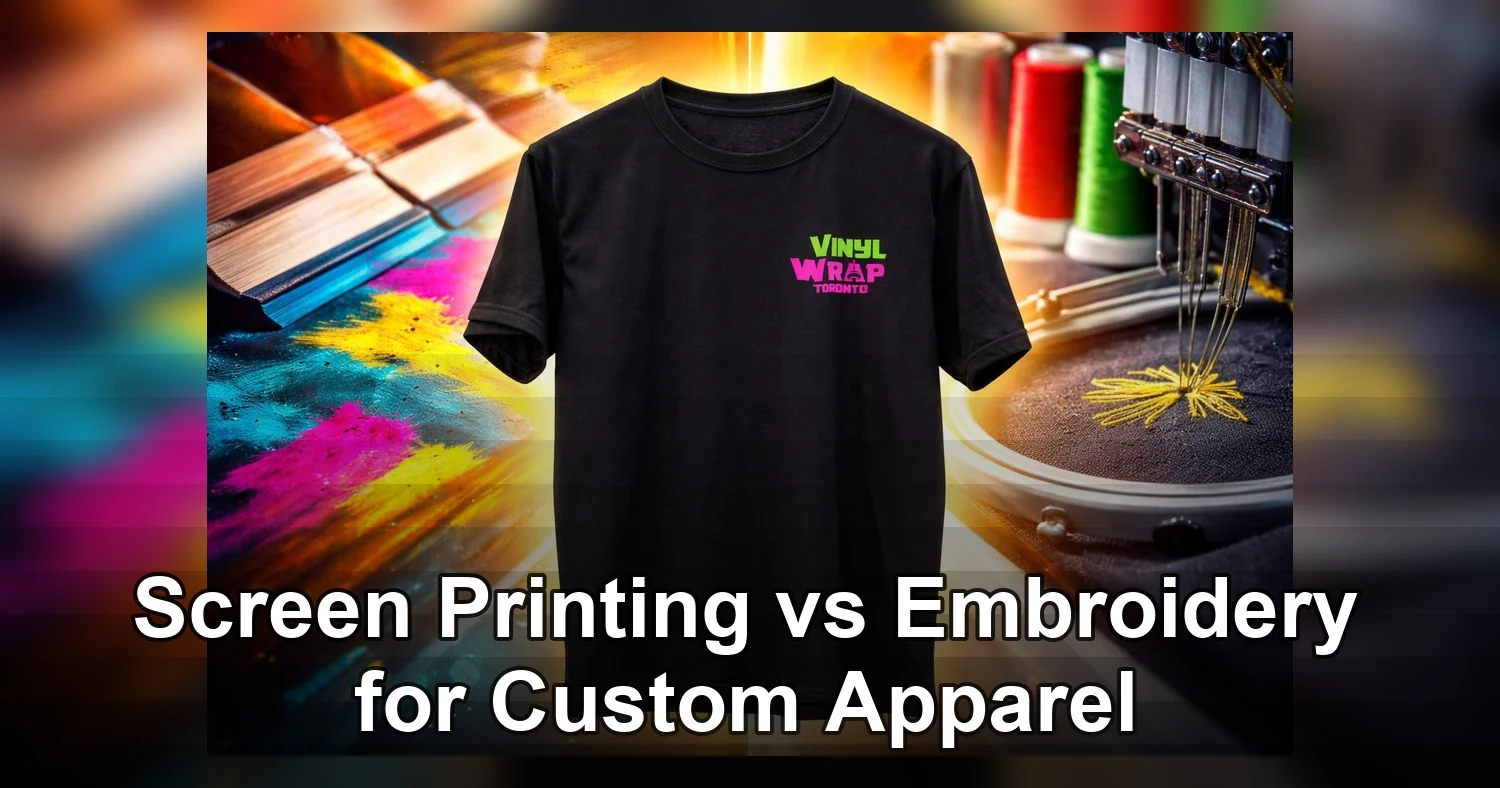
By the end of this guide, you will know which decoration method fits your garment, what changes your cost per piece, and how to avoid logo choices that weaken your brand image. For most Etobicoke buyers, the screen printing vs embroidery for custom apparel decision usually comes down to this: screen printing is often the better choice for larger runs of graphic tees and hoodies, while embroidery is often the stronger fit for polos, caps, jackets, and uniforms that need a more polished look. That simple answer matters whether you are outfitting restaurant staff, preparing trade show giveaways, or ordering workwear for a growing local team.
Last updated: August 2026
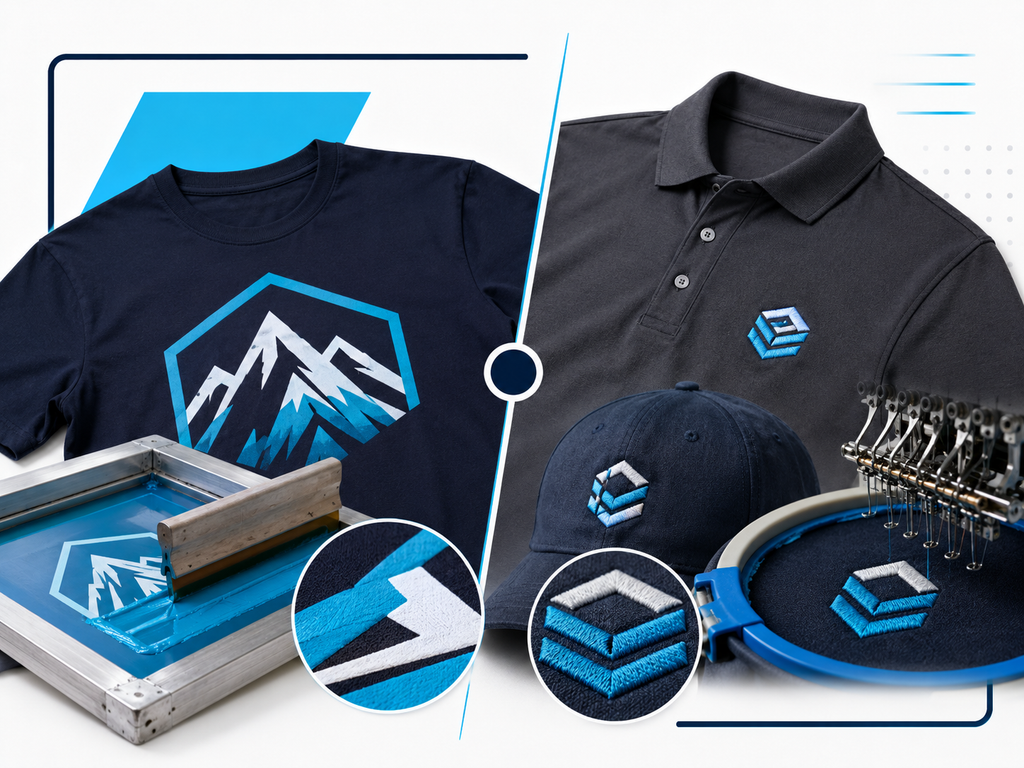
Fabric type, logo detail, placement, and order size can change the best option quickly. A comparison like this overview of embroidery vs screen printing points to the same practical pattern. Printing usually works better for high-volume graphic apparel, while embroidery fits structured garments and smaller logo placements. The guide below breaks that down for local businesses that need branded apparel to look right, last well, and stay on budget.
Screen printing vs embroidery for custom apparel: a side-by-side buyer’s guide
If you need a fast answer, screen printing is usually the better choice for bold graphics on tees and hoodies, while embroidery is usually the better choice for logos on polos, hats, outerwear, and staff uniforms. For Etobicoke business owners, the right pick comes down to where the logo goes, how detailed the artwork is, what the garment is made of, and how many pieces you need.
When comparing screen printing vs embroidery for custom apparel, think less about which method is better and more about which one fits the job. A brewery ordering 200 event shirts has different needs than a property management company ordering 24 branded polos for onsite staff.
Quick buyer rule of thumb
- Choose screen printing for larger logo areas, back prints, promotional runs, and lower cost per garment on bigger quantities.
- Choose embroidery for left chest logos, executive or uniform programs, textured premium branding, and heavier garments.
- If the logo has tiny text, gradients, or photo-like detail, screen printing usually reproduces it more cleanly.
- If the logo needs a structured, long-term corporate look, embroidery often looks better.
| Buying factor | Screen printing | Embroidery | Best use case | What Etobicoke buyers should watch |
|---|---|---|---|---|
| Design detail | Handles fine lines, small text, and multi-colour art well | Best for simpler logos with clean shapes | Detailed event graphics, marketing shirts | Tiny lettering may stitch poorly below common chest sizes |
| Garment type | Excellent on tees, sweatshirts, and casual cotton blends | Excellent on polos, fleece, hats, bags, and jackets | Uniforms and outerwear usually favour embroidery | Thin or stretchy garments can pucker under dense stitching |
| Brand look | Flat, bold, promotional, modern | Textured, elevated, corporate, permanent | Campaign merch versus client-facing staff apparel | Consider who will wear it and where customers will see it |
| Cost per garment | Often lower on medium to large runs | Often higher because pricing follows stitch count and placement | 50 to 500 printed tees versus 12 to 50 embroidered polos | Front and back prints add cost, and large stitch files do too |
| Placement size | Works well for full front, full back, sleeves | Works best for small chest, cap, or sleeve positions | Big visual branding versus subtle logo placement | Embroidery is rarely the practical choice for oversized art |
Cost and order-size reality
For most business orders, screen printing usually becomes more economical on larger runs because setup is spread across more pieces. Embroidery pricing depends less on quantity alone and more on stitch count, logo size, and garment thickness. That means a simple 2.5-inch chest logo can be very manageable, while a large filled-in crest can raise the cost per garment quickly.
The best decoration method depends on what you are buying for. For restaurant promo tees, screen printing often gives more impact for the dollar. For law firms, trades, condo staff, and logistics teams that need a uniform look every day, embroidery usually creates the stronger long-term brand impression.
Which decoration method fits your garment: tees, polos, hoodies, and outerwear
The garment matters as much as the logo. Fabric weight, stretch, surface texture, lining, and seam placement all affect whether screen printing or embroidery will look sharp or cause problems.
Tees and polos
T-shirts are usually the easiest place to choose. On smooth cotton and cotton-blend tees, screen printing gives the cleanest result for front logos, back graphics, and multi-colour artwork. If your order is built around men’s cotton t-shirts, printing is often the most efficient option for promotions, retail-style merch, community events, and team giveaways.
Polos are different. Their knit texture, especially pique polos, can make small printed logos look less crisp than on a flat tee. Embroidery usually sits better on the left chest and supports a more uniform-like appearance. For office staff, golf events, and service teams meeting customers face to face in Etobicoke, polos are often a natural fit for embroidery.
Hoodies and fleece
Hoodies work with both methods, but placement changes the decision. Large front or back branding is usually better printed. A small chest logo can be embroidered if the fabric is stable enough and the design is not too dense.
Heavy fleece can support embroidery well, but very thick stitch fills may feel stiff. If the hoodie already has pockets, seams, or zippers near the logo area, printing can be easier to position consistently across the order.
Outerwear, workwear, and placement issues
Jackets and safety gear often lean toward embroidery because the garments are structured, durable, and worn as part of a professional uniform. On a quilt polyester traffic safety jacket, an embroidered chest logo usually looks cleaner and holds up better than a large decorative print.
Placement is the hidden decision factor. Screen printing excels on full backs, sleeves, and larger branding zones. Embroidery excels on left chest, hat fronts, and smaller sleeve marks. Before approving artwork, check:
- Fabric stretch and thickness
- Whether seams, pockets, or zippers cross the logo area
- How small the text is at final size
- Whether the logo needs a soft feel or a raised texture
Logo durability, wash life, and how each method affects brand perception
If your priority is logo durability, both methods can last well when matched to the right garment and produced properly. The difference is how they age, how they feel, and what message they send about your brand.
Wash life and wear over time
Embroidery does not crack or peel because the logo is stitched into the garment. That makes it a strong option for uniforms that are washed often, such as tradeswear, hospitality polos, and outerwear. Over time, though, threads can fuzz slightly, snag on rough surfaces, or pull if the garment gets caught.
Screen printing can also hold up very well, especially on cotton tees and hoodies, but large solid prints may eventually show fading or cracking after repeated wash cycles if the print is heavily worn or the garment is not cared for properly. The advantage is that a well-made print stays flexible and comfortable on casual apparel.
Texture, finish, and perceived value
Embroidery adds depth and a raised texture, which often makes a logo feel more established and premium. That is why many Etobicoke companies choose it for receptionist polos, sales uniforms, dealer apparel, and client-facing jackets. It signals permanence.
Screen printing looks flatter and more graphic. That is not a drawback when the goal is visibility, energy, or retail-style design. For event shirts, restaurant launches, gym merchandise, and promotional campaigns, print often feels more current and approachable.
Common mistakes that hurt brand appearance
- Using embroidery for tiny text or very detailed logos, which can reduce legibility.
- Using screen printing for a small chest logo on a formal polo when a stitched finish would look more polished.
- Choosing oversized embroidery on thick garments, which can feel bulky and distort the fabric.
- Ignoring wash instructions, especially for printed garments exposed to frequent high-heat drying.
A simple rule helps here: if the apparel is meant to promote a campaign, screen printing often creates the stronger visual impact. If it is meant to represent your company every working day, embroidery usually supports the more polished brand perception.
What drives cost per garment for local Etobicoke orders
For most Etobicoke orders, cost per garment is driven less by the logo alone and more by setup, decoration complexity, garment choice, quantity, and timing. Two orders with the same artwork can land at very different price points once those variables are factored in.
Setup and artwork prep
Every custom order has some front-end cost. With screen printing, that usually means screen setup by color. A one-color chest print is much cheaper to start than a four-color front and two-color back design. With embroidery, the equivalent setup cost is digitizing, which turns your logo into a stitch file. That is often a one-time charge for new artwork, but edits or size changes can add cost.
This is one reason screen printing tends to be more economical on higher-volume runs, while embroidery pricing is more affected by stitch count and setup. If your team only needs a dozen pieces, setup matters more per garment than it does on a 100-piece reorder.
Color count, stitch count, and garment type
For screen printing, each ink color usually increases cost. A simple one-color staff tee on men’s cotton t-shirts is usually far more budget-friendly than a multi-location design with several spot colors.
For embroidery, the big pricing driver is stitch count. A clean left-chest logo may run around 6,000 to 8,000 stitches, while a larger back logo or crest with fills, outlines, and small details can exceed 15,000 to 20,000 stitches. More stitches mean more machine time and higher unit cost.
Garment type also changes pricing. Basic cotton tees are usually the lowest-cost blanks. Polos, fleece, softshells, and branded outerwear climb from there. Technical garments, lined jackets, and heavy workwear take more handling and can limit placement options. A logo on a quilt polyester traffic safety jacket will not price like the same logo on a lightweight tee.
Order size and rush fees
Quantity has a major effect on cost per garment. Larger runs spread setup over more pieces, which is why 72 shirts usually price better per unit than 18 shirts with the same print. Reorders are often more efficient too, especially when approved art files and previous stitch files are already on hand.
Rush fees typically show up when local buyers need compressed production, same-week completion, special garment sourcing, or split deliveries to multiple Etobicoke sites. If stock has to be pulled quickly from GTA warehouses or production has to jump ahead in queue, expect a premium. The easiest way to protect budget is to lock artwork early, keep decoration simple, and combine departments or locations into one larger order when possible.
Turnaround time, minimums, and rush orders for busy local businesses
If you are ordering for a tradeshow, new staff launch, restaurant opening, or seasonal promotion in Etobicoke, the safest rule is simple: work backward from the event date and build in approval time. Production does not start when you request a quote. It starts after garment stock, artwork, sizing, and placement are approved.
Realistic production timelines
For many local custom apparel orders, a standard turnaround is about 7 to 10 business days after final approval. More complex embroidery, larger runs, or garments that need to be sourced from multiple warehouses can stretch that to 10 to 15 business days. If you need multiple decoration locations, individual naming, or kitting by employee, add more time.
Event-driven buyers should pad the schedule for common delays:
- Out-of-stock sizes or colors
- Late logo changes from head office
- Unclear placement instructions
- Size collection delays from staff
- Courier time between supplier, decorator, and your Etobicoke location
Minimums and when they matter
Minimums depend on the method and garment. Screen printing often makes the most sense at 12, 24, or more pieces per design because setup has to be spread across the run. Embroidery can work for smaller counts, especially for polos, caps, and jackets, but the unit price is usually higher on tiny orders.
If you are not yet sure whether you need tees, fleece, outerwear, or workwear, review the available apparel categories before promising a delivery date internally. The garment decision affects stock availability just as much as decoration method.
How to handle rush orders without creating bigger problems
Rush orders are possible, but only when the variables are controlled. If you need a fast turn for onboarding 15 new hires or a booth team heading to the International Centre, keep the order simple:
- Choose an in-stock garment with broad size availability.
- Use one logo placement instead of front, back, and sleeve.
- Avoid last-minute art revisions.
- Submit a complete size breakdown the first time.
- Confirm whether pickup or local delivery is faster for your deadline.
For repeat business orders, the fastest jobs are usually reorders using previously approved artwork and a garment your supplier already knows fits your team. That is especially useful for landscaping crews, gyms, clinics, and restaurants that add staff in waves through the year.
Common ordering mistakes that lead to weak results or wasted budget
The biggest apparel ordering mistakes usually happen before production starts. Weak artwork choices, the wrong blank, or a mismatch between garment and decoration can turn a decent budget into underwhelming uniforms or promo wear.
Using artwork that is too detailed for the application
Small text, thin outlines, gradients, and intricate logo elements often look fine on a screen but fail on fabric. For embroidery, tiny text under roughly 0.25 inch tall can become hard to read, especially on textured polos, fleece, or caps. Fine details also get lost when a logo is reduced to left-chest size.
For screen printing, very small elements can fill in on heavier fabrics, and complex art with many colors increases cost quickly. A smarter approach is to create a simplified logo version specifically for apparel rather than forcing the full website logo onto every piece.
Choosing the wrong garment for the job
Buyers often pick based on the lowest blank cost instead of how the item will actually be worn. Lightweight promo tees may be fine for a one-day giveaway, but they are rarely the best option for crews who wash uniforms weekly. On the other hand, putting a dense embroidered logo on a very thin tee can feel heavy and cause puckering.
Fabric matters too. Performance polyester, fleece, waterproof outerwear, and safety gear all behave differently in production. Seams, pockets, linings, and coatings can limit placement or affect how clean the final mark looks. Workwear and outerwear should be chosen for the environment first, then decorated with a method that suits that fabric and use case.
Not matching decoration to purpose, wear cycle, and budget
A common local mistake is using the same decoration plan across every garment type. That sounds efficient, but it often wastes money. A premium embroidered chest logo may be right for management polos and client-facing jackets, while a simple printed logo is often the better value for event tees, volunteer shirts, or large seasonal campaigns.
Before approving an order, use this quick check:
- Will the smallest text still read from a few feet away?
- Does the logo version suit the garment size and texture?
- Will staff wear this item weekly or only occasionally?
- Is the decoration durable enough for the washing cycle?
- Are you paying for premium garments where a basic promo blank would do, or vice versa?
For Etobicoke businesses ordering uniforms, the best results usually come from simplifying art, testing one garment before a full rollout, and choosing the method that fits the actual use case instead of just the lowest quote.
How to choose the best decoration method for your next campaign
The best decoration method is the one that matches how the apparel will be used, not just the lowest quote. For most Etobicoke business orders, screen printing makes the most sense for higher-volume promo wear and bold graphics, while embroidery is usually the stronger choice for uniforms, outerwear, and logos that need a more polished look. In the screen printing vs embroidery for custom apparel decision, the right answer usually comes down to four filters: budget, durability needs, garment type, and the brand image you want people to see.
Start with the job the garment needs to do
If you are ordering event shirts, staff giveaway tees, or campaign apparel with a larger front or back design, screen printing is usually the best decoration method. It handles strong color coverage well and often gives a lower cost per garment once quantities rise. That makes it a practical fit for men’s cotton t-shirts used at trade shows, community events, or seasonal promotions.
If the apparel is meant to look more permanent, such as office polos, hospitality uniforms, or service jackets, embroidery often wins. It is especially effective for left-chest logos on thicker garments, and embroidery is generally better suited to structured garments and smaller logo placements than large printed graphics. For safety teams, field crews, or transportation staff, embroidered branding on a quilt polyester traffic safety jacket usually looks more professional than trying to force a print onto a bulky surface.
Use your brand image as the tiebreaker
Ask what impression you want to create in Etobicoke when your team walks into a customer site or community event. Screen printing tends to feel energetic, promotional, and graphic-forward. Embroidery tends to feel established, premium, and uniform-driven.
If you are unsure, review your garment choices first across broader categories of custom apparel, then match the decoration to the fabric weight, logo size, and use case. That simple sequence prevents one of the most common buying mistakes, choosing the decoration first and the garment second.
- Budget: Choose screen printing if you need a lower cost per garment on larger runs. Choose embroidery if you can spend more for a premium finish on smaller logo areas.
- Durability: Choose embroidery for workwear, uniforms, and jackets that need a long-lasting stitched mark. Choose screen printing for promo apparel that will be worn regularly but does not need a textured finish.
- Garment type: Choose screen printing for tees and fleece with larger art. Choose embroidery for polos, caps, outerwear, and heavier fabrics.
- Brand image: Choose screen printing for bold, modern, campaign-style visuals. Choose embroidery for a clean, established, professional look.
- Quick final check: If your logo is large and colorful, print it. If it is small, simple, and meant to elevate the garment, stitch it.
If you want the fastest way to decide, start with four checks: garment type, logo detail, order quantity, and the image you want your team to project. Bulk event shirts and promo tees usually lean toward screen printing, while staff polos, caps, and outerwear often get better results from embroidery.
Before placing an Etobicoke order, gather your logo file, sizes, quantities, and deadline, then ask for a mockup on the exact garment you plan to buy. If tees are part of your campaign, reviewing options like men’s custom cotton t-shirts can help you confirm where screen printing makes the most sense. A side by side quote for both methods is usually the smartest next step, because it lets you compare look, durability, and total cost before production starts.
Related Products and Services
If you are planning a similar project, these related options may help.
Helpful External Resources
These sources provide supporting background and additional context.
-
Which is more affordable for small custom apparel runs?
For small orders, embroidery can be cost effective when the design is simple and the garment is a polo, cap, or jacket. Screen printing usually becomes more affordable as quantities increase, especially for larger graphics and multiple pieces. The best choice for screen printing vs embroidery for custom apparel depends on setup fees, logo size, and the number of decoration colors or stitches.
-
Is embroidery or screen printing more durable after repeated washing?
Embroidery is generally the most durable option because the design is stitched into the fabric and does not crack or peel. High quality screen printing can also last well if it is properly cured and washed according to care instructions. For heavy use uniforms and outerwear, embroidery is often the safer long-term choice.
-
What is the best method for polos, hoodies, and jackets?
Embroidery is usually best for polos and jackets because it looks polished on structured garments and holds up well. Screen printing is often better for hoodies when you want larger artwork, bold colors, or a softer feel on casual apparel. If you want a corporate look, embroidery usually wins; if you want a promotional look, screen printing is often stronger.
-
How do turnaround time and minimum order size affect my choice?
Screen printing often has more setup and works best when the cost can be spread across a larger run. Embroidery is usually easier for smaller quantities, but digitizing the artwork can add upfront time. If you need a fast turnaround, ask about in stock garments, rush options, and whether the minimum order fits your timeline.
-
What artwork files work best for each decoration method?
For screen printing, vector files such as AI, EPS, or PDF are best because they scale cleanly and separate colors accurately. For embroidery, clean vector art or a high resolution logo works best, and the design may need digitizing before production. Simpler logos with fewer details usually produce the best results for both methods.
Get a Free Quote Today
Contact us at +1-(416) 288-8661 or Email us at info@Brandingcentres.com and let's get started.