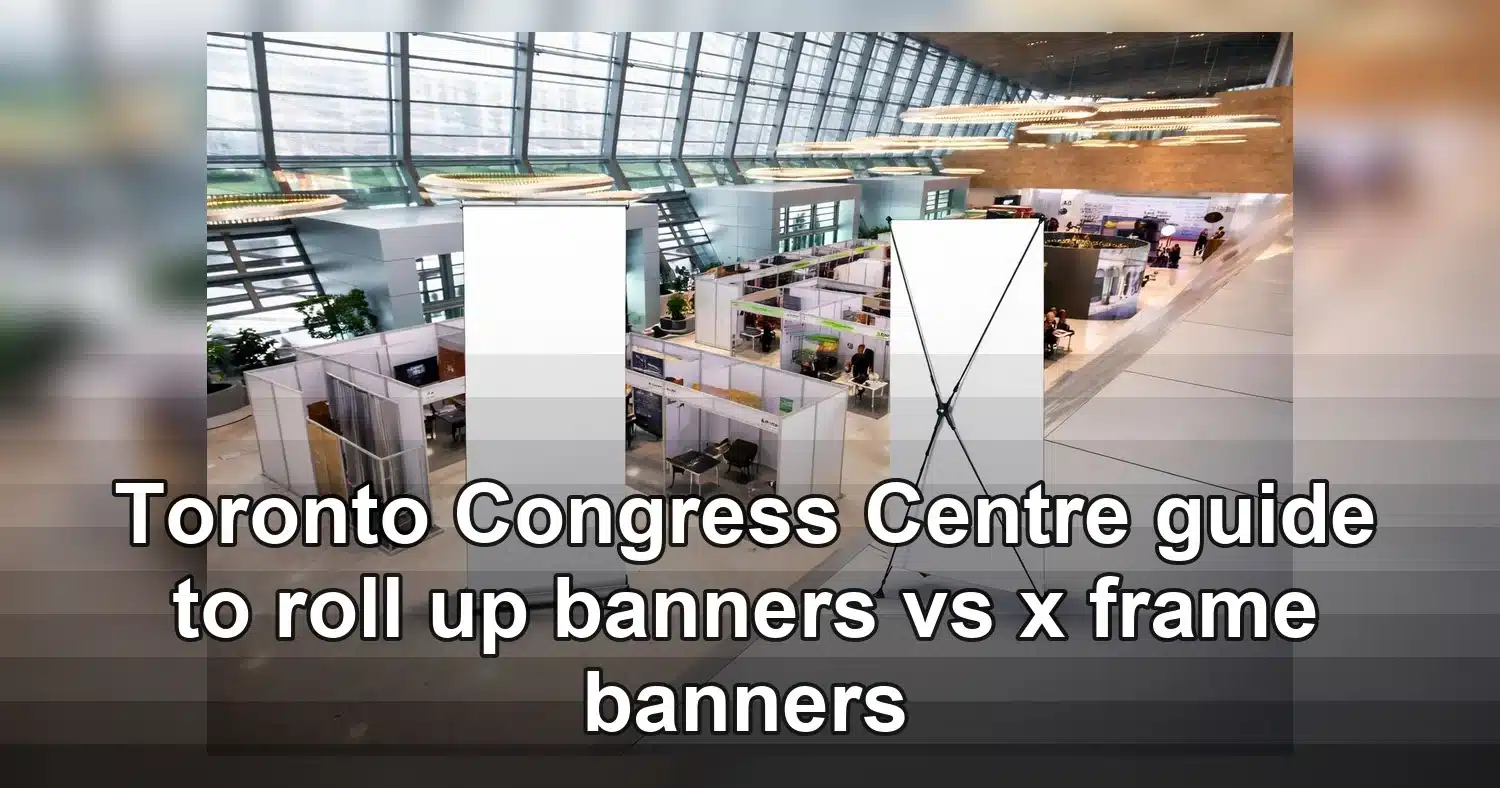
If you are comparing roll up banners vs x frame banners for an event near Toronto Congress Centre, the best choice usually comes down to three things: how fast you need to set up, how polished you want the booth to look, and how often you plan to reuse the display. In most trade show and conference settings, a roll up banner is the stronger option for a premium presentation and quick deployment, while an X frame banner is the better value when budget matters more than finish.
Last updated: April 2026
Ready to print roll-up banner printing?
Send your artwork, quantity, and deadline to Branding Centres. We will help confirm specs, turnaround, and the best production option.
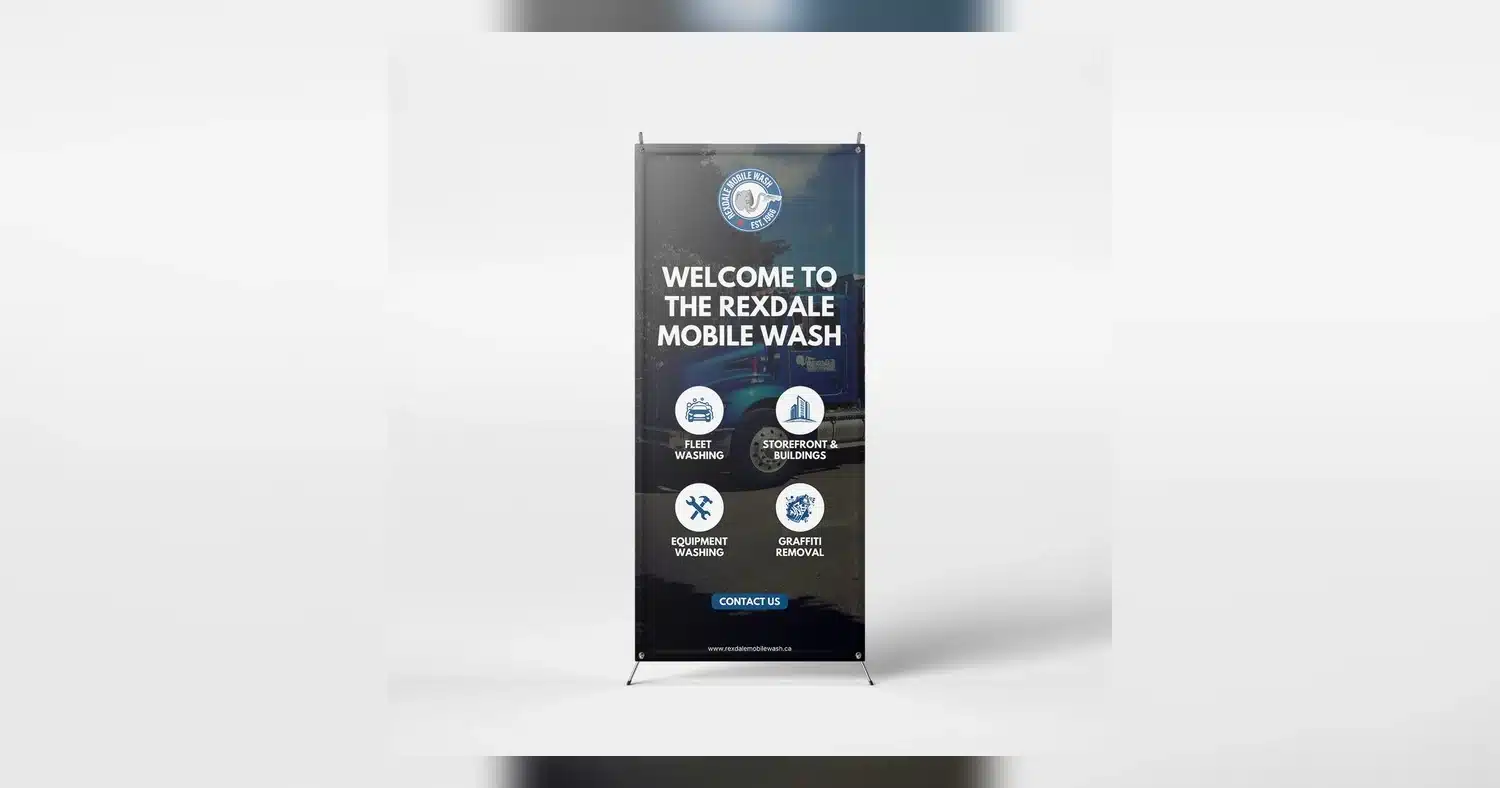
That simple distinction matters in a busy venue. Exhibitors often have limited load-in time, tight booth footprints, and little room for error once the show floor opens. A banner is not just a printed graphic. It affects how easily your team works, how well your brand reads from the aisle, and how much stress you face on event day. For that reason, many businesses start by comparing roll up banners with X frame displays before ordering anything for a trade show, recruitment fair, product launch, or seminar.
This guide breaks down the real differences between these two banner systems so you can choose the one that fits your booth, your timeline, and your budget without paying for features you do not need.
Why exhibitors compare roll up banners vs x frame banners
Exhibitors compare roll up banners vs x frame banners because both are portable, indoor-friendly, and easy to print, but they solve different problems.
At Toronto Congress Centre, the venue environment can make small hardware details matter. A booth near an aisle or registration area may need a display that goes up quickly and stays stable while attendees pass by. If your team is carrying literature, a monitor, sample products, or a table setup, the banner has to fit into the space without slowing anyone down.
For that reason, the real decision is rarely just about price. It is about how the banner will function during the event. Will one person set it up? Will the graphic be used again next month? Does the booth need to look premium for sponsor meetings or executive conversations? Will the display travel by car, courier, or freight? The answers point you toward one banner system or the other.
What buyers usually care about first
- Setup speed: Can one person assemble it quickly without tools?
- Footprint: Will it fit beside a table, counter, or demo area?
- Presentation: Does it look clean from the aisle and in photos?
- Durability: Will the hardware hold up through repeated events?
- Cost: Is the display worth the spend for how often it will be used?
If you are exhibiting frequently, a stronger hardware system often saves time and avoids reprinting or replacing damaged parts later. If you are doing one short event or a temporary promotion, a simpler frame may be enough.
roll up banners vs x frame banners: side-by-side comparison
The fastest summary is this: roll up banners usually look more polished and set up faster, while X frame banners usually cost less and weigh less.
That difference is easy to see once both are assembled. A retractable banner hides the graphic inside the base, which creates a cleaner appearance. An X frame banner uses visible support arms and corner attachment points, which makes the structure feel lighter and more utilitarian. Both can work well, but they do not create the same brand impression.
| Factor | Roll up banner | X frame banner | Best fit |
|---|---|---|---|
| Setup time | Usually very fast, often under 2 minutes | Usually 2 to 5 minutes depending on the graphic and frame | Fast-paced booths and small teams |
| Presentation | Clean, professional, and more premium | Simple and functional, but more budget-oriented | Brands focused on first impressions |
| Footprint | Compact base with a neat vertical profile | Light frame, but support arms and attachment points are visible | Booths with limited floor space |
| Portability | Easy to carry in a case, with the graphic protected in the base | Lightweight and easy to move, with separate frame parts | One-person transport and local events |
| Reusability | Strong long-term option for repeated use | Reusable, but graphic tension points can wear over time | Repeat exhibitors and rotating campaigns |
| Best use | Trade shows, sponsor walls, presentations, premium pop-ups | Temporary promos, simple signage, budget-conscious activations | Depends on budget and event goals |
In practice, the most noticeable difference is visual. Roll up banners tend to look more finished because the base conceals the mechanism and the graphic stays taut. X frame banners can still look good with the right print and tension, but the stand itself is more visible and usually signals a lower-cost display choice.
Quick decision summary
- Choose roll up banners if you want the best mix of speed, polish, and repeat use.
- Choose x frame banners if you need a simpler display at a lower upfront cost.
- Choose roll up banners if your booth is client-facing and presentation matters.
- Choose x frame banners if the message changes often and the setup is temporary.
For a closer look at retractable hardware, review roll up banners. If you want the lightweight frame format, compare that with x frame banners.
When a roll up banner is the better choice
A roll up banner is the better choice when you need a display that looks polished, sets up quickly, and survives repeated use without a lot of handling.
That makes retractable hardware especially useful for exhibitors near Toronto Congress Centre who attend several events each year. It is also a smart option when different staff members may be responsible for setup and teardown. The built-in cassette keeps the graphic protected during transport and makes the system easier to use consistently.
Best scenarios for roll up banners
- Frequent trade shows: The hardware is built for repeated use across multiple events.
- Premium branding: The hidden base and taut graphic create a more professional look.
- Short setup windows: One person can usually install the banner with minimal effort.
- Client-facing booths: The display looks more finished in photos and in person.
Roll up banners are also easier to store cleanly. The banner rolls into the base, which protects the print from scuffs and edge wear. That matters if the display will travel between venues, sit in a car, or move through loading areas with other booth materials.
For businesses that care about brand consistency, this format is often the safer long-term investment. It is especially useful for product launches, sponsor branding, retail pop-ups, and conferences where a clean visual presentation supports sales conversations.
Another advantage is speed under pressure. If you arrive late, have a smaller team than expected, or are asked to reset your booth after a layout change, a retractable banner reduces friction. That is a practical benefit, not just a cosmetic one.
Things to check before buying a roll up system
- Base weight and stability
- Quality of the retraction mechanism
- Case protection for transport
- Availability of replacement graphics
- Banner size and whether it fits your booth layout
If the hardware is too light, even a good print can look unstable. For repeat exhibitors, the quality of the cassette matters as much as the graphic itself.
When an X frame banner is the smarter buy
An X frame banner is the smarter buy when your main goal is to keep costs down while still getting a simple indoor display that works well for basic branding.
This format is popular with startups, small businesses, and teams running one-off events because it uses less hardware and usually costs less than a retractable unit. If your booth is temporary, your message changes often, or you only exhibit occasionally, the lower upfront spend can make more sense than paying for premium hardware you will not fully use.
Best-fit use cases
- Indoor events with controlled traffic and little wind exposure
- Registration areas, seminar rooms, and small booth backdrops
- Price-led campaigns or short promotional runs
- Companies that want a lightweight display for occasional use
X frame banners can also work well when the stand is secondary to the message. If you already have branded literature, a table cover, or a product demo setup, the display just needs to hold the graphic in place and remain visible from the aisle. In that case, spending more on retractable hardware may not add much value.
They are also practical when replacement graphics are likely. Seasonal offers, recruiting messages, and event-specific promotions can be refreshed without treating the hardware as a major investment. That can help keep print costs under control over time.
Where X frame banners save money
- Lower hardware cost
- Lightweight transport
- Simpler replacement graphic strategy
- Good fit for short-term use
For buyers who need an economical exhibitor display choice, the X frame format is often enough. It is less about premium presentation and more about getting a clean, readable sign into the booth at a manageable price.
The details that actually affect quality
When comparing roll up banners vs x frame banners, the biggest quality differences usually come from hardware, print material, finishing, and sizing.
A display can look fine in a product photo but fail in the real world if the stand is unstable or the material reflects too much light. That is why it is worth checking the practical details before ordering.
Hardware details to review
- Base stability: A heavier, better-balanced base improves performance in busy halls.
- Pole construction: Stronger tubing helps keep the banner straight at full height.
- Cassette action: On retractable systems, the graphic should roll smoothly without snagging.
- Frame tension: On X frame systems, the print should stay tight without curling at the edges.
At a venue like Toronto Congress Centre, indoor airflow, foot traffic, and frequent movement around booths can expose weak hardware quickly. Even if the event is indoors, the display still needs to hold steady.
Graphic material and finish
The print material should match the event environment. Matte materials can reduce glare under bright show lighting, while fabric can create a softer, more premium look in some booth designs. Glossy surfaces can work, but they may reflect light if the venue lighting is strong.
Finishing matters too. Hemmed edges, reinforced corners, welded seams, and proper grommets can all improve durability depending on the banner style. For X frame banners, reinforced corners are especially important because the graphic depends on tension to stay flat.
Sizing and replacement graphics
Before ordering, confirm the finished size and make sure it fits your booth plan. A banner that is technically correct on paper can still feel cramped once a table, chair, product stand, or literature rack is added.
If you expect to reuse the hardware, ask about replacement graphics. Being able to update the print without replacing the stand is one of the best ways to lower long-term costs. That is especially helpful for seasonal campaigns and recurring trade shows.
For teams comparing display systems, it can help to review the available roll up banner hardware options against your intended graphic size so you know exactly how much visual space you are buying.
Pricing, rush timelines, and common ordering mistakes
The total cost depends on hardware quality, print material, graphic size, quantity, and whether you need a fast turnaround.
With roll up banners vs x frame banners, it is easy to focus on the lowest quote and miss the full picture. A cheaper stand may still require a better print, stronger finishing, or faster production if the event is close. If your timeline is tight, the fastest safe order is the one that does not need last-minute changes.
Main pricing drivers
- Hardware tier: Entry-level stands cost less than heavy-duty versions.
- Graphic material: Basic vinyl is usually cheaper than premium matte or specialty substrates.
- Quantity: Ordering more units often lowers the per-piece price.
- Finishing: Reinforced edges and premium construction can increase cost.
- Artwork setup: File corrections and resizing may affect the final quote.
Questions to ask before you order
- What is the standard turnaround time?
- What changes if I need rush production?
- Does the quote include hardware, print, case, and proofing?
- Can I reorder replacement graphics later?
- What file format and bleed size do you need?
One of the most common mistakes is ordering too late and discovering that proofing, printing, and finishing take longer than expected. Another is forgetting to check whether the banner will be delivered to the venue, picked up, or shipped to a hotel or office before the event.
It is also smart to think about how the display will travel. If the banner must fit in a car trunk or be carried by one person, weight and packing size become more important. That often pushes buyers toward a lighter frame or a more protective retractable system, depending on how often the display is reused.
Toronto Congress Centre setup tips for a smoother event day
If you are exhibiting at Toronto Congress Centre, the best banner choice is the one that fits the real conditions of your booth, not just the design concept.
That means planning for load-in, storage, and aisle visibility before you order. A display that looks great online can still be frustrating if it takes too long to install or blocks your table layout.
Set up for transport first
If your team is unloading from a vehicle, moving through loading doors, and setting up with limited time, transport should be part of the decision. Roll up banners store the graphic in the base, which helps protect the print during travel. X frame banners are lighter, but the separate frame parts and exposed graphic need more care.
Measure the real booth footprint
Before ordering, map out the space you actually have. Check the banner width, base depth, any rear leg spread, and how the display will sit next to a table or product stand. At a busy venue, even a few extra inches can affect traffic flow and sightlines.
- Banner width versus booth width
- Base depth or frame spread
- Table and literature placement
- Aisle clearance and staff movement
This is especially important if the booth is compact. An X frame can be a good value, but the support structure may become awkward if every inch counts.
Avoid these common exhibitor mistakes
- Choosing a display that is wider than the booth can handle
- Using small text that cannot be read from the aisle
- Ignoring base stability or rear support spread
- Buying lightweight hardware for repeated travel
- Skipping a practice setup before show day
Doing one test assembly before the event helps you catch problems early. You will know whether the banner stands level, whether the graphic centers properly, and whether the hardware is easy enough for the team to use under pressure.
How to choose the best banner for trade shows
The best banner for trade shows is the one that matches your booth goals, event schedule, and transport needs.
That usually means choosing roll up banners when you want a more polished presentation and repeated use, or choosing x frame banners when you want an economical display for lighter-duty indoor events.
Choose roll up banners if your goal is:
- A polished front-of-booth presentation
- Fast, repeatable setup by one person
- Cleaner visuals for photos and client meetings
- Better long-term value across multiple shows
Choose x frame banners if your goal is:
- Lower upfront cost
- A simple indoor display for occasional use
- Lightweight transport and straightforward handling
- Temporary messaging or short-run promotions
Use this decision framework
- Booth size: Smaller booths usually benefit from compact, self-contained hardware.
- Budget: If cost is the main concern, start with X frame options.
- Frequency: If you exhibit often, more durable hardware is usually worth it.
- Message: Premium brands and executive meetings usually favor roll up banners.
- Setup staff: If one person handles assembly, the easiest system often wins.
If you want a display that feels ready for repeated events, review roll up banners and match the hardware to your booth plans. If you need a lower-cost indoor option, compare x frame banners and focus on size, print quality, and whether the message will change often.
In short, choose a roll up banner when you want the safest all-around exhibitor display choice for speed and presentation. Choose an X frame banner when you need a simple, lightweight, budget-friendly solution. Either one can work well if it fits the event, the booth, and the way your team actually sets up.
Related Products and Services
If you are planning a similar project, these related options may help.
- Roll Up Banner (Hardware
- X Frame Banners
- Roll Up Banners
- Printed Roll Up Banner For Sarina News Today
Helpful External Resources
These sources provide supporting background and additional context.
- X Frame Banners In Toronto
- Retractable Banners
- Why Choose Roll Up Banner Stands Over An X Stand Banner
Are roll up banners better than x frame banners for repeated trade shows?
Yes, roll up banners are usually better for repeated trade shows because the graphic retracts into the base, which helps protect it during transport and storage. X frame banners can still be reused, but they are more exposed and may show wear sooner if you set up and pack them often.
Which banner is easier to set up at Toronto Congress Centre?
Roll up banners are usually easier and faster to set up because you pull the graphic out of the base and lock the pole in place. X frame banners are still simple, but they take a bit more time because the corners need to be attached and tensioned on the frame.
Can x frame banners still look professional in a booth?
Yes. X frame banners can look professional if the artwork is sharp, the sizing is correct, and the print material is well chosen. They are a good fit for straightforward branding, but roll up banners usually create a more polished and premium impression.
What should I ask before ordering a banner for a trade show?
Ask about finished size, material, turnaround time, hardware quality, and whether replacement graphics can be ordered later. It is also smart to confirm file requirements, bleed size, and whether the display is meant for indoor use only.
How do I choose the right banner for my booth?
Start with your booth size, how often you will reuse the display, how quickly you need setup, and how much of your budget you want to spend on hardware. If you want a premium look and fast installation, choose a roll up banner. If you want a lower-cost indoor option, choose an X frame banner.
Get a Free Quote Today
Contact us at +1-(416) 288-8661 or Email us at info@Brandingcentres.com and let's get started.