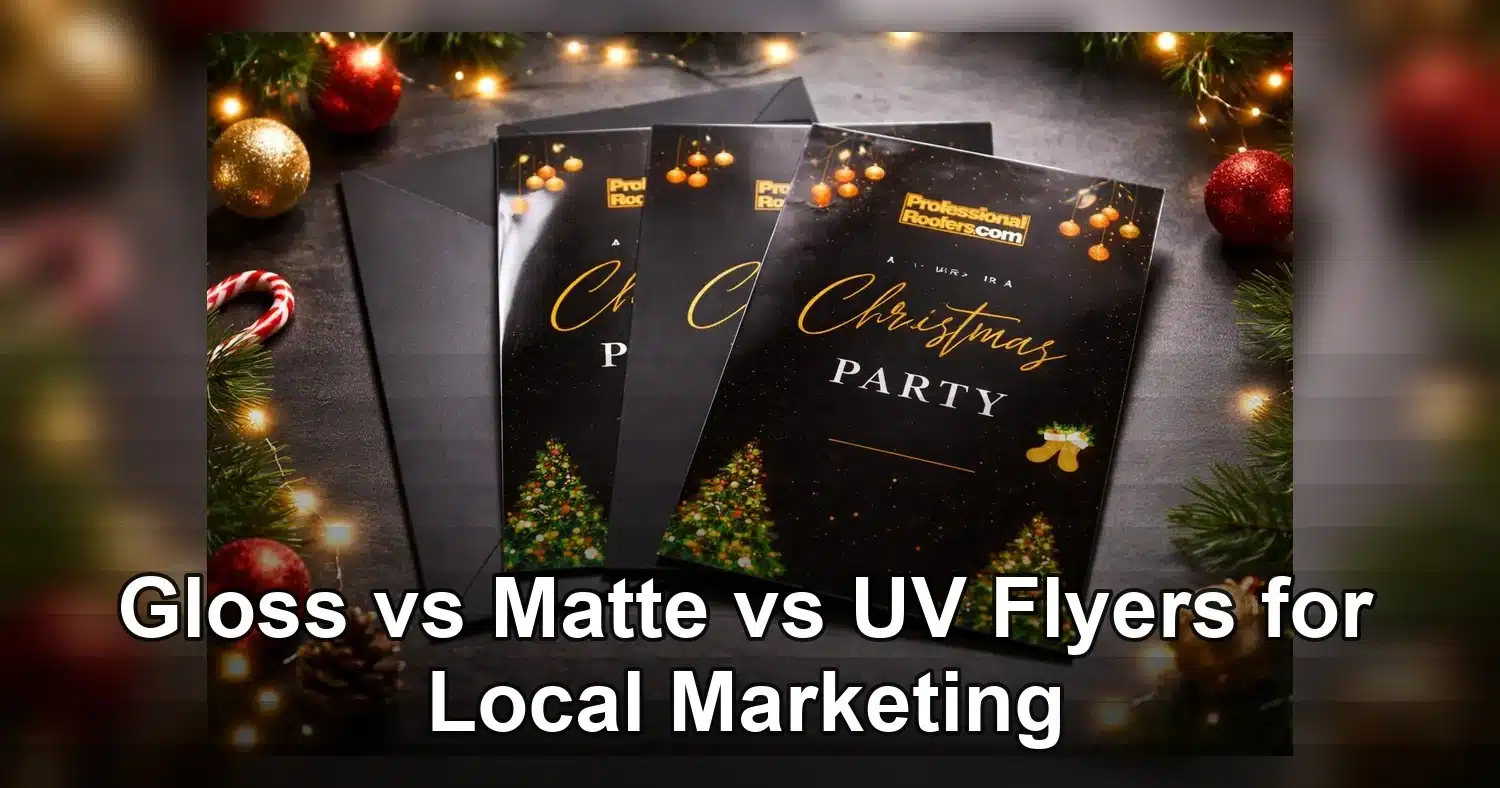
If you are deciding on gloss vs matte vs uv flyers for a local promotion, the best finish usually comes down to where the flyer will be seen, how long people will hold it, and whether the message depends on vivid images or easy reading. Gloss is usually strongest for bold visuals and quick attention, matte is usually the safest choice for text-heavy handouts and pieces people may need to write on, and UV high gloss is best for eye-catching flyers that need a premium, high-shine look and added surface protection. For local business owners promoting grand openings, menu specials, salon services, or event handouts, the finish can directly affect pickup rate, readability, and how polished your brand looks in real-world lighting.
Last updated: May 2026
Ready to print flyer printing?
Send your artwork, quantity, and deadline to Branding Centres. We will help confirm specs, turnaround, and the best production option.
That matters because shine, glare, texture, and scuff resistance all change how a flyer performs in storefront windows, restaurants, waiting rooms, and event booths. Gloss and UV finishes can make color look richer and photos look sharper, while matte reduces glare and keeps copy easier to scan. If your campaign leans toward a softer, easier-to-read, writable look, matte often gives you the most practical result. If you want the strongest visual pop for a limited-time promotion, gloss or UV can be the better fit, as long as the layout is not overloaded with fine text.
Gloss vs matte vs uv flyers: what each finish changes
The finish changes how your flyer looks, feels, and performs once it is printed and distributed. For local marketing, the biggest differences are shine, readability, scratch resistance, and the impression of quality. A flyer is often judged in seconds, so the finish needs to support the message instead of distracting from it.
| Finish | Look and feel | Readability | Durability | Best fit |
|---|---|---|---|---|
| Gloss | Bright, reflective, color-rich | Strong for photos and bold offers, weaker in harsh light | Moderate, can show fingerprints and scuffs more easily | Promos, product flyers, event handouts |
| Matte | Soft, non-reflective, more understated | Easy to read under bright indoor lighting | Good handling resistance, less glare-related wear | Service businesses, menus, appointment flyers |
| UV high gloss | Very shiny, premium, high-impact | Great for focal points, but glare can be noticeable | Strong surface protection against rubbing and moisture | Short-run attention pieces, product launches, premium promos |
| Matte text-style flyers | Clean, easy to write on, less flashy | Best for text-heavy layouts and detailed information | Practical for frequent handling and notes | Class schedules, service menus, in-store handouts |
Shine and perceived quality
Gloss and UV finishes create a stronger first impression because they raise contrast and make colors feel more saturated. That can help a flyer look more upscale or more promotional, depending on the design. Matte finishes look calmer and more editorial, which often suits brands that want trust, clarity, and a cleaner presentation instead of a flashy look. If your brand is built around professionalism, wellness, food quality, or local service, matte can feel like the more controlled choice.
Readability and handling
Matte reduces glare, so it is usually easier to read under overhead lighting, direct sunlight, or camera flash. That matters if your flyer will sit on a counter, get handed out at a register, or be scanned quickly at an event. Gloss can still work well, but it is less forgiving when the design includes small text, dense pricing, maps, or multiple offers. If your flyer must communicate details fast, readability should carry more weight than shine.
Scratch resistance and texture
UV high gloss flyers usually feel slicker and offer a tougher surface against rubbing during distribution. That can be useful for stacked handouts, retail counters, or delivery inserts. Matte has a more natural texture and tends to hide fingerprints better, which is why it often feels cleaner after repeated handling. Gloss sits in the middle: attractive and colorful, but more likely to show wear if the piece is passed around a lot.
How to choose by campaign
- Choose gloss for bright visuals, product photos, and short promotional runs.
- Choose matte for text-heavy offers, service menus, and flyers people may keep.
- Choose UV high gloss when you want the flyer to stand out fast on crowded tables or counters.
How venue lighting, photos, and brand colors should shape your choice
Your venue lighting can make one finish look polished and another look hard to read. The best choice depends on where the flyer will be seen, not just how it looks on a proof. A flyer that looks great on a computer screen can behave very differently once it is placed under fluorescent lights, in a sunlit window, or beside reflective surfaces.
Storefront windows and daylight
If flyers sit near a window, gloss and UV finishes can reflect daylight and wash out lighter text. That is risky for businesses displaying seasonal offers or takeout specials in front windows. Matte usually performs better here because it cuts glare and keeps the message visible from outside and inside. It also helps any small callouts remain legible even when the sun shifts during the day.
Restaurants and mixed indoor lighting
Restaurants often use warm ceiling lights, accent lighting, and natural light from doors or windows. In that environment, gloss can make food photography pop, but it may also create shiny hotspots on dark backgrounds. If the flyer is mostly about specials, hours, and contact information, matte finish flyers usually stay easier to scan at a glance. If the flyer is a one-time promo for a signature dish or a seasonal menu highlight, gloss can add appetite appeal without changing the layout.
Salons, mirrors, and close viewing
Salons and spas often have reflective surfaces, bright task lights, and people reading flyers from arm’s length. Matte reduces visual noise in those spaces and feels more premium for service-driven branding. Gloss can still work for bold before-and-after photos, but only if the design avoids tiny text and heavy dark backgrounds that create glare. If the flyer is meant to sit at a reception desk, matte often looks more composed and less distracting.
Event booths and photography
At event booths, flyers are often photographed, handed out quickly, or stacked beside other printed pieces. UV high gloss flyers can look strong under booth lighting and help color-heavy visuals stand out in a crowded space. That said, if attendees need to jot down notes or keep the flyer for later, matte gives a more usable surface. For related handout formats, the same finish logic applies when you want a matching campaign across flyers, postcards, and take-home pieces.
Brand colors and photo style
- Bright reds, oranges, and neon accents usually look stronger on gloss.
- Soft neutrals, pastels, and minimal layouts often look more refined on matte.
- Food, product, and lifestyle photography tends to get more pop on gloss.
- Designs with dense copy, maps, or coupon codes usually read better on matte.
When gloss text flyers outperform matte
Gloss text flyers outperform matte when the goal is fast attention, vivid color, and strong offer visibility. They are especially effective for short-run local promos where the flyer must stop someone quickly and drive action immediately. If the reader only spends a few seconds with the piece, the finish should help the headline, not fight it.
When the offer needs to pop
If the flyer is promoting a limited-time discount, grand opening, seasonal special, or product launch, gloss gives the headline more visual punch. The shine increases contrast and makes photos and color blocks feel sharper, which helps the main offer stand out even in a stack of other handouts. This is one reason retailers, salons, and restaurants often use gloss for flyers that feature one clear action such as order now, book today, or visit this weekend.
When images do most of the selling
Gloss works best when the design leans on visuals instead of long paragraphs. Product shots, food photography, event imagery, and lifestyle branding all tend to look richer on a reflective finish. That added vibrancy can make a local flyer feel more premium without changing the layout or copy. If your flyer is image-led, gloss often gives a better return than matte because the visual impression carries the message before the reader reaches the fine print.
When distribution is fast and targeted
For door drops, sidewalk handouts, counter displays, and direct mail pieces with a single promo, gloss can help create more pickup and quicker response. In these cases, the flyer does not need to be read for long. It just needs to be noticed. If the campaign is built around one message and a short deadline, gloss is often the more efficient choice.
When matte is the weaker choice
Matte can be excellent for readability, but it sometimes softens the impact of bold colors and glossy product imagery. That makes it a less effective choice when the flyer depends on instant visual appeal. If the campaign is short, the artwork is colorful, and the offer is easy to understand in one glance, gloss text flyers often outperform matte because they create stronger shelf appeal and more pickup at the point of distribution.
When matte finish flyers are the smarter pick
Matte finish flyers are the better choice when you want people to read quickly, write on the piece, and trust the information without a lot of glare. For local marketing, that makes matte a strong fit for coupons, menus, appointment promos, class schedules, and handouts that may be marked up or kept for reference.
Why matte helps everyday readability
Matte reduces reflection, so text stays easier to scan under storefront lighting, office lights, or daylight near a window. That matters for flyers with small print, multiple service lines, or a simple offer that needs to be understood in seconds. If your flyer is mostly words, matte finish flyers usually feel calmer and more legible than a shiny coating. This is especially true when the design includes pricing details, phone numbers, or redemption instructions.
When writeability matters
Matte stock is easier to write on with pens and pencils, which is useful for appointment reminders, RSVP cards, coupon redemptions, event sign-up sheets, and staff handouts. Restaurants, salons, clinics, and gyms often prefer a matte surface because customers and employees can add notes without fighting the finish. If your flyer needs a date, phone number, or promo code filled in by hand, matte is usually the safer option.
Why it feels more premium in a subtle way
Matte has a softer, more restrained look that many local brands use for a premium or modern feel. It works especially well when you want the design to feel polished but not flashy. That is why matte often pairs well with service businesses, boutique retailers, and professional offices. The finish sends a quiet message of quality, organization, and attention to detail.
If you want a finish that feels understated and practical, matte is often the right answer. It is also a good match for coordinated print pieces when you want the same readable, low-glare look across multiple customer touchpoints.
Where uv high gloss flyers help and where they create problems
UV high gloss flyers are best when you want maximum shine, bold color pop, and extra scuff resistance. The coating adds a bright, polished look that can make photos, food images, retail offers, and event graphics stand out quickly in a stack or at a counter. It is the most dramatic of the three finishes, so it works best when the design can support that level of visual energy.
Where UV shine adds value
UV coating is a smart pick for pieces that need shelf appeal and handling durability. It can help protect against surface rubbing during distribution, making it useful for flyers placed in shopping bags, handed out at events, or displayed in busy local spots. If the design uses large photos, saturated brand colors, or a strong promotional headline, the finish can give it more energy and visual punch. UV is often a strong choice when the flyer must feel special right away.
Where UV creates problems
UV high gloss can work against you when the flyer is text-heavy, needs handwritten notes, or must be read in bright light. The shine can create glare that makes small type harder to scan, especially on dense menus, service lists, or multi-offer flyers. It can also be a poor choice for pieces that will be written on by customers or staff, since ink may smear or not stick as cleanly. When the message depends on precision, gloss can become a distraction.
Folding and finishing considerations
Another drawback is production flexibility. Heavy UV coverage can make folding more complicated, especially on thicker stocks, because the coating may crack at fold lines if the job is not planned correctly. That matters for tri-fold menus, coupon booklets, or folded handouts. If you need a piece that folds cleanly and still feels easy to handle, matte or a lighter finish may be safer. UV is strongest on flat, attention-first pieces.
In short, UV high gloss flyers are strongest when visuals are the star and the flyer will be handled a lot, but they can be the wrong fit for practical, note-friendly, or highly detailed pieces.
Pricing, minimums, turnaround, and proofing questions local owners should ask
The quote that looks cheapest is not always the best value. With gloss vs matte vs uv flyers, price changes based on stock weight, coating choice, quantity, and production speed, so local buyers should compare the full job specs before choosing a printer. A low sticker price can turn into a poor deal if the stock is too thin, the finish is wrong for the message, or the turnaround misses your campaign date.
Main cost drivers to compare
- Paper weight: Thicker stock usually costs more, but it can feel more durable and premium.
- Coating choice: Standard gloss and matte options are usually priced differently, while UV high gloss may cost more because of the added finishing step.
- Quantity: Larger runs often lower the per-piece price, so 500, 1,000, and 5,000 counts can vary a lot in unit cost.
- Turnaround speed: Rush printing usually raises the price, especially if you need same-day, next-day, or weekend production.
- Color coverage: Full-bleed designs with heavy ink coverage can affect pricing and may need more careful proofing.
Minimums and timing questions to ask
Before you approve a quote, ask what the minimum order is, when press-ready files are due, and whether the turnaround includes shipping or local pickup. Some printers can meet a quick deadline on a simple flyer, but coating choice and stock availability can add time. If your campaign is tied to an opening, sale weekend, or event date, build in extra time for reprints or file fixes. A good-looking flyer is not useful if it arrives after the promotion ends.
Proofing questions that prevent expensive mistakes
Always ask whether you are getting a digital proof, a hard proof, or both. Confirm trim size, bleed, safe margins, and whether fine text is large enough for the finish you chose. This is especially important for glossy or UV pieces because glare can make borderline type feel harder to read, and for matte pieces because the surface may make colors look softer than they do on screen. If you are ordering recurring local marketing pieces, keep notes on what finished well and what needed adjustment so future reorders are faster.
For budget comparison, ask each printer to quote the same specs: size, stock weight, coating, quantity, turnaround, and proof type. That is the easiest way to compare gloss vs matte vs uv flyers without getting distracted by a low headline price that changes once the details are added.
Best finish by campaign type: grand openings, coupon drops, menus, and events
The best choice in gloss vs matte vs uv flyers depends on how the piece will be handled, where it will be seen, and what action you want people to take next. For local campaigns, the finish should match the job, not just the artwork.
Grand openings and high-visibility launches
For grand openings, retail launches, and restaurant debuts, gloss text flyers usually work well when the design relies on bright food photos, product shots, or bold color blocks. Street team handouts outside shopping centers, gyms, and transit stops benefit from a finish that makes images pop fast. If the flyer has a map, opening date, QR code, and a limited-time offer, gloss can help the promo look more polished at first glance.
If staff will handwrite RSVP details, table numbers, or special promo codes, switch to matte finish flyers instead.
Coupon drops and neighborhood door-to-door campaigns
For door drops, mailbox-adjacent distribution, and local route marketing, matte is often the safer pick. Coupon offers need clean readability, room for promo codes, and easy writing if customers bring the piece in and a cashier marks it redeemed. Matte also feels less slippery when bundled for door-to-door teams. It is practical, clear, and easy to hold onto.
Menus, takeout inserts, and restaurant promos
Menus and takeout inserts are usually a split decision. Gloss is useful for photo-heavy dine-in promos, especially when you want signature dishes to stand out. Matte is better for practical takeaway pieces that include checkboxes, catering notes, family pack options, or loyalty stamps. If the piece may go on a fridge, counter, or order clipboard, matte is more forgiving and easier to reuse.
Event flyers and venue-specific promotions
For concerts, bar nights, fundraisers, and venue-specific promotions, UV high gloss flyers are best reserved for image-first pieces with minimal text, such as nightlife promos, DJ sets, or upscale launch events. They can look strong in lobby racks and staffed handouts, but they are less useful for community event flyers that need schedules, sponsor lists, or tear-off offers. The more information the flyer must carry, the more likely matte becomes the better fit.
- Street team handouts: gloss for visual impact, matte for readability
- Door drops: matte for offers, maps, and redeemable coupons
- Menus: gloss for food photography, matte for practical use
- Events: UV for dramatic visuals, matte for information-heavy details
Common flyer finish mistakes that lower response rates
The biggest flyer finish mistakes are usually not design mistakes. They are decision-order mistakes. Local businesses often pick the coating first, then try to force the offer, CTA, and distribution method to fit it. That can lower readability, reduce response, or make a good design work harder than it should.
Choosing an ultra-shiny finish for text-heavy flyers
One of the most common problems with gloss text flyers and UV high gloss flyers is glare on small text. That matters when your flyer includes pricing, dates, addresses, coupon codes, or service details. Matte finishes are generally easier to read and write on, so they are often the better choice for local offers that depend on clear information rather than image impact. If the reader has to tilt the flyer to read the headline or scan the QR code, response rates can drop.
Picking the finish before the CTA is finalized
A finish should support the action you want. If your CTA is bring this in for 20 percent off, book your estimate, or write your preferred pickup time, the surface must fit that use. Many businesses compare gloss vs matte vs uv flyers based on appearance alone, then realize too late that the piece needed writable space, a stamp area, or room for staff notes. Decide on the action first, then choose the finish that makes that action easier.
Ignoring where the flyer will actually be seen
Lighting changes performance. A shiny flyer may look great in a proof but become harder to read under storefront glass, lobby spotlights, restaurant pendant lights, or direct sunlight during sidewalk distribution. This is especially important for venue racks, trade show tables, and event check-in counters. If your distribution point is bright, reflective, or constantly changing, matte often gives you more reliable results.
Ordering a coating that cannot be written on
This mistake shows up in restaurant inserts, loyalty offers, school event handouts, and neighborhood promotions. If staff, customers, or partners need to write on the piece, avoid finishes that resist pen or marker. A better fit may be matte pieces or a separate writable handout for redemption, RSVP, or scheduling tasks. The goal is not just to print a nice flyer, but to create one people can actually use.
Quick pre-order check
- What is the single CTA?
- Will anyone need to write on it?
- Will it be handed out outdoors, dropped at doors, or displayed indoors?
- Is the flyer image-led or text-led?
- Will glare make the offer harder to read in the real venue?
Before you place an order, narrow your choice to three practical questions: where the flyer will be seen, how much text it carries, and whether customers need to write on it. Then ask for a printed proof or sample on the actual stock so you can check glare, color, and feel under your own venue lighting. If you want the safest next step, compare your quantity, paper weight, and deadline with your printer now so you can choose the right finish for the campaign instead of guessing.
Related Products and Services
If you are planning a similar project, these related options may help.
Helpful External Resources
These sources provide supporting background and additional context.
Is gloss vs matte vs uv flyers the best finish choice for every local business?
No. The best finish depends on the flyer’s purpose, the amount of text, and where it will be displayed. Gloss is strong for colorful promotions, matte is best for readability and writing, and UV high gloss is ideal when you want a premium, high-impact look.
Can customers write on matte finish flyers or gloss text flyers?
Matte finish flyers are usually easier to write on, which makes them a better fit for coupons, appointment notes, RSVP details, and event sign-ups. Gloss and UV coated flyers can resist ink and may be harder to write on cleanly.
Does UV high gloss flyers cost more or take longer to print?
UV high gloss flyers often cost more than standard gloss or matte because of the extra coating step. Turnaround can also be a little longer depending on stock, quantity, and printer workflow, so it is smart to confirm timing before approving the order.
Which flyer finish works best for window displays, indoor handouts, and door drops?
Matte usually works best for window displays and door drops because it reduces glare and keeps the message readable in changing light. Gloss can work well for indoor handouts when you want strong color, while UV high gloss is best for attention-first displays.
What is the best finish for pricing, coupons, and service menus?
Matte is usually the safest choice for pricing, coupons, and service menus because it makes text easier to read and gives people room to write notes or redemption details. If the flyer is mostly images and one bold offer, gloss can still work well.
Get a Free Quote Today
Contact us at +1-(416) 288-8661 or Email us at info@Brandingcentres.com and let's get started.