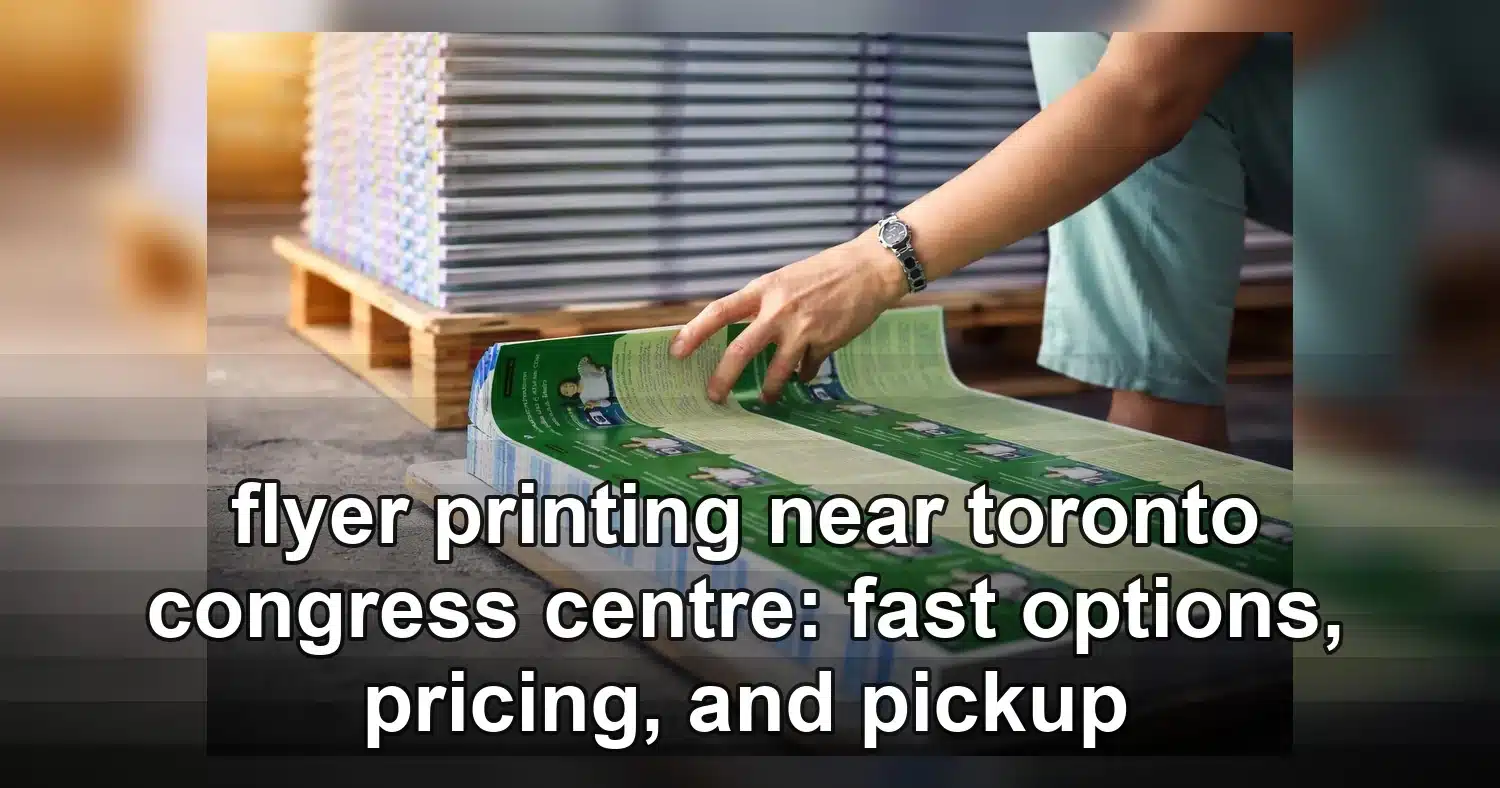
If you need flyer printing near Toronto Congress Centre, the best results usually come from a local print partner that can move fast, understand event timing, and help you choose a flyer that is easy to read in a busy hall. For exhibitors, conference marketers, and nearby businesses, the right flyer is not only quick to produce. It is sized for fast scanning, printed on stock that matches the job, and ready before the rush starts at the venue.
Last updated: April 2026
Ready to print flyer printing?
Send your artwork, quantity, and deadline to Branding Centres. We will help confirm specs, turnaround, and the best production option.
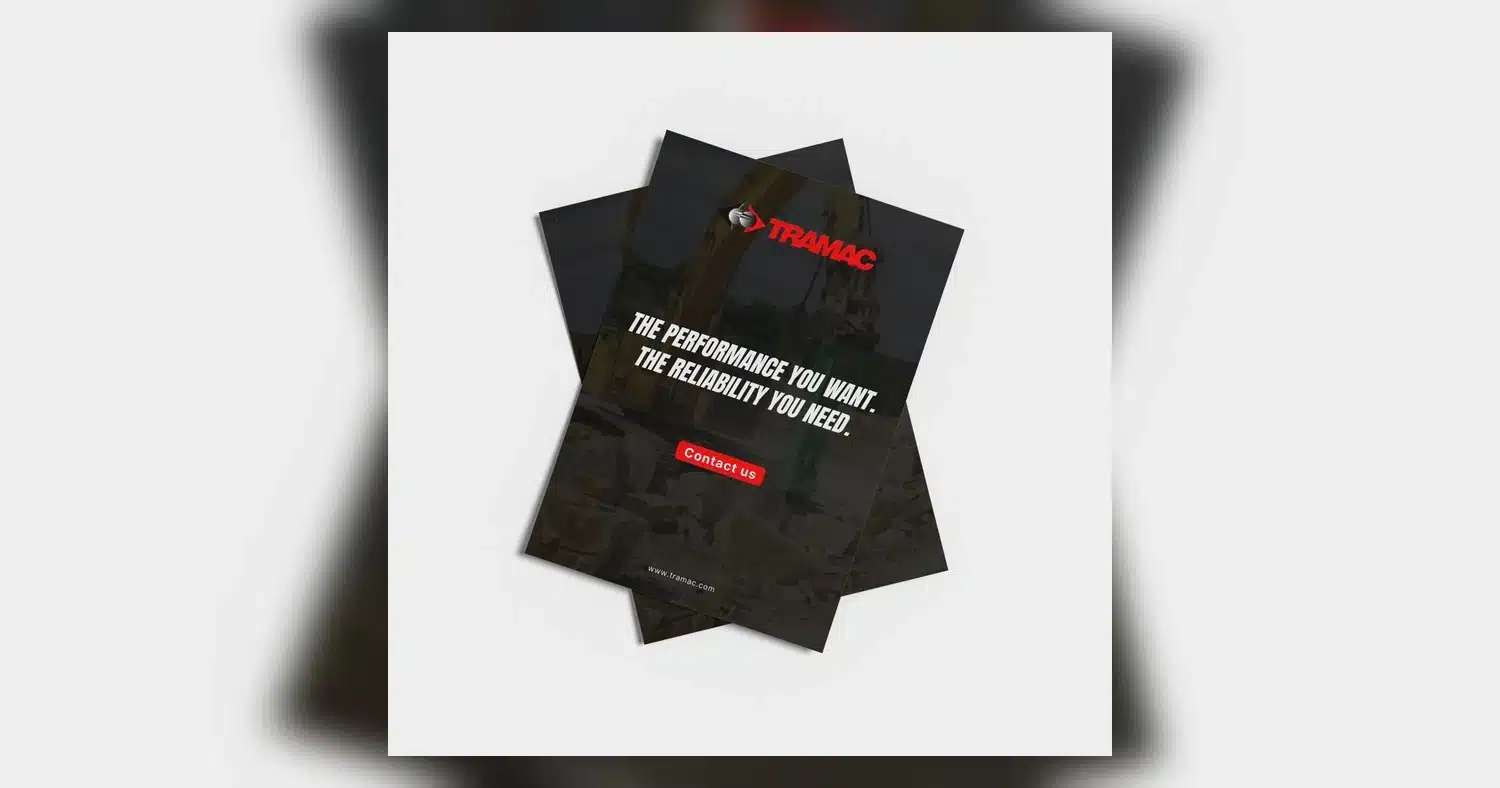
Near the Toronto Congress Centre, deadlines matter as much as design. Some teams need a few hundred flyers for a same-day booth push, while others need larger quantities for hotel drops, registration desks, or multi-day distribution. A print order can only move as quickly as the files, proof, and production queue allow, so planning early gives you more control over cost and turnaround. This guide explains how to choose the right format, budget, paper stock, and delivery plan for event flyers that actually get used.
Why local flyer printing near Toronto Congress Centre works better under event deadlines
A local printer can reduce friction at every step. When your booth team is trying to finalize a promotion, a nearby shop can review files, confirm stock, and turn around a small or mid-size flyer order faster than an out-of-area vendor. That speed matters when the event schedule changes, a speaking slot is added, or a last-minute offer needs to be printed before the show floor opens.
Local service also makes pickup and delivery easier. Instead of trying to coordinate shipping from a distant warehouse, you can often arrange a direct handoff close to the venue, hotel, or office. That means fewer handoff points, fewer delays, and less risk that your handouts arrive after the first wave of traffic has already passed by your booth.
Start with the job of the flyer
Before placing an order, decide what the flyer is supposed to do. A flyer for trade show traffic should not try to act like a brochure, a sales sheet, and a postcard all at once. One clear message works better. If the goal is to generate booth visits, lead with the offer. If the goal is to capture leads, make the next step obvious. If the goal is to support a product launch, keep the benefits simple and specific.
Good event flyers answer one question quickly: why should this person care right now? When the answer is obvious, the flyer is more likely to be picked up, read, and kept long enough to matter.
Match the flyer to the audience
At the Toronto Congress Centre, your audience may include buyers, event planners, technical evaluators, distributors, or local professionals moving between sessions. That mix means the flyer should be easy to skim in a few seconds. Use a strong headline, a short subhead, and one call to action that fits the moment. If the flyer is meant for nearby businesses after the event, include practical details such as hours, address cues, or a booking window so the reader can act quickly.
Plan distribution before you print
The way you hand out flyers affects the ideal size and finish. Booth staff who are passing materials to walk-up traffic need something that stacks neatly and is easy to carry. Inserts for bags, folders, or welcome kits may need a more polished look. Flyers that people may write on, stamp, or bring to a meeting usually perform better on an uncoated or matte stock. Flyers that depend on imagery and color often look better on a coated stock.
A practical pre-show checklist can keep the order on track:
- Confirm the exact event name, dates, and booth number.
- Choose one main offer or one clear action you want people to remember.
- Prepare print-ready artwork with bleed, safe margins, and correct contact details.
- Estimate booth traffic so you do not underorder or overorder.
- Decide whether the flyers will be handed out, stacked, inserted, or mailed after the event.
Which flyer size, stock, and finish work best for booth traffic?
The best flyer setup for booth traffic is usually a standard size on sturdy paper with a finish that matches how people will handle it. Smaller sizes are easier to hand out in volume, while heavier paper and premium finishes work better when you want the piece to feel more durable and worth keeping.
| Option | Best use | Strengths | Trade-offs | Recommended for |
|---|---|---|---|---|
| 4 x 6 in | Simple offers and quick reminders | Compact, easy to hand out, cost-effective | Limited space for copy | High-volume giveaways and coupon-style promotions |
| 5.5 x 8.5 in | General booth handouts | Easy to carry, quick to skim, balanced layout space | Less room than a full letter sheet | Most trade show and conference campaigns |
| 8.5 x 11 in | Detailed offers, schedules, and service summaries | Room for more copy, images, and QR codes | Can feel bulky in large quantities | Exhibitors with complex products or multiple messages |
| 100 lb gloss text | Fast-moving event handouts | Bright color, crisp images, good value in volume | Can show fingerprints if handled a lot | Booths that need visual impact at scale |
| 14 pt cover | Premium leave-behinds | Thicker feel, stronger presence, more durable | Less flexible for folding or stuffing into packs | Executive audiences, demos, and premium branding |
| Uncoated or linen uncoated | Write-on handouts and follow-up pieces | Easy to annotate, softer tactile feel | Less sheen and less photo pop | Meeting notes, sign-ups, and consultative selling |
For many conference teams, the most balanced choice is a 5.5 x 8.5 in or 8.5 x 11 in flyer on 100 lb gloss text or 14 pt cover. If the handout is likely to be written on, a matte or uncoated stock is usually more useful than a glossy one. If your brand wants a tactile, boutique look, a linen uncoated stock can add texture without making the flyer feel overly formal.
Finish changes how the flyer feels at the booth. Gloss and high-gloss finishes help product images stand out and can make a simple promotion look brighter under convention lighting. Uncoated finishes feel softer and are easier to write on. If the flyer is mostly image-driven, a high-gloss finish can create a stronger first impression. If it is meant to support conversations and note-taking, a more natural finish may be the better fit.
Turnaround timing and when to order
The safest rule is to order as soon as the artwork is final. Flyer printing near Toronto Congress Centre often depends on proof approval, file readiness, and the printer’s production schedule. Even a small issue, such as a missing bleed, a low-resolution image, or a typo in the booth number, can delay a rush job and push pickup to a later window.
What must be ready before production begins
Print files should be complete before you request rush service. That means final copy, correct dimensions, bleed, safe margins, high-resolution images, and embedded or outlined fonts. If the flyer includes event-specific details, such as a conference discount or booth location, make sure those details are final before the first proof is sent. Fast service works best when no layout revisions are needed after proofing.
A typical rush order moves through these steps:
- Submit print-ready files.
- Review the digital proof immediately.
- Approve the proof without layout changes.
- Enter production if stock and capacity are available.
- Arrange pickup or courier delivery to the venue, hotel, or office.
Same-day, next-day, and pre-show pickup
Same-day printing is best for simple flyers with straightforward finishing and a manageable quantity. Next-day service gives more room for review, which is helpful if the stock is heavier or the pickup must fit around travel plans. Pre-show pickup is often the safest choice when the event date is fixed and you want a buffer in case traffic, loading access, or reception hours slow things down.
When time is tight, the best strategy is usually to keep the design simple and the quantity realistic. A clean flyer on a standard stock can move through production faster than a piece with specialty finishes, custom folds, or extra handling steps.
Delivery timing near the venue
If you are having the order delivered, confirm the exact handoff location, the receiving hours, and the person who will accept it. That matters when multiple vendors are arriving on the same day or when a hotel concierge, event coordinator, or office manager is handling the order. If pickup is more practical, choose a window that gives you enough time to check the cartons before heading to the venue.
What affects flyer pricing in Toronto
The biggest pricing drivers for flyer printing near Toronto Congress Centre are quantity, paper stock, color coverage, finishing, and turnaround time. For larger event orders, the price per piece usually drops as volume rises, but upgrades in paper or finishing can quickly offset those savings. The most cost-effective flyer is not always the cheapest sheet on paper. It is the one that does the job with the least waste.
Quantity and run size
Short runs usually cost more per flyer because the setup cost is spread across fewer pieces. If your team expects traffic over several days, it is often cheaper to print one larger batch than to place multiple small orders. Estimate daily handout volume, expected walk-up traffic, and whether the same piece will also be used for follow-up meetings or hotel distribution.
Paper stock and ink coverage
Heavy image coverage, full-bleed layouts, and photo-heavy designs can cost more than clean text-and-logo layouts because they use more ink and require tighter press control. Paper also affects the budget. Standard coated stocks are usually the most economical, while uncoated and specialty textured papers can raise the price if they are being used to create a premium feel. The right choice depends on whether the flyer needs to impress, inform, or simply move quickly through the booth.
Finishing and rush fees
Gloss coating, soft-touch coating, rounded corners, folding, and custom trimming all add cost. Rush production may also add a premium, especially if the order needs to be completed the same day or delivered within a narrow window. If your flyer is meant to support a busy conference schedule, budget for the possibility that speed will cost more than standard turnaround.
A simple budget structure can help keep the project predictable:
- Base print cost for the planned quantity
- Stock upgrade, if any
- Coating or finishing upgrade
- Rush production surcharge
- Pickup or delivery cost
For large orders, it is smart to ask for two quotes, one for the ideal spec and one for a value version. That makes it easier to decide whether a premium finish is worth the extra spend for your event.
Design choices that improve response rates
The best flyers make the offer clear in a few seconds. At a conference, people are walking, scanning badges, listening to speakers, and trying to keep their hands free. Your flyer should work in that environment. It should be easy to read at a glance, easy to understand without explanation, and easy to act on later.
Use a headline that states the payoff
Lead with the benefit, not the company name. Examples include, Book a demo in 10 minutes, Get your free sample kit, or Save 20 percent on first orders. The subhead should add context, such as the product category, booth number, or event-only offer. A strong headline helps the flyer earn attention before the reader decides whether to keep it.
Make the offer specific and time-bound
Trade show audiences respond faster when the offer has a deadline or a conference tie-in. Booth-only discounts, scan-to-win promotions, consultation slots, and show-day bundles are all easier to understand than a vague brand message. If the flyer is for follow-up, make the next step obvious, such as booking a meeting, requesting pricing, or visiting a landing page with the same offer.
Use QR codes carefully
QR codes work best when they send people to a mobile-friendly page that matches the flyer. Put the code where it is visible without competing with the core message. Add a short instruction, such as Scan for pricing or Book your consult, so people know what happens after they scan. The flyer should still make sense if someone never uses the code.
Keep contact details simple
One phone number, one web address, and one email are usually enough. For local exhibitors, booth number, event name, and a specific meeting point can be more useful than a long block of contact information. The goal is not to list everything you know. The goal is to make the next step easy.
Clutter hurts response rates. Use one strong image, one offer, and one call to action. Leave enough white space so the flyer reads clearly in a hallway, at registration, or while someone is moving between sessions. That is especially important when your handout is competing with bags, badges, schedules, and other event material.
How to check print quality before you approve the order
The fastest way to judge quality is to review a proof and, when possible, compare it to a sample on the same paper stock and finish. For brand-sensitive campaigns, you want to verify resolution, bleed, trim accuracy, color consistency, and paper feel before the full run begins. Small mistakes are easier to fix before production than after a box of flyers has already been printed.
Check resolution and sharpness
Photos and logos should look crisp at final size, not just on a computer screen. Low-resolution artwork can seem acceptable on a monitor and still print soft or pixelated. Text should stay sharp, and any image intended to carry the brand should be sized correctly for the final flyer dimensions.
Inspect bleed and trim
If the design goes to the edge, it needs bleed so the final trim does not leave thin white slivers. In the proof, check that important copy, logos, and QR codes stay inside the safe area. This is especially important on narrow-margin layouts and full-bleed designs where the trimmed edge is close to the content.
Compare color and finish
Brand colors can shift from screen to print, especially with dark blues, reds, skin tones, and neutral backgrounds. If the flyer depends on exact color matching, ask how the proof will be produced and whether a printed sample is available before the full order is approved. Also check that the coating or stock finish supports the look you want, whether that is bright and glossy or soft and tactile.
Use a quick proof checklist
- Names, titles, dates, and booth numbers are correct
- Images are sharp at final size
- Bleed extends beyond the trim area
- Safe margins protect key content
- Colors match brand expectations
- Paper and finish suit the campaign
When flyers are better than postcards or brochures
Flyers are the best choice when you need a fast, affordable piece that people can read quickly and take without slowing booth traffic. For event campaigns near Toronto Congress Centre, that usually means one clear offer, one call to action, and a format that is easy to restock throughout the day.
Choose flyers when the message is short and the timeline is tight. They work well for booth invitations, event specials, product launches, appointment booking, and QR-driven offers. They are also easier to distribute in volume than folded pieces or multi-page booklets. If your team is handing out materials to a large number of attendees, a single-sheet format is often the most practical option.
- Flyers: best for quick offers, QR codes, and high-volume handouts.
- Postcards: best for compact reminders and a more premium feel.
- Brochures: best for longer explanations and follow-up sales material.
- Other handouts: best when the piece needs to stay in a bag, binder, or registration kit.
If you need to explain multiple services, product tiers, or longer feature lists, a brochure may make more sense. If you only need to get attention and drive a simple response, a flyer is usually the faster and more flexible option.
Local ordering checklist for a Toronto Congress Centre campaign
Before approving a print job, lock down the files, quantities, timing, and pickup details. A careful checklist prevents reprints, missed deadlines, and awkward booth-side surprises when the order arrives late or incomplete.
File and artwork checks
- Confirm the final trim size, bleed, and safe area.
- Export a print-ready PDF with images at 300 dpi.
- Embed or outline fonts so nothing shifts in output.
- Keep QR codes large enough to scan from arm’s length.
- Check spelling, dates, booth number, hall number, and promo code.
Quantity and packing details
Order based on real distribution needs, not just a round number. If the booth is likely to be busy, ask for an overage of 10 to 15 percent so you do not run out before the final session. If the flyers need to be separated by day, by person, or by booth station, ask whether they can be packed that way before pickup or delivery.
Pickup and delivery questions to ask
- Where exactly should the order be picked up or delivered?
- What is the latest approved time for production release?
- Will the order be ready in cartons, bundles, or loose stacks?
- Can the printer notify us when the job is complete?
- Is there a backup plan if the first proof needs corrections?
Before you approve your flyer order, confirm five things, final quantity, finished size, paper stock, proof sign-off, and the exact pickup or delivery window for your event. If those details are clear, flyer printing near Toronto Congress Centre becomes much easier to manage, and your team can focus on the booth instead of the print run.
Related Products and Services
If you are planning a similar project, these related options may help.
- Enviro Uncoated Flyers
- Linen Uncoated Flyers
- Uv (High Gloss
- Flyers
Helpful External Resources
These sources provide supporting background and additional context.
How fast can I get flyer printing near Toronto Congress Centre?
Rush turnaround is often possible the same day or next business day if your artwork is print-ready and the quantity is reasonable. The fastest jobs are usually simple flyers with no complex finishing, plus an approved proof and a clear pickup or delivery plan.
What flyer size works best for trade show handouts?
For most conference and booth uses, 5.5 x 8.5 in is a strong all-around choice because it is easy to hand out and easy to keep. If you need more room for detail, 8.5 x 11 in works well, while 4 x 6 in is better for short offers and high-volume giveaways.
Which paper stock is best for event flyers?
Gloss or coated stocks work well for flyers with photos, product images, and bright branding. Uncoated or matte stocks are better when people need to write on the flyer, add notes, or carry it through a meeting after the show.
Can I get flyers delivered to a hotel or venue near the Congress Centre?
Yes, many local print orders can be delivered to a hotel, office, or event receiving area near the venue. The key is to confirm the exact drop-off location, receiving hours, and the person who will accept the delivery before the job goes into production.
What should I send to the printer to avoid delays?
Send a print-ready PDF with the final size, bleed, safe margins, and high-resolution images. Also double-check the booth number, event name, contact details, and promo code before you approve the proof, because small errors are the most common cause of delays.
Get a Free Quote Today
Contact us at +1-(416) 288-8661 or Email us at info@Brandingcentres.com and let's get started.