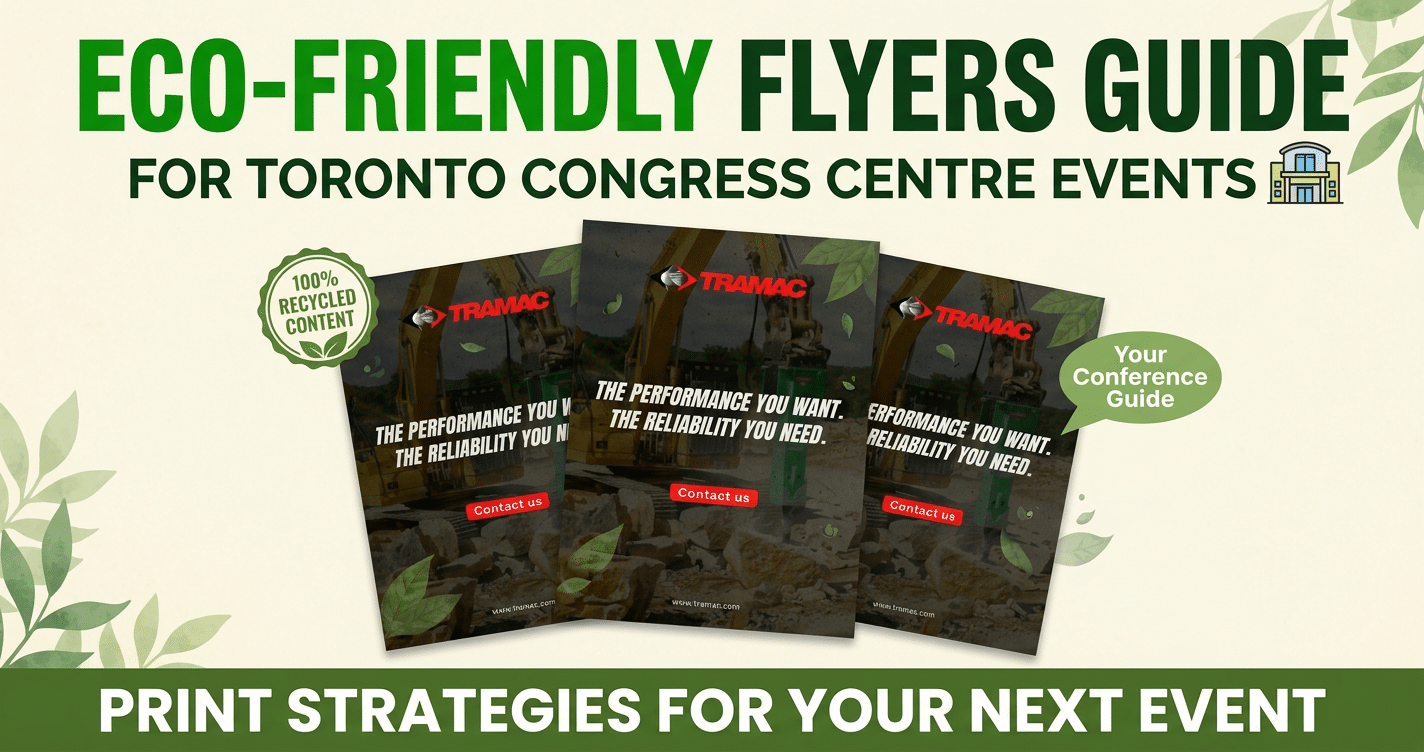
If you need eco-friendly flyers toronto congress centre exhibitors can hand out quickly and people will actually keep, the strongest choice is usually a recycled or uncoated flyer with a clear message, a visible QR code, and delivery timed to arrive before booth setup. At a busy venue like the Toronto Congress Centre, a flyer has to do three jobs at once: communicate fast, support your sustainability message, and survive the trip from aisle to pocket to follow-up.
Last updated: April 2026
Ready to print flyer printing?
Send your artwork, quantity, and deadline to Branding Centres. We will help confirm specs, turnaround, and the best production option.
This guide focuses on the decisions that matter most for conference printing. You will see where flyers work best on the show floor, how Enviro Uncoated and Linen Uncoated stocks compare, which specs improve readability and scan rates, and which pricing and turnaround factors can affect your order. If you want a clean starting point, review Enviro Uncoated Flyers as a practical baseline for a low-gloss, environmentally conscious presentation. For a broader view of local sustainability options, Toronto printers that focus on recycled stock and lower-impact production are discussed in this overview of eco-friendly printing companies in Toronto.
Eco-Friendly Flyers Toronto Congress Centre: where they work best on a busy conference floor
The best use for eco-friendly flyers Toronto Congress Centre exhibitors can make is to support a live conversation, not to replace it. In a crowded hall, the flyer needs to be immediately useful. It should help a visitor decide whether to stop, scan, book, or remember you later.
Booth handouts that explain your offer fast
Booth handouts are the most common use case. A flyer should summarize the offer, the benefit, and the next step in a format that can be understood in seconds. That matters at a venue where attendees are moving between sessions, meetings, and sponsor areas with limited time.
For this purpose, a simple layout often performs better than a visually dense one. Use a short headline, three quick supporting points, and one clear action. If your team is talking with a high volume of visitors, the flyer should answer the question, why should I remember this company after I leave the booth?
Session promotion and room-side traffic
Flyers are also effective when you are promoting a session, demo, workshop, or sponsored talk. A small stack near the room entrance or on a staffed table can reinforce timing, speaker names, and the location of your booth afterward. That makes it easier to convert session interest into booth traffic once the presentation ends.
This is one place where a clear QR code helps a lot. If the flyer links to the session schedule, speaker bio, or follow-up offer, attendees can scan it while walking and save the details for later. The goal is to reduce friction, not add more reading.
Lead capture inserts and follow-up packs
Flyers also work well as inserts inside a bag, welcome kit, sample pack, or quote request folder. For higher-value leads, a flyer can be the piece that explains your next step after the first conversation. That is especially useful when the person at your booth has shown interest but is not ready to buy on the spot.
If your booth includes a take-home product, such as an eco-friendly straw tumbler, the flyer can carry the sales message while the product keeps your brand visible after the event. This combination works because one item travels home for long-term recall while the other drives action immediately.
Leave-behinds for longer sales cycles
When the sales cycle is longer, the flyer becomes a leave-behind that does more than introduce the brand. It should explain what the buyer should do next, where to go online, and why the offer matters now. For this use, the paper choice matters more because the flyer is being judged as part of your brand experience.
If you want a cleaner, more natural surface that still looks polished, Enviro Uncoated Flyers are often the best fit. According to local print guidance shared by Toronto eco-print specialists, recycled and environmentally conscious materials can support brand credibility while still being practical for events. That is the real value at Toronto Congress Centre: the flyer should feel responsible, easy to read, and easy to keep.
Enviro Uncoated Flyers vs. Linen Uncoated Flyers for conference exhibitors
Choose Enviro Uncoated Flyers when your priority is clarity, a natural finish, and a stronger eco presentation. Choose Linen Uncoated Flyers when you want a more tactile surface and a slightly more premium feel for selected handouts or VIP follow-up. Both are suitable for conferences, but they send different signals to the reader.
Enviro Uncoated usually feels understated, modern, and practical. Linen Uncoated has a subtle texture that can make the piece feel more elevated in a one-to-one conversation. If you are comparing the two, think less about which stock is better in general and more about which stock matches the type of lead you are handing it to.
| Factor | Enviro Uncoated Flyers | Linen Uncoated Flyers | Best fit at a conference |
|---|---|---|---|
| Feel | Smooth, natural, understated | Textured, premium, tactile | Enviro for high-volume handouts, Linen for selected prospects |
| Print clarity | Very good for text, icons, and QR-heavy layouts | Good, but the texture can soften fine detail | Enviro is better for dense information |
| Writeability | Excellent for notes, names, and follow-up reminders | Good, with a more textured writing surface | Both work, but Enviro is easier for quick annotations |
| Premium perception | Eco-conscious and professional | More elevated and gift-like | Linen suits executive meetings and special invitations |
| Best use case | Booth handouts, session promos, mass distribution | Sales leave-behinds, appointment follow-up, VIP packs | Match the stock to lead quality and handoff style |
If your flyer needs to communicate quickly, support a scan, and work in large quantities, Enviro Uncoated usually makes the most sense. If the flyer is part of a polished package and you want the paper to help carry the brand story, Linen Uncoated is the stronger choice. For additional format and stock options, review the full flyers product range.
Print specs that make flyers look sharp and scan well on the show floor
The best flyer specs are the ones that stay readable in a moving crowd and still feel polished when someone scans the QR code later. For Toronto Congress Centre events, that usually means a standard size, clear margins, strong contrast, and a layout that makes one action obvious.
Practical setup choices for conference flyers
- Flyer size: 8.5 x 11 in is the safest choice for information-heavy content. 5.5 x 8.5 in works well for compact handouts and leave-behinds.
- Bleed: Use 0.125 in bleed on all sides so color blocks, photos, and background elements trim cleanly.
- Safe area: Keep important text and QR codes at least 0.25 in inside the trim line.
- Double-sided layout: Put the headline, benefit statement, and QR code on the front. Use the back for specs, service categories, short testimonials, or a concise agenda.
QR placement matters more than many exhibitors expect. Put the code where it can be found quickly, usually near the bottom right or centered in a clear open area. Avoid placing it on top of busy photography, dark solids, or textured patterns that make scanning slower. Keep enough white space around the code so a phone camera can detect it without trouble.
For production files, use print-ready PDFs with embedded fonts, CMYK color, and images at 300 dpi. If the flyer includes a schedule, a special offer, or speaker details, keep the hierarchy simple: headline, subhead, three bullets, and a clear call to action. That structure is easier to read from arm’s length and easier to remember after the event.
Long paragraphs usually fail on the conference floor. A flyer should not try to explain everything. It should help the reader decide what to do next. That means using concise body copy, strong contrast, and a single primary CTA. If the flyer supports a session or demo, one bold line should answer the first question a visitor has, which is why they should stop or scan now.
If you are printing on Enviro Uncoated Flyers, the matte surface is especially helpful for readability and for handwritten notes. Staff can add booth numbers, names, or follow-up reminders during a busy event, which makes the piece more useful after the first conversation.
Pricing factors to know before ordering sustainable event printing
The biggest cost drivers for eco-friendly flyers Toronto Congress Centre exhibitors order are quantity, stock choice, ink coverage, finishing, and timing. If you plan those variables early, you can budget more accurately and avoid avoidable rush fees or production compromises.
Quantity and version count
Unit cost usually drops as quantity rises, but total spend can climb quickly if you order multiple versions. If you need one flyer for VIP leads, another for general attendees, and a French or bilingual version, each version adds proofing and setup work. The fewer versions you need, the easier it is to keep the budget under control.
Paper stock and ink coverage
Heavier recycled stocks, specialty uncoated sheets, and premium textures usually cost more than standard text-weight paper. Full-bleed color can also increase cost because it uses more ink and requires tighter press control. For a lower-cost sustainable event printing plan, a clean one- or two-color design on a recyclable stock is often the most efficient approach.
Finishing and logistics
Simple trim sizes are usually the most economical. Folds, die-cuts, coatings, and rounded corners add labour and can reduce recyclability. Delivery to the Toronto Congress Centre can also affect pricing, especially if you need timed receiving, liftgate service, or shipment to a specific booth location.
Rush timing and variable data
Rush orders often cost more because they compress proofing, printing, and delivery into a shorter window. Variable data, unique QR codes, personalized offers, and multiple sponsor lockups can also increase setup time, even if the change only affects a few lines of copy.
For exhibitors comparing material options, many buyers start with Enviro Uncoated Flyers or Linen Uncoated Flyers because both balance sustainability, readability, and cost. If you need a broader comparison, review the full flyer products range. A useful benchmark from eco-friendly flyer printing resources is that stock selection, ink use, and waste reduction usually matter more than decorative extras when sustainability is part of the brief.
Turnaround planning for Toronto Congress Centre conferences
For Toronto Congress Centre conferences, the safest plan is to approve artwork early, allow time for production, and build in a delivery buffer before setup. Standard jobs are manageable when you work backward from show day. Rush jobs need simpler specs and a faster approval cycle.
Recommended ordering timeline
- 7 to 10 business days before needed delivery: finalize quantity, paper stock, and versioning.
- 5 to 7 business days before delivery: approve the proof and lock the files.
- 2 to 4 business days before show day: print, trim, and package the order.
- 1 to 2 business days before booth setup: receive and check the shipment at the venue or a nearby staging point.
If the flyer includes personalized codes, multiple languages, or several sponsor logos, add more proofing time. Small edits can still slow production if they affect layout, QR placement, or variable data positions.
Standard versus rush planning
Standard turnaround is best when your team wants a calmer approval cycle and a backup window for reprints. Rush service can work, but it is smarter to simplify finishing, reduce the number of versions, and choose a stock that does not require complex handling. That lowers the risk of mistakes and keeps the job more manageable.
Shipping windows matter just as much as print speed. If your flyers arrive too early, they may be held or misplaced. If they arrive too late, your booth staff may be setting up without handouts on the first morning. For event printing, timing is part of quality control.
Practical show-floor backup tips
- Ship a small backup box separately from the main pallet.
- Keep several hundred flyers in the booth, not only at registration.
- Send digital copies to the team in case a reprint is needed onsite.
- Use a simple flat pack so cartons open quickly during setup.
Many exhibitors pair flyer orders with small takeaways, such as an eco-friendly straw tumbler, to extend the sustainability message across more than one touchpoint. The key is to treat shipping, receiving, and backup stock as part of the plan, not as an afterthought.
Common flyer mistakes that reduce pickup rates and weaken sustainability messaging
The most common flyer mistakes are overcrowded copy, weak calls to action, poor paper choice, and vague green claims. Those issues hurt both pickup rates and brand credibility, especially at a fast-paced conference where attendees decide in seconds what to keep.
Too much information on one page
When a flyer tries to explain every feature, product, certification, and offer, people stop reading. At a Toronto trade show, pickup is driven by instant clarity. Use one main message, one primary benefit, and one action you want the reader to take. If the reader has to work to understand the flyer, the flyer is already losing.
Weak or missing call to action
A flyer without a clear next step often ends up in the recycling bin. Phrases like Visit booth 214, scan for the demo schedule, or book a meeting today give attendees a reason to act. If the CTA is buried in small print, it loses impact.
Poor stock choice for the message
If the flyer claims sustainability but feels flimsy, overly glossy, or heavily processed, the message does not land. Smart buyers of eco-friendly flyers Toronto Congress Centre events tend to choose tactile, recyclable stocks that support the brand story rather than fighting it. If you want a slightly more elevated uncoated feel, Linen Uncoated Flyers can work well for polished event handouts.
Late ordering and rushed production
Late orders often force compromises such as higher costs, fewer proof rounds, simpler finishing, or delivery stress. That can lead to mistakes in sponsor names, booth numbers, QR codes, or event dates. A rushed print job is also harder to align with sustainable event printing goals because expedites can increase waste and freight inefficiency.
Generic green claims
Words like eco-friendly or green do not build trust by themselves. Attendees respond better to specific details such as recycled content, uncoated stock, lower-ink design, or local production choices. The more concrete the claim, the more believable it feels.
It also helps to choose the right format for the amount of information you need to share. A cleaner layout using Enviro Uncoated Flyers can make QR codes, event details, and short benefit statements easier to scan while still reinforcing the sustainability message. For broader comparisons of eco printing methods, eco-friendly flyer and poster references often point to the same core principle: simple layouts and responsible stock choices improve both usability and perception.
How to choose a printer for conference-ready eco-friendly flyers
The best print partner for eco-friendly flyers toronto congress centre events should do more than quote a price. They should help you choose the right stock, catch file issues before press, and deliver on time to a busy venue without weakening your sustainability message.
Use this buyer checklist before you order
- Ask for printed samples, not only PDFs. Request uncoated samples in common flyer weights such as 100 lb text and 80 lb cover so you can compare texture, color, and QR readability under conference hall lighting.
- Get paper guidance based on use. If you want the strongest recycled look and feel, ask whether Enviro Uncoated Flyers fit your booth handout best. If you want a more elevated tactile finish for sponsor meetings or premium leave-behinds, compare Linen Uncoated Flyers.
- Confirm proofing support. A reliable printer should include a file check, a digital proof, and clear signoff for bleeds, safe area, color expectations on uncoated paper, and final trim size.
- Verify local delivery capability. Ask if they can deliver directly to the Toronto Congress Centre, your nearby hotel, or an advance receiving location, and whether they can time the drop for exhibitor move-in.
- Check the real production timing. The important question is when artwork must be fully approved, not just the advertised turnaround.
How to verify sustainable claims
Do not rely on broad phrases like green printing. Ask for the exact paper name, recycled content percentage, FSC availability, ink type, and whether the printer can keep the approved stock consistent from sample to final run. Many eco-friendly flyer printing options highlight recycled stocks and lower-impact production choices, which gives you a useful benchmark when comparing Toronto suppliers.
Choose the right next step
If your priority is a clear sustainability story, start with Enviro Uncoated stock. If brand feel matters more, consider linen. If you are still comparing sizes, quantities, and paper options, review the full range of flyer products and build your conference order around one supplier that can handle your flyers and related event materials on the same deadline.
Before you order, lock in four details first: flyer quantity, paper stock, final size, and your delivery window to the Toronto Congress Centre. Then confirm bleed, QR code placement, and whether you need multiple versions for different sessions or audiences. If you want a simple next step, compare your options against the available flyer printing products and request guidance on the best stock and turnaround for your event goals. A quick review now can help you avoid rush fees, reduce waste, and arrive at show day with conference-ready flyers that match both your brand and your sustainability message.
Related Products and Services
If you are planning a similar project, these related options may help.
Helpful External Resources
These sources provide supporting background and additional context.
Are eco-friendly flyers suitable for Toronto Congress Centre conferences?
Yes. Eco-friendly flyers work well for Toronto Congress Centre conferences, trade shows, and exhibitor handouts because they combine a professional look with a responsible paper choice. They are especially effective for booth handouts, session promos, and take-home leave-behinds when you want a piece attendees can scan and keep.
Which is better for exhibitors, Enviro Uncoated Flyers or Linen Uncoated Flyers?
Enviro Uncoated Flyers are usually the better choice if you want a cleaner recycled look, strong readability, and a practical surface for notes or QR-driven layouts. Linen Uncoated Flyers are better when you want more texture and a slightly more premium feel. The right choice depends on whether your priority is eco presentation, tactile appeal, or a polished leave-behind.
How early should I order sustainable event printing for a conference?
Order as early as possible, ideally 2 to 3 weeks before the event. That leaves time for proofing, revisions, printing, and delivery without rush pressure. If you need custom sizes, multiple versions, or specialty stock, add extra lead time so your flyers arrive before booth setup.
What affects the cost of eco-friendly flyers for a Toronto trade show?
Price depends on quantity, paper stock, size, color coverage, finishing, and turnaround time. Rush orders and special production steps usually cost more, while larger quantities reduce the per-piece price. File readiness also matters because artwork cleanup or proof corrections can add time.
What file format should I use when ordering eco-friendly flyers?
A print-ready PDF is the best choice. Make sure fonts are embedded, images are high resolution, and the file includes bleed and safe margins. Clean files help reduce delays, avoid layout problems, and speed up production for your event deadline.
Get a Free Quote Today
Contact us at +1-(416) 288-8661 or Email us at info@Brandingcentres.com and let's get started.