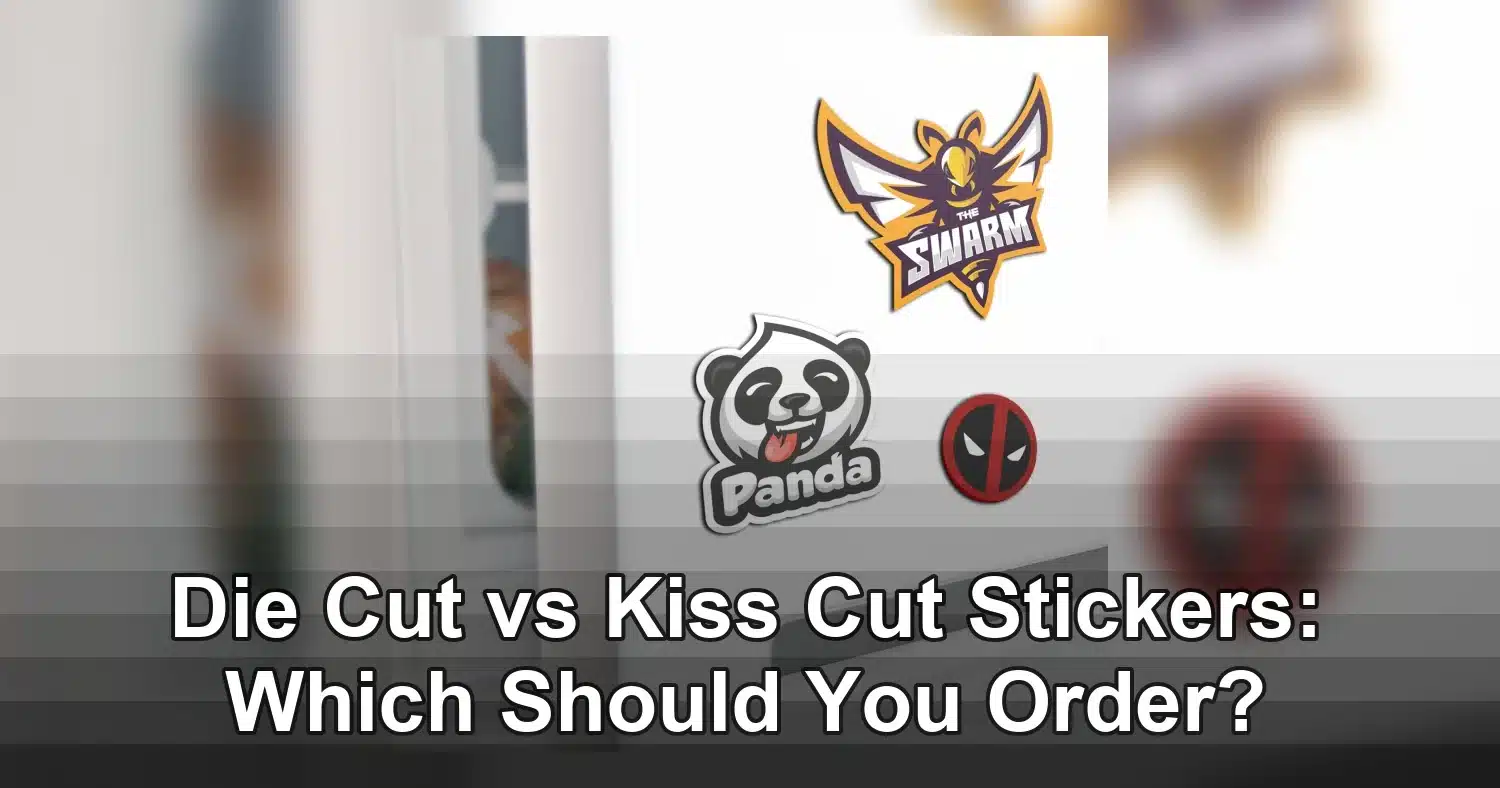
When you compare die cut vs kiss cut stickers, the choice comes down to how the sticker is cut, how it peels, and how you plan to hand it out. Die cut stickers are trimmed all the way through the sticker and backing, so the finished piece follows a custom outline. Kiss cut stickers are cut through the sticker layer only, while the backing stays larger around it.
Last updated: May 2026
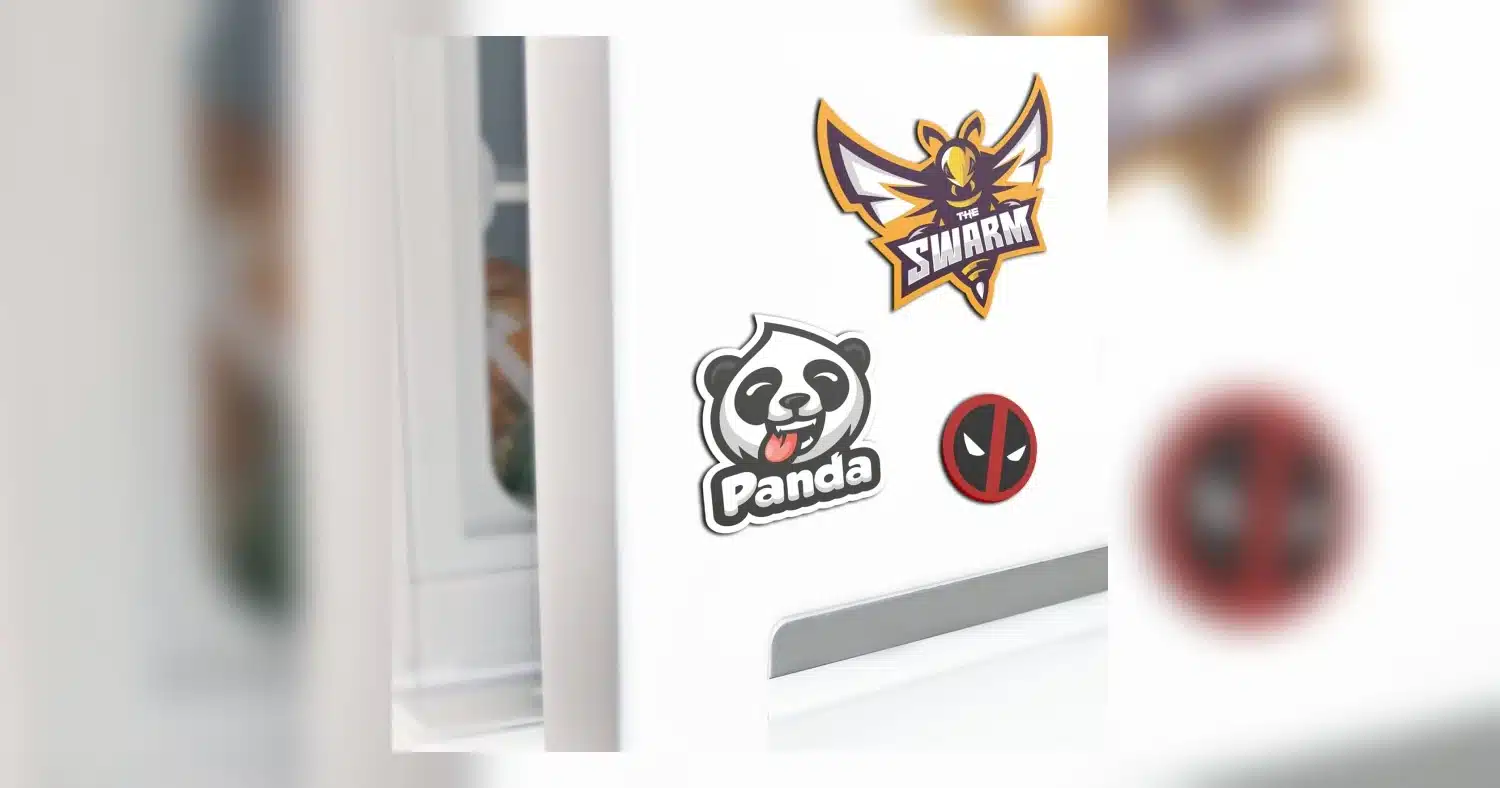
That small production choice changes the whole buying experience. Die cut stickers usually look cleaner and more finished because the final shape matches the design. Kiss cut stickers are easier to peel, hold up better in shipping, and work well for sticker sheets, multiple designs, or faster order packing. For small businesses, artists, and ecommerce brands, the better option usually comes down to how the sticker will actually be used.
Use die cut when you want a sticker to feel like a finished piece on its own. Use kiss cut when convenience matters more. If the sticker is meant to stand alone, die cut often fits better. If it is going into a pack, insert, or event giveaway, kiss cut usually makes more sense.
What is the difference between die cut vs kiss cut stickers?
The main difference is where the blade stops. With die cut stickers, the cut goes through the printed sticker and the liner underneath, so the finished piece follows the exact custom outline. With kiss cut stickers, the blade cuts only through the top sticker material and leaves the liner intact beneath it.
That one production choice changes shape, handling, and presentation. A die cut sticker usually arrives as a single custom-shaped piece with little or no extra border. A kiss cut sticker usually arrives on a larger sheet or larger liner with extra space around the artwork, which makes it easier to lift and peel.
How die cut stickers are built
Die cut stickers work well when the outline is part of the branding. If your logo has a strong silhouette, a mascot shape, or a bold icon, the final sticker can follow that exact contour. The result is a tidy, self-contained sticker that looks ready to hand out the moment it comes off the press.
Because the shape is fully trimmed, die cut stickers tend to feel more polished and premium. They also work well when you want the sticker itself to be the product, not just a label on backing paper. The tradeoff is that intricate shapes can be a little harder to peel, especially if the design has tiny corners, thin points, or detailed inner spaces.
How kiss cut stickers are built
Kiss cut stickers keep the backing larger, which gives the user more room to grip the edge and remove the design cleanly. The sticker can still be custom shaped, but the liner acts like a protective frame around it. That extra border helps when the sticker needs to survive mailing, stacking, or frequent handling.
Kiss cut is especially helpful for sticker sheets. You can place several designs on one sheet, combine a logo with a QR code or seasonal art, and keep everything organized in one piece. For brands that pack orders in volume, that convenience can save time and reduce waste.
How the peel experience changes
Peelability is one of the biggest reasons buyers choose kiss cut over die cut. With more liner space around the art, it is easier to grab the sticker without bending the design. This matters for customers at a market booth, staff packing inserts in bulk, or anyone who wants a smoother first use.
Die cut stickers can still peel well, but they are less forgiving when the shape is delicate. If your outline has narrow legs, sharp points, or very small text, a kiss cut setup may be the safer option. The better choice is the one that keeps the sticker clean and usable, not just visually attractive.
Die cut vs kiss cut stickers: side-by-side comparison
If you want a fast buying shortcut, compare the two formats by how they look, feel, and ship. The best option usually becomes clear once you match the cut style to the job.
| Feature | Die cut stickers | Kiss cut stickers | Best when you need |
|---|---|---|---|
| Cut style | Cut through the sticker and backing into one finished shape. | Cut through the top sticker layer only, leaving the liner intact. | A full custom silhouette: die cut. Extra liner protection: kiss cut. |
| Presentation | Looks crisp, premium, and ready for direct handouts. | Looks practical and organized, especially on sheets. | A collectible feel: die cut. A utility-focused format: kiss cut. |
| Peeling | Can be more difficult on intricate shapes. | Usually easier because there is more liner to grip. | Fast customer use and quick packing: kiss cut. |
| Shipping | More exposed edges if packed loosely. | Better liner support during transit and storage. | Mailers, inserts, and bulk sets: kiss cut. |
| Best use | Logo giveaways, merch tables, laptop decals, retail handouts. | Sticker sheets, bundled promotions, event packs, order inserts. | Single hero sticker: die cut. Multiple stickers or easy peel: kiss cut. |
| Brand effect | Strong for custom branding and a polished finish. | Strong for convenience, versatility, and volume use. | Premium impression: die cut. Operational efficiency: kiss cut. |
A simple rule works for most buyers: if the sticker is the main attraction, choose die cut. If the sticker is part of a larger packaging or fulfillment workflow, choose kiss cut. That distinction saves time and helps you avoid paying for a format that does not match the real job.
When die cut stickers make the most sense
Die cut stickers are the stronger choice when you want the shape itself to do branding work. The custom outline becomes part of the visual identity, which can make the sticker feel more memorable and more premium. This is especially useful when the artwork already has a recognizable silhouette.
Best use cases for die cut
Die cut works especially well for single designs that people will keep, display, or collect. Think branded mascots, icons, monograms, simplified logos, or seasonal artwork that does not need extra support around it. The finished outline gives the sticker a neat, intentional look that is easy to recognize.
- Retail handouts at the counter
- Trade show giveaways
- Limited-run merch drops
- Artist and creator stickers
- Laptop decals and water bottle stickers
Die cut also pairs well with packaging that needs a polished finish without a large print budget. A plain mailer box, tissue wrap, or retail bag can look more elevated with a shaped sticker than with a standard square label. If your brand relies on first impressions, that can make the format worth it.
Design details that matter
Custom shape stickers work best when the outline is clean and simple enough to cut accurately. Tiny islands, hairline details, and sharp narrow points can make the sticker harder to peel and more prone to wear. If your logo is highly detailed, consider simplifying the cut path so the final piece is durable and easy to use.
Another practical tip is to give the artwork enough breathing room. Important text should stay away from the cut line, and the outer edge should feel intentional instead of cramped. In many cases, a slightly simplified shape will look better than an overly complex one that tries to do too much.
Where die cut can fall short
Die cut is not always the smartest choice. If you need fast distribution, a lot of variety, or easy peeling for people of all ages, the fully trimmed shape can slow things down. It can also be less protective in transit if the stickers are packed loosely or stacked without enough support.
For that reason, die cut is best when presentation matters more than convenience. If you want the sticker to feel like a polished mini product, it is a great choice. If you need something easy to use at scale, kiss cut may be the better fit.
When kiss cut stickers are the smarter choice
Kiss cut stickers are the more practical option when you want easier peeling, better protection, and more flexibility in layout. The larger liner helps the sticker survive shipping and handling, which is why this format is popular for sheets, inserts, and bulk distribution.
Best use cases for kiss cut
Kiss cut is often the right answer for businesses that ship many orders or hand out multiple designs at once. A sticker sheet can hold a logo, a seasonal graphic, a thank-you message, and even a QR code in one organized format. That is useful when you want one package insert to do several jobs at once.
- Ecommerce thank-you inserts
- Employee welcome kits
- School and nonprofit giveaways
- Event handouts with multiple designs
- Product bundles and promo packs
Kiss cut stickers are also easier to count and pack. Because the liner remains intact, staff can stack them neatly, slip them into envelopes, and keep the order process moving. If you are preparing a large campaign and every minute counts, that convenience is valuable.
Why sticker sheets are useful
Sheets let you combine messages without ordering separate products. A skincare brand might use one sheet for a logo, ingredient icons, and packaging labels. A bakery might use one sheet for a logo, a seasonal illustration, and a social handle. That flexibility reduces clutter and gives customers a more complete branded experience.
Kiss cut also gives you a little more room for error in everyday use. The backing around the sticker helps protect edges from bending, which can matter if the piece is going into a mailer, a tote bag, or a pile of giveaway items. When the sticker is meant to travel, the extra liner often pays off.
Where kiss cut can fall short
The main drawback is that kiss cut stickers do not always have the same dramatic visual impact as a fully shaped die cut piece. If the extra liner is large, the presentation can feel more functional than premium. For a hero sticker that needs to stand alone, that may be a disadvantage.
There is also a balance to strike in layout. If the sticker sheet becomes crowded or the stickers are cut too tightly, peeling can become awkward and the sheet can look messy. Good spacing and sensible sizing are essential if you want the format to feel easy and professional.
What affects price, turnaround, and minimum order size?
Pricing for die cut vs kiss cut stickers usually depends on size, quantity, material, finish, and artwork complexity. The cut style matters, but it is rarely the only factor. A larger sticker uses more material, and a more complex outline usually takes more production time.
Size and shape complexity
Simple shapes are usually quicker and cheaper to produce than detailed outlines. A circle or rectangle is straightforward, while a highly detailed custom contour can require more careful cutting and inspection. If you are comparing several versions of a design, the simplest cut path often gives the best value.
Material and finish
Vinyl, paper, matte, gloss, clear, and weather-resistant materials can all affect the final price. Specialty finishes tend to cost more because they add extra production steps and can require more careful handling. If you want the sticker to feel premium, expect the cost to rise as the finish becomes more specialized.
Quantity and production time
Larger quantities usually lower the unit price because setup costs are spread across more pieces. Smaller orders can still be cost-effective, but the per-piece price is often higher. If you know you will need the same design for a while, ordering extra can sometimes save money in the long run.
Turnaround also depends on file readiness. A clean, print-ready file can move through production faster than a file that needs corrections. If your artwork is missing bleed, has unclear cut lines, or uses low-resolution graphics, you may lose time during proofing.
How to prepare artwork without causing delays
Good file setup is one of the easiest ways to avoid problems. Whether you choose die cut or kiss cut stickers, the artwork should include a clear cut path, proper bleed, and enough safe space around important details. The printer should never have to guess where the sticker should be trimmed.
File setup basics
- Use a high-resolution print file.
- Keep the cut line separate from the artwork.
- Leave bleed beyond the trim line.
- Keep text and key details inside the safe zone.
- Save the file in the format requested by the printer.
Bleed is especially important because it prevents white edges if the cut shifts slightly during production. Safe margins matter too because they protect text, fine lines, and small design elements from being clipped. These details matter even more on custom shapes, where the edge of the sticker is part of the design itself.
Common mistakes to avoid
One common mistake is using a cut shape that is too intricate for the size of the sticker. Another is placing text too close to the edge, which can make the final piece look cramped or uneven. A third mistake is assuming the same artwork will work equally well as both die cut and kiss cut without adjustment.
If you are unsure, it helps to review the intended use before approving the file. A sticker designed for a merch table may not need the same structure as a sticker designed for a shipping insert. Matching the art to the use case makes the final product easier to print and easier to use.
How to choose the right sticker type quickly
If you are still deciding between die cut vs kiss cut stickers, use this simple checklist. The right answer usually becomes clear once you focus on the user experience rather than just the design mockup.
- Choose die cut if the sticker is meant to be a stand-alone branded item.
- Choose kiss cut if easy peeling and safer handling matter more.
- Choose die cut if the outline is a major part of the visual identity.
- Choose kiss cut if you need multiple designs on one sheet.
- Choose kiss cut if the stickers will be packed with other items in mailers.
- Choose die cut if you want a clean, collectible look for giveaways.
A useful rule is to match the format to the moment of use. If someone will take the sticker home as a keepsake, die cut tends to feel more special. If someone needs to peel it quickly from a sheet or insert, kiss cut tends to feel more useful.
For many small businesses, the choice is not about which option is better overall, but which option is better for this campaign. Once you think in those terms, the decision becomes much easier and the final sticker is more likely to do its job well.
In the end, die cut vs kiss cut stickers is a choice between premium presentation and practical handling. Die cut gives you the strongest finished shape. Kiss cut gives you easier peeling and more flexibility. If you match the format to the way the sticker will be used, you will usually get a better result and fewer production headaches.
Which is easier to peel, die cut or kiss cut stickers?
Kiss cut stickers are usually easier to peel because the backing stays intact around the sticker, so there is more liner to grip. Die cut stickers are cut through both layers, which can make them harder to lift if the shape is small or detailed.
Which looks more premium on packaging?
Die cut stickers often look more premium because the finished sticker follows the exact shape of the artwork. That custom outline creates a cleaner, more polished presentation. Kiss cut stickers can still look professional, especially on sheets or inserts.
Are kiss cut stickers better for sticker sheets?
Yes, kiss cut is usually the better choice for sticker sheets. The larger backing makes it easier to combine several designs on one sheet and keeps the pieces organized for packing, shipping, and handouts.
Do die cut and kiss cut stickers cost the same?
Not always. Pricing depends on size, quantity, material, finish, and artwork complexity. Either format can be economical, but more complex shapes, specialty finishes, and smaller runs can increase the price.
What file should I send for die cut vs kiss cut stickers?
Send a high-resolution print file with a separate cut line, enough bleed, and a safe margin around text and important details. The cut path should be clear and accurate so the printer can trim the sticker cleanly without affecting the design.
Get a Free Quote Today
Contact us at +1-(416) 288-8661 or Email us at info@Brandingcentres.com and let's get started.