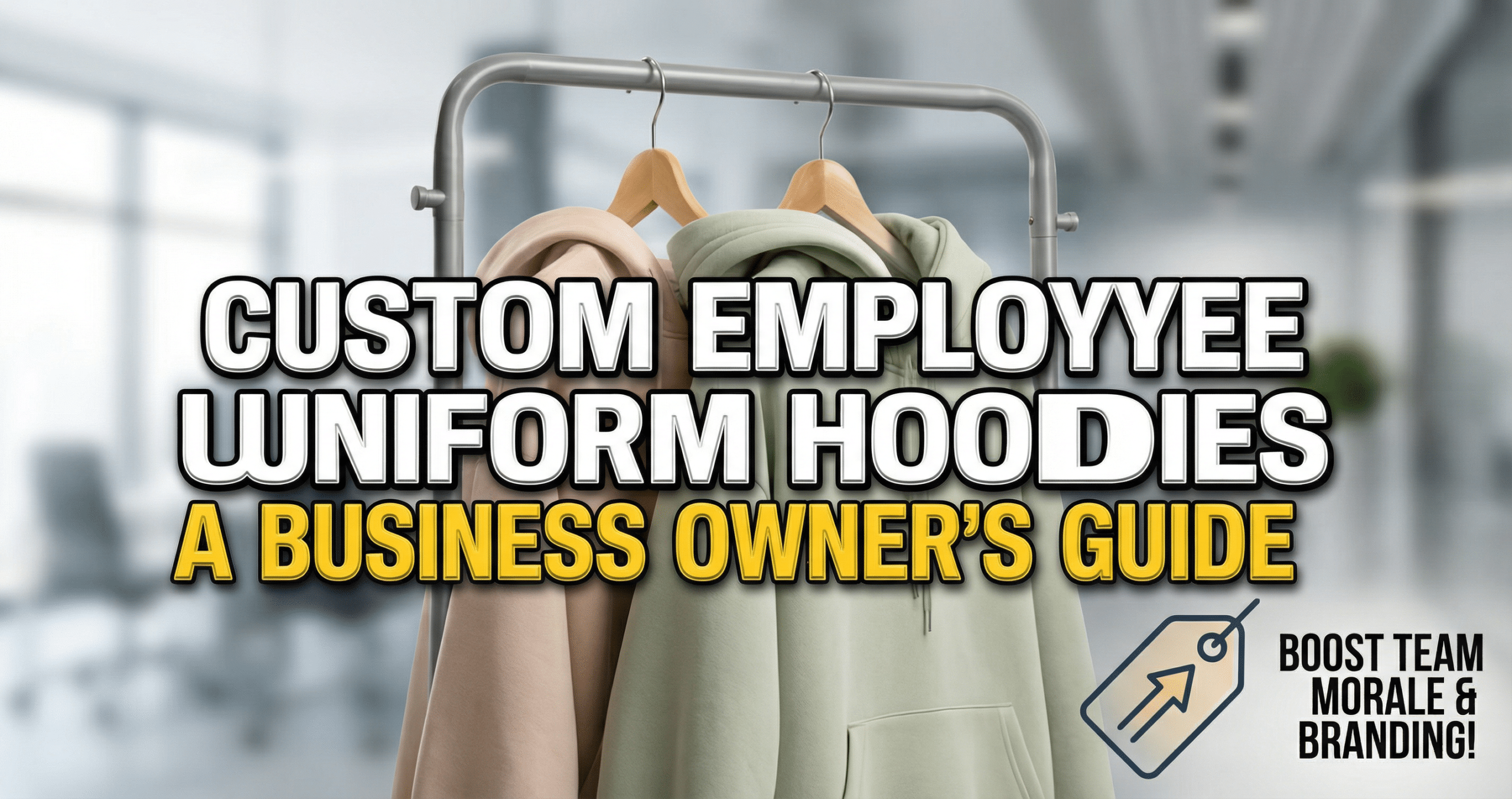
If you are planning a Custom Employee Uniform for teams that need warmth, easy layering, and consistent branding, custom hoodies are often one of the most practical choices. They work well for retail floors, warehouses, delivery crews, service teams, school staff, and office teams that move between indoor and outdoor spaces during the day. The right hoodie program is usually less about style alone and more about fit, fabric weight, decoration method, and how easily you can reorder the same garment later.
Last updated: April 2026
This guide breaks down when hoodies make more sense than polos or jackets, how to choose the right fleece weight, how embroidery and printing compare, and what affects price and turnaround. If you need a simple option that works across many body types and job roles, a unisex fleece hoodie is often a strong starting point for a repeatable uniform program.
Why Custom Employee Uniform Hoodies Work So Well
Custom Employee Uniform hoodies are popular because they solve several workplace needs at once. They keep staff comfortable, create a consistent branded look, and give teams a layer they will actually wear. Compared with a jacket, a hoodie is usually lighter and less restrictive. Compared with a polo, it offers more warmth and is better suited to cooler environments.
Comfort improves compliance
If employees like the garment, they are more likely to wear it correctly and consistently. A soft fleece hoodie helps reduce complaints about scratchy fabric, tight sleeves, or uncomfortable temperature changes during long shifts. That matters for teams that spend the day walking, lifting, standing, or moving between climate-controlled and outdoor spaces.
Hoodies support a stronger brand presence
A hoodie gives you a larger decoration area than many other uniform basics. That means you can place a logo on the chest, back, sleeve, or hood, depending on the look you want. It also makes employees easier to identify in busy environments, which is useful in retail, hospitality, events, and mixed-use workplaces.
They work across many types of teams
- Warehouse and logistics crews who need warmth and mobility
- Retail teams in cool stores or stock rooms
- Office staff who occasionally meet clients or visitors
- Field teams that need a layer under outerwear
For a dependable everyday option, a unisex fleece hoodie is often the easiest garment to standardize across a team. If you want a polished casual uniform that still feels practical, hoodies can be a better long-term choice than one-off jackets or inconsistent layered clothing.
How to Choose the Right Fabric, Fit, and Hoodie Style
The best hoodie for an employee uniform depends on how the garment will be worn in real life. A hoodie that looks great in a mockup can still fail if it overheats employees, fits poorly, or does not hold up to frequent washing. Paying attention to fabric weight, cut, and closure style will help you choose a uniform people will actually use.
Choose the right fabric weight
Fabric weight affects comfort, warmth, durability, and layering. Light fleece is good for indoor teams or mild weather. Midweight fleece is the most versatile option for daily use. Heavy fleece is best for colder spaces, outdoor work, or winter wear, but it can feel too warm in heated environments.
- Lightweight: easier to layer, less bulky, faster drying
- Midweight: versatile, comfortable, and suitable for most teams
- Heavyweight: warmer and more durable for cold conditions
Fit matters more than many buyers expect
Unisex fits are efficient for bulk ordering and often simplify inventory, but they may feel too boxy for some wearers. Women’s cuts can improve comfort and appearance, especially for customer-facing teams. If your staff includes different body types or role-specific needs, it can make sense to offer more than one fit.
For example, a standard unisex fleece hoodie can be paired with a more tailored fleece ladies hoodie so staff can choose a fit that feels right while the brand still looks uniform.
Pullover or zip-up?
Pullover hoodies usually look cleaner and offer a large decoration area. Zip-up hoodies make temperature control easier and are convenient for teams who need to remove layers during the day. Pullovers often feel more cohesive for branded uniforms, while zip-ups can be more functional in active roles.
Think about the work environment
Also consider pocket style, hood thickness, and whether the hoodie needs to fit over base layers or under outerwear. A hoodie that works well for a retail team may not be the right choice for a crew working near equipment, handling inventory, or spending time outdoors. If moisture management or visibility is a priority, a 100% polyester hoodie may be a smarter option than a standard fleece style.
Embroidered vs Printed Hoodies: Which Decoration Method Is Best?
The right decoration method depends on your logo, your budget, and how the hoodie will be used. Embroidered Hoodies usually create a more polished, durable finish, while Printed Hoodies are often better for larger graphics, more color detail, and lower startup costs.
| Method | Best for | Durability | Detail and color | Typical use case |
|---|---|---|---|---|
| Embroidery | Simple logos, names, and badges | Very high | Best for clean shapes and fewer colors | Office staff, management, premium uniforms |
| Screen print | Bold logos and larger graphics | High with proper care | Good for multiple colors and larger artwork | Retail, events, warehouse teams |
| Heat transfer | Small runs, names, and variable data | Moderate | Good for detailed designs and multiple placements | Short-term programs, role labels, seasonal orders |
| Direct-to-film or digital print | Full-color artwork and complex designs | Moderate to high | Excellent detail and color accuracy | Brands with gradients, fine lines, or multi-color art |
When embroidery makes more sense
Choose embroidery when you want a professional look that holds up through repeated washing. It works especially well for chest logos, employee names, and simple brand marks. It is also a good choice when the uniform is meant to feel polished and long-lasting.
The downside is detail. Very small text, thin lines, and gradients can become difficult to reproduce accurately. Complex artwork may also require more stitch time, which can increase cost.
When printing is the better fit
Screen printing and other print methods are a better match when the logo has more color, a larger footprint, or a more casual look. Printed designs often cost less at higher quantities and can cover more of the garment, which is useful for staff uniforms that also function as brand promotion. For many businesses, printing is the practical choice when ordering a broad men fleece pullover hoodie style for staff.
As a simple rule, use embroidery for a premium, durable uniform appearance and printing for larger graphics, heavier color usage, or tighter budgets. If your timeline is short, some print shops can turn around simple jobs faster than embroidery, especially when the artwork is already prepared and the garment choice is in stock.
What Affects the Price of a Custom Employee Uniform Hoodie Order
The cost of a hoodie order usually comes down to six major factors: the blank garment, the decoration method, the complexity of the logo, the number of print locations, total quantity, and the deadline. Once you understand those variables, it becomes much easier to compare quotes and budget properly.
Garment quality and hoodie style
The blank hoodie is the starting point. A lightweight promotional fleece generally costs less than a heavier retail-style hoodie with stronger stitching, softer fabric, and more durable ribbing. Specialty options can raise the base cost as well, including performance fabrics, safety colors, and larger size ranges.
For example, a unisex fleece hoodie may price differently from a tailored option such as a fleece ladies hoodie because the cut, sizing, and brand selection can change the blank cost.
Decoration details that change unit cost
- Embroidery is often priced by stitch count, so a simple left chest logo costs less than a dense full-back design.
- Screen printing is influenced by the number of ink colors and print locations.
- Sleeve prints, hood prints, oversized graphics, and individual names add setup and production time.
- Specialty inks, reflective details, or premium thread colors can increase the total.
Quantity and size mix matter
Larger orders usually reduce the per-piece price because setup costs are spread across more garments. A 24-piece order will usually cost more per hoodie than a 144-piece order. Size mix matters too, since XXL and above can carry upcharges depending on the blank supplier.
Watch for hidden cost drivers
- Artwork cleanup or vector conversion
- Digitizing for embroidery
- Color matching requirements
- Packaging, labeling, or department sorting
- Rush production and expedited freight
A practical way to request pricing is to ask for tiered quotes at 24, 48, 96, and 144 pieces using the same logo placement and garment type. That makes it easier to compare Custom Apparel options without being surprised by setup fees or size-related changes later.
Turnaround Times, Rush Orders, and Reorders
Most hoodie orders move fastest when the artwork, garment choice, and approval process are finalized before production begins. Turnaround is not just print time. It also includes proofing, sample review, production scheduling, shipping, and any sorting needed for multiple locations or departments.
Typical timeline to expect
- Quote and garment selection: 1 to 3 business days
- Art prep and proof approval: 1 to 3 business days
- Sample review, if requested: 3 to 7 business days
- Production: 5 to 10 business days for many standard orders
- Delivery or pickup: 1 to 5 business days depending on location
If you need exact color matching, multiple logo placements, or individual employee names, expect more time. If your team is ordering a performance style such as a 100% polyester hoodie, stock availability can also affect the schedule.
What makes rush orders harder
Rush jobs usually cost more because the decorator may need to source blanks quickly, move the order ahead in production, and use faster freight. Simple one-location prints on in-stock hoodies are the easiest orders to rush. Complex embroidery, uncommon sizes, and multi-location pack-outs are harder to accelerate.
How to make reorders easier
- Save approved artwork, thread colors, and print specs
- Keep the exact hoodie style, brand, and color on file
- Record logo placement measurements, such as left chest size or full-back width
- Track employee size history by department or location
- Set reorder points before busy seasons or hiring surges
The best reorder process is simple. Standardize the hoodie specs once, then reorder from saved files before inventory runs low. That helps protect your Employee Uniform program from last-minute substitutions and delays.
How to Keep Branding Consistent Across Multiple Locations
Consistency across locations comes from a controlled standard, not from asking each branch to make its own design choices. The most reliable Custom Employee Uniform programs use one approved logo package, one garment menu, and one clear approval process.
Create a simple hoodie brand standard
- Approved logo versions, such as full color, one color, and embroidery-safe
- Exact placement rules for chest, back, sleeve, or hood
- Minimum and maximum logo sizes
- Thread colors or Pantone targets for print matching
- Approved garment colors by department or job role
This becomes important when one branch wants black hoodies, another wants heather gray, and another needs high-visibility options. Without a standard, logo size and placement can drift from branch to branch.
Standardize the garment menu without making it too rigid
Most companies do best with a short approved menu rather than a single hoodie for everyone. For example, you might approve a men’s base option like a men fleece pullover hoodie, a women’s fit equivalent, and one performance or safety option for field or warehouse teams. That keeps the brand consistent while still covering fit and job-function differences.
Use a simple approval workflow
- Head office approves the artwork and garment list once.
- Branches order only from pre-approved styles and decoration layouts.
- Any exception, such as a special event logo or new department mark, goes to one designated approver.
- The supplier stores the final artwork, size curve, and shipping profiles.
Prevent mismatch with operational controls
- Use the same art file for every reorder
- Keep one color standard for ink and thread
- Review size runs by location so branches do not over-order only medium and large
- Ship by employee or department when needed
For growing businesses, the goal is simple uniformity without extra admin work. A strong order template lets local teams buy quickly while the brand still looks like one company in every office, store, or jobsite.
Common Mistakes That Make Uniform Hoodies Fail in the Field
The main reason a hoodie fails as an employee uniform is that it looked good on paper but was not chosen for the actual job. Most problems come from sizing, fabric weight, logo visibility, or decoration choices that do not match the work environment.
Ordering one fit for everyone
A common mistake is assuming one cut will work for every employee. Unisex can work well, but not if you ignore body types, layering needs, and fit preferences. A warehouse crew wearing hoodies over base layers will need a different size breakdown than a front-counter team wearing them indoors.
- Do not order based only on S to XL guesses.
- Ask for a full size run, including 2XL to 4XL if needed.
- Account for shrinkage if the hoodie contains a high cotton percentage.
- Test fit over work shirts or safety gear, not just a T-shirt.
Choosing fabric that is too light
Thin hoodies often disappoint delivery crews, warehouse staff, and outdoor workers. A lightweight fashion hoodie may feel soft at first, but it can lose shape, pill, or wear out quickly under daily use. For real uniform use, many teams need midweight or heavy fleece, especially in colder environments or high-movement roles.
Making the logo hard to read
Poor contrast and weak placement are another common failure point. A small chest logo can work, but not if the design has fine detail that disappears on textured fleece. Back prints fail when they are too low, too dark on a dark garment, or hidden by the hood.
- Avoid low-contrast combinations like black on charcoal or navy on royal.
- Simplify detailed logos for embroidery.
- Check readability from several feet away, not just on a proof.
Using the wrong decoration for the job
Decoration method matters in the field. Printed logos may be fine for retail use, but heavy washing, abrasion, grease, or high heat can shorten the life of the imprint. Embroidery can be more durable, but dense stitching on very light fleece can distort the fabric. In visibility-sensitive environments, a standard hoodie may not be enough, and a safety-focused garment may be the better choice.
Before you place an order, match the hoodie to the work itself, not just the brand guide. That one decision prevents many Custom Employee Uniform problems before they start.
A Buying Checklist Before Your Next Custom Apparel Order
Before you approve your next hoodie order, run through a practical checklist. The best Custom Apparel purchases happen when the supplier, fit, decoration method, and reorder process are confirmed before production starts.
Supplier review checklist
- Verify the supplier’s process. Ask who handles proofs, who checks garment inventory, and what happens if a style goes out of stock.
- Ask for a sample or blank garment. A digital mockup does not tell you how the fleece feels, how thick it is, or how it fits across your team.
- Confirm minimums and price breaks. Know whether the minimum changes by color, decoration method, or placement.
- Get the timeline in writing. Include proof approval, production, shipping or pickup, and any rush fees.
Product selection checklist
Choose the hoodie style based on who will wear it and where it will be worn. A front-of-house team may want a cleaner retail look, while drivers or warehouse staff often need thicker fleece and more room for layering. If your staff has different fit preferences, compare a unisex fleece hoodie with a fleece ladies hoodie or a men fleece pullover hoodie before locking in one style for everyone.
- Match fabric weight to the season and work setting.
- Confirm pocket style, hood design, and garment color consistency.
- Check whether logos remain readable on every color you plan to order.
Approval and reorder checklist
Ask for final approval on logo size, placement measurements, thread or ink colors, and garment brand. Save the approved proof, item number, and color code for future reorders. If you work with multiple branches, keeping a master size breakdown by location can save time and reduce sizing errors.
- Keep a few extras in common sizes for new hires
- Document the exact hoodie style and color used in the first order
- Confirm that the supplier can reproduce the same logo setup later
Before placing your next order, confirm the hoodie style, fabric weight, size run, logo placement, decoration method, and reorder process in writing. Ask for a proof or sample, verify production timing for both first orders and repeat runs, and make sure the supplier can keep branding consistent across every team or location. If you are ready to compare options, use this checklist to request quotes that match your team’s actual work environment and uniform goals.
Related Products and Services
If you are planning a similar project, these related options may help.
Helpful External Resources
These sources provide supporting background and additional context.
Are embroidered hoodies or printed hoodies better for employee uniforms?
Both can work well for a Custom Employee Uniform, but the best choice depends on your logo and how the hoodie will be used. Embroidered hoodies usually look more polished and tend to last longer through frequent washing. Printed hoodies are better for larger graphics, more color detail, and lower startup costs. If you want a premium look for daily wear, embroidery is often the stronger option.
What hoodie fabric works best for daily employee use?
For most teams, a midweight cotton-polyester fleece is the most practical choice because it balances comfort, durability, and warmth. It works well in offices, retail, warehouses, and service roles. If the team is active or works in damp conditions, a performance fabric such as polyester may be a better fit.
How many custom hoodies should a business order?
Order enough for every employee, then add a few extras for new hires, replacements, and size exchanges. Many businesses also keep buffer stock in the most common sizes. If hoodies are part of a Custom Employee Uniform program, it helps to plan for turnover and seasonal staffing changes.
How long does custom hoodie production usually take?
Production time depends on the decoration method, order size, artwork approval, and garment availability. Simple printed orders can often be completed faster than embroidered ones, while larger or more complex orders can take longer. If you have a launch date or event deadline, ask about timeline and rush options as early as possible.
What artwork file should I submit for custom employee hoodies?
Vector files such as AI, EPS, or PDF are usually the best choice because they scale cleanly and help produce crisp logos. High-resolution PNG files can also work for some print jobs, but low-quality images may reduce the final result. If possible, send the original logo file to speed up proofing and production.
Get a Free Quote Today
Contact us at +1-(416) 288-8661 or Email us at info@Brandingcentres.com and let's get started.