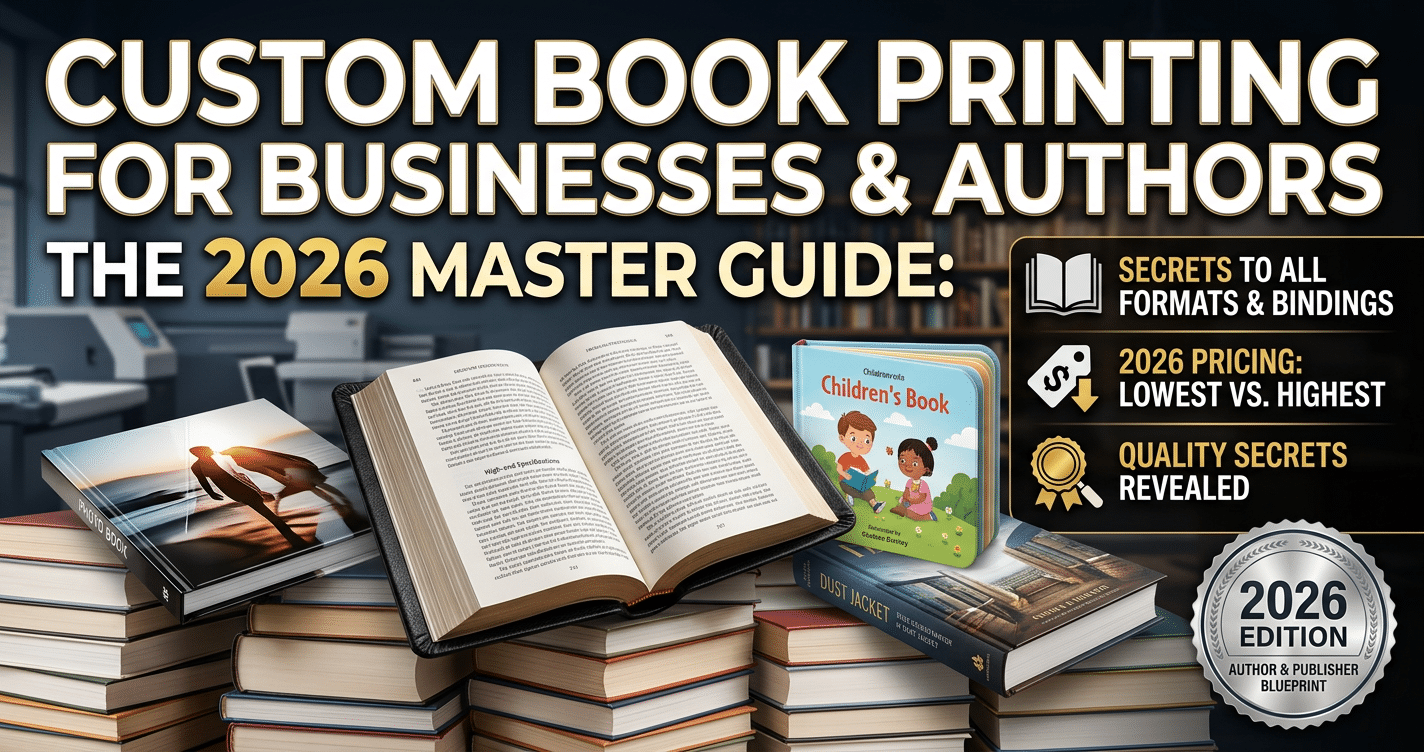
Custom Book Printing works best when the project starts with a clear purpose. Before you request a quote, define who the book is for, how it will be used, how many copies you need, and what level of presentation matters most. Those choices shape the format, paper, binding, turnaround time, and total cost, so a little planning up front can prevent expensive revisions later.
Last updated: April 2026
Ready to print booklet printing?
Send your artwork, quantity, and deadline to Branding Centres. We will help confirm specs, turnaround, and the best production option.

Whether you are printing a book for a product launch, client leave-behind, training program, event giveaway, or retail sale, the right setup depends on the job the book needs to do. A polished presentation book has different requirements than a lightweight workbook or an author title meant for distribution. The more precisely you define the goal, the easier it becomes to choose the right print specifications and stay on budget.
Custom Book Printing for Businesses and Authors: Define the Project Before You Quote It
The strongest Custom Book Printing projects begin with a simple brief. If you can explain the purpose, audience, quantity, and delivery date, printers can recommend a better format and give you a more accurate estimate. That also helps you compare vendors fairly, since a quote for one binding style or paper stock may not be directly comparable to another.
Start with the purpose of the book
A book printed for retail sale is not built the same way as a book printed for internal training or one-time event use. A sales catalog may need strong visuals and easy replacement, while a novel usually needs a comfortable reading format and a lower unit cost. If the book is a giveaway, volume and affordability may matter more than premium finishing. If it is a client presentation piece, the perceived quality of the cover and paper may be the priority.
Define the audience and how the book will be handled
Think about who will hold the book and where it will be read. Conference attendees usually need something light and easy to carry. Executives may expect a more refined hardcover or perfect-bound piece. Employees using a workbook need pages that lay flat and hold up under repeated writing. These practical details help determine whether you should print a short run, a large run, or a specialty format designed for frequent use.
Set quantity and budget early
Quantity is one of the biggest drivers of unit price. Small orders cost more per book because setup time is spread across fewer copies. Larger runs usually reduce the per-book price, but they also increase upfront spend and storage needs. It helps to ask for quotes at multiple quantity levels, such as 50, 100, 250, and 500 copies, so you can see where the cost breaks fall and choose the best balance of budget and inventory risk.
Decide how the finished book will be used
- Retail sale: prioritize durability, clean layout, and a polished cover.
- Event handout: keep it portable, affordable, and easy to replenish.
- Internal reference: focus on readability, binding strength, and easy updates.
- Client presentation: emphasize premium paper, refined finish, and brand consistency.
Once you know the purpose, you can move from broad ideas to specific production choices. That is the fastest way to narrow the field and avoid paying for features the book does not really need.
Choose the Right Book Format for Your Goal and Budget
The best format depends on how the book will be distributed, how long it needs to last, and how much you can spend per copy. In most Custom Book Printing projects, the main options are paperback, hardcover, spiral or coil binding, saddle-stitching, and specialty formats such as lay-flat books.
| Format | Durability | Presentation | Best Use Case | Relative Cost |
|---|---|---|---|---|
| Paperback / Perfect Bound | Good for normal handling | Clean, professional, retail-friendly | Author books, catalogs, manuals, marketing books | Low to moderate |
| Hardcover / Case Bound | High | Premium, long-lasting, gift-worthy | Executive reports, premium brand books, special editions | High |
| Saddle-Stitched | Light to moderate | Simple and compact | Booklets, programs, short catalogs, event pieces | Very low |
| Spiral or Coil Bound | Very practical for frequent opening | Functional, less formal | Workbooks, training manuals, recipe books, reference guides | Low to moderate |
| Lay-Flat Binding | Strong for repeated use | Premium and easy to use | Portfolios, lookbooks, presentation books, instructional pieces | Moderate to high |
Match the format to the goal
For book launches and direct sales, perfect-bound paperback usually offers the best balance of cost and perceived value. It looks polished on a shelf and is familiar to readers. Hardcover makes more sense when the book itself is part of the brand experience, such as a collector edition, a premium gift, or a high-value client piece that should feel substantial in hand.
Think about usability, not just appearance
A book that will be used often should be chosen for function first. A training manual that gets opened every week should not be selected only because it looks elegant. Spiral or coil binding may be a better fit because it lies flat on a desk and holds up to repeated handling. For short event materials, saddle-stitching is often the fastest and least expensive option, especially when page counts are modest.
Budget tip
If you need to control spend, decide what the book must do before you decide how fancy it should look. Premium finishes can add value, but they also raise cost quickly. If the book is a free giveaway, a large hardcover may not be the best use of budget. If the book is sold or used to support high-value client relationships, a more polished format can make sense.
Paper, Color, and Finish Choices That Shape Readability and Brand Perception
Paper and finish choices do more than affect appearance. They influence readability, how the book feels in hand, and how much the project costs. In Custom Book Printing, these decisions often determine whether the final product feels professional, easy to use, and aligned with the brand.
Choose paper weight based on the content
Lighter interior paper, such as 50 lb to 60 lb text stock, is often used for text-heavy books because it keeps the book lighter and more affordable. Heavier paper, such as 70 lb to 80 lb text stock, can reduce show-through and improve perceived quality, especially for books with photos or dense ink coverage. For covers, thicker stock adds rigidity and helps the book survive shipping, stacking, and repeated handling.
Decide whether color is worth the added cost
Black-and-white interiors are usually the most economical option for novels, manuals, and text-heavy guides. Full-color interiors work better for catalogs, brand books, lookbooks, and instructional materials where images are part of the message. If only a small number of pages need color, it is worth asking whether selective color pages can deliver the right effect without turning the whole project into a more expensive print run.
Use finishes to support the book’s purpose
Cover finish affects both first impressions and practical use. Gloss coating creates a bright, reflective surface that works well for vibrant visuals and marketing pieces. Matte coating gives a softer, less reflective finish that often feels more refined for professional, editorial, or literary projects. Soft-touch coatings can create a premium feel, but they are best reserved for books where tactile presentation is part of the value.
Common finish decisions to make
- Gloss cover: stronger color pop, more reflective, good for vibrant visuals.
- Matte cover: less glare, easier to read, often feels more refined.
- Uncoated interior: better for writing, annotations, and text-heavy reading.
- Coated interior: sharper image reproduction for catalogs and photo books.
One common mistake is choosing a glossy interior for a book that will be read under bright lights for long periods. Another is using paper that is too thin for a full-color piece, which can cause show-through and make the book feel flimsy. The best choice is the one that balances brand image, readability, and print cost for the actual use case.
What Drives Custom Book Printing Prices, Minimums, and Turnaround Time
The biggest drivers of Custom Book Printing cost are quantity, page count, trim size, color usage, binding method, finishing, and shipping. If you understand those variables early, it becomes easier to compare quotes and set a realistic deadline for your launch, event, or client delivery date.
What changes the unit price most
Quantity usually has the strongest effect on price per book. A 50-copy order costs more per unit than a 500-copy order because setup, file handling, and press time are spread across fewer books. That is why short runs are useful for testing demand or supporting a limited event, while larger runs often bring the best unit economics.
- Quantity: Higher quantities usually lower the per-book cost.
- Page count: More pages mean more paper, more press time, and often higher binding costs.
- Size: Non-standard trim sizes can increase waste or require custom setup.
- Interior printing: Black-and-white interiors cost less than full color.
- Cover printing and finish: Lamination, foil, spot gloss, embossing, and heavier covers raise the price.
- Binding: Saddle stitch is usually less expensive for low page counts, while perfect bound, casebound, or Wire-O adds cost.
- Shipping: Books are heavy, so freight can materially affect the final total, especially for multi-location delivery.
Short runs versus larger quantities
For businesses and authors, short-run book printing is often the right choice when content may change, demand is uncertain, or the book is needed for a specific presentation, trade show, training session, or local event. Digital printing keeps minimums low and reduces inventory risk. Larger runs make more sense when the content is locked, the book will be distributed over time, and consistency across copies matters more than storage flexibility.
Typical minimums to expect
Minimums vary by printer and format. Digital Custom Book Printing may start as low as a few copies for some paperback or softcover jobs. More specialized formats, premium finishing, or hardcover production may push the minimum higher. If you need a custom spec, ask whether the printer has a minimum quantity or a minimum dollar value for the order.
How turnaround time really works
Turnaround is not just print time. It usually includes file review, proofing, approval, production, bindery, packing, and shipping.
- Prepress review: 1 to 2 business days if files are clean, longer if corrections are needed.
- Proofing: Digital proofs may be same day to 2 days. Hard-copy proofs add shipping time.
- Production: Small digital runs may take 3 to 7 business days. Larger or more complex jobs often take 7 to 15 business days or more.
- Delivery: Add transit time, especially if books must reach multiple offices, stores, or event venues.
A practical planning rule is to build in at least one extra week beyond the printer’s quoted production window. That buffer protects you from file fixes, proof revisions, freight delays, and last-minute quantity changes.
File Prep Checklist Before You Send a Book to Print
Clean files prevent the most common Book Printing delays. Before you send a book to print, make sure your layout is built to final size, images are high enough resolution, fonts are handled correctly, and the proof has been checked by more than one person.
Set the document up correctly
- Use the final trim size: Build the interior pages at the exact finished size requested by the printer.
- Add bleed where required: If images or color blocks run to the edge, extend them at least 0.125 inch past the trim on all sides.
- Keep a safety margin: Keep body text, page numbers, and important design elements at least 0.25 inch from trim. Add more room near the gutter for thick books.
Check images and color
- Use 300 dpi images at final size: Enlarging a small web image usually leads to blurry printing.
- Avoid RGB surprises: Convert files and images to CMYK when the printer requires it.
- Review rich black and color builds: Large black areas and dark backgrounds should be set intentionally, not by accident.
Handle fonts and page setup carefully
- Embed fonts or outline them: Missing fonts can reflow text and shift line breaks.
- Export single pages for interiors: Most printers want interior pages in reading order, not reader spreads.
- Prepare the cover separately: Use the printer’s cover template for front, back, spine, and bleed. Spine width must match the final page count and paper caliper.
- Include blank pages if needed: Some books need blank pages to preserve chapter starts, signature counts, or right-hand opening pages.
Proof like a production manager, not just an author
- Check page order, folios, chapter starts, and table of contents references.
- Look for widows, orphans, cut-off images, and text too close to the trim.
- Print a physical mockup if possible to catch scale, margins, and readability issues.
- Confirm barcode placement, ISBN details, and spine text orientation if applicable.
- Review the final PDF at 200 percent zoom and again at normal reading size.
One of the most expensive mistakes in Custom Book Printing is approving a proof too quickly. A wrong spine width, low-resolution image, or missing font can trigger delays, reprints, and rush shipping charges. Treat final proofing as part of production, not a last-minute formality.
How to Evaluate a Printer Before You Place an Order
The best printer is not just the cheapest quote. You want a partner that can produce your exact book format, catch file issues early, meet deadlines, and deliver consistent quality from proof to final shipment.
Start with capability, not price
First, confirm the printer regularly produces the kind of book you need. That includes trim size, page count range, binding style, cover treatment, and quantity. The key question is not whether they list a service, but whether they handle your exact specifications well and can repeat the result consistently.
- Does the printer support your trim size without forcing a custom workaround?
- Can they print your page count without compromising the spine or page opening?
- Do they offer the binding method your use case needs?
- Can they ship to one location or split orders across offices, stores, or event sites?
Ask for proof points you can verify
A serious Custom Printing vendor should be able to show evidence of quality and process control.
- Printed samples: Ask for books with similar size, paper weight, and binding.
- Proofing options: Confirm whether they provide PDF proofs, color proofs, or hard-copy proofs.
- Binding durability: Check spine glue, cover wrap, page alignment, and edge trimming.
- Color consistency: Review solids, skin tones, gradients, and photo detail across multiple samples.
- Production guidance: Good printers flag file problems before they become production problems.
Evaluate service and communication
Support matters more than many buyers expect. If a printer is slow to answer prepress questions before the order, that usually becomes worse once the job is in production.
- Test response time with a few specific questions.
- See whether they explain tradeoffs clearly or just send generic pricing.
- Ask who handles file review, proof approval, and issue escalation.
- Confirm cutoff times for same-day processing and rush production.
Look for repeatability
For businesses and authors who plan reorders, consistency is critical. Ask whether the printer stores files, tracks version changes, and can match prior runs closely. This is especially important for training manuals, branded books, conference materials, and author backlist titles where every reprint should feel like the same product.
A useful final step is to place a small test order before committing to a large run. That lets you assess print quality, packaging, delivery reliability, and support without taking on unnecessary inventory or budget risk.
How Printed Books Help Businesses Sell, Launch, and Stay Memorable
Custom Book Printing works best when the book has a clear job to do. For businesses and authors, printed books are not just informational pieces. They can generate leads, improve client experience, support launches, train teams, and give your brand something people keep instead of deleting.
Use books as a sales and lead generation tool
A printed book gives your sales process more weight than a brochure or one-page leave-behind. It lets you explain your method, show case studies, answer objections, and position your company as the expert before a prospect ever books a call.
- Consultants use short hardcover or paperback books as premium leave-behinds after meetings.
- Service businesses mail books to qualified leads before discovery calls.
- Authors and coaches use books as the core offer that drives speaking, workshops, and email signups.
Improve client onboarding and retention
Books are also effective after the sale. A client welcome book can reduce repetitive questions, explain your process, outline timelines, introduce the team, and set expectations in a way that feels polished. This is especially useful for agencies, financial firms, home service companies, and healthcare practices.
A practical onboarding book might include:
- Your process from kickoff to delivery
- Common delays and how clients can avoid them
- FAQs, milestones, and approval checkpoints
- Contact information and escalation paths
Compared with long email threads, a printed guide is easier to hand to decision-makers and easier for clients to revisit later.
Support launches, events, and local brand visibility
For author launches and business events, printed books create a tangible centerpiece. They can be sold at the back of the room, included in VIP kits, signed at launch events, or handed out at trade shows. Local businesses often use branded books at chamber events, franchise meetings, recruiting fairs, and customer appreciation nights because attendees are far more likely to take home a book than a flyer.
If timing matters, plan around freight, proof approval, and event dates. A missed delivery can derail a launch table or speaker package, so books tied to events should be ordered with buffer time.
Train teams and build authority over time
Internal training books are useful for standardizing service delivery across teams or locations. A printed manual can walk staff through scripts, workflows, compliance reminders, and brand standards in a format that is easy to annotate and use on site.
The bigger advantage is long-term authority. A well-produced book makes your business easier to remember, easier to refer, and easier to trust. That matters whether you are an author building a platform or a company using Custom Book Printing to turn expertise into a sales asset.
Final Planning Checklist Before You Request a Quote
Before you ask for pricing, prepare a simple print brief with your trim size, page count, binding preference, paper stock, interior color, quantity, and required delivery date. That gives you cleaner quotes, faster feedback, and fewer production delays.
- Project purpose: sales, training, retail, event, or client presentation
- Audience: who will read it and how often
- Format: paperback, hardcover, saddle stitch, coil, or lay-flat
- Paper: interior weight and cover stock
- Color: black-and-white, spot color, or full color
- Binding: durable, decorative, or easy-to-use
- Quantity: initial run and likely reorder needs
- Deadline: proof time plus production and shipping buffer
If you are ready to move ahead, ask for a proof, confirm the specs in writing, and work with a printer who can guide you toward the most cost-effective setup for your book. The best Custom Book Printing result usually comes from matching the production method to the real purpose of the book, not from choosing the most expensive option available.
Helpful External Resources
These sources provide supporting background and additional context.
What is the best format for a short-run custom printed book?
For most short-run projects, perfect-bound paperback is the most practical choice because it looks professional, keeps costs manageable, and works for many page counts. If the book is very thin or mainly informational, saddle stitch can be a better fit.
How do I choose between paperback and hardcover?
Choose paperback if you want lower cost, lighter weight, and faster production. Choose hardcover if the book needs to feel premium, last longer, or serve as a gift, commemorative piece, or high-end brand asset. For many businesses and authors, paperback is the best starting point.
What affects Custom Book Printing cost the most?
The biggest cost drivers are quantity, page count, trim size, color printing, paper stock, binding style, finishing, and shipping. Short runs cost more per copy, while larger runs usually lower the unit price.
What should I check before uploading files for print?
Make sure your file matches the final trim size, includes bleed if needed, uses high-resolution images, and has fonts embedded or outlined. Also check margins, page order, spine width, and the cover template before approving the proof.
How long does custom book printing usually take?
Timing depends on the format, quantity, and finishing options. Small digital runs can move quickly, but you should still allow time for file review, proofing, production, and shipping. It is smart to build in extra buffer time for revisions or freight delays.
Can businesses and authors print small quantities without high setup costs?
Yes. Many Custom Book Printing options are designed for short runs, which makes it possible to print small quantities for launches, training, self-publishing, or events without ordering a large inventory.
Get a Free Quote Today
Contact us at +1-(416) 288-8661 or Email us at info@Brandingcentres.com and let's get started.