For a business order, the cheapest decoration method is not always the least expensive choice. The wrong process can add setup fees, limit fabric compatibility, or leave the logo looking less polished than you expected. For Etobicoke owners comparing custom apparel printing options, the usual rule is simple: screen printing gives the best value for larger runs, embroidery gives uniforms and caps a premium finish, and direct-to-film printing is often the most flexible choice for small orders or detailed multi-colour artwork.
Last updated: August 2026

Choosing the right method comes down to your budget, garment, and branding goals. If you are still deciding what to decorate, it helps to review common custom apparel categories alongside the print method, since a cotton event tee, a trucker cap, and an outdoor safety jacket all handle production differently. Method differences are also laid out in this overview of apparel decoration methods, which shows why artwork complexity, garment type, and quantity should guide the choice.
Custom apparel printing options for Etobicoke businesses
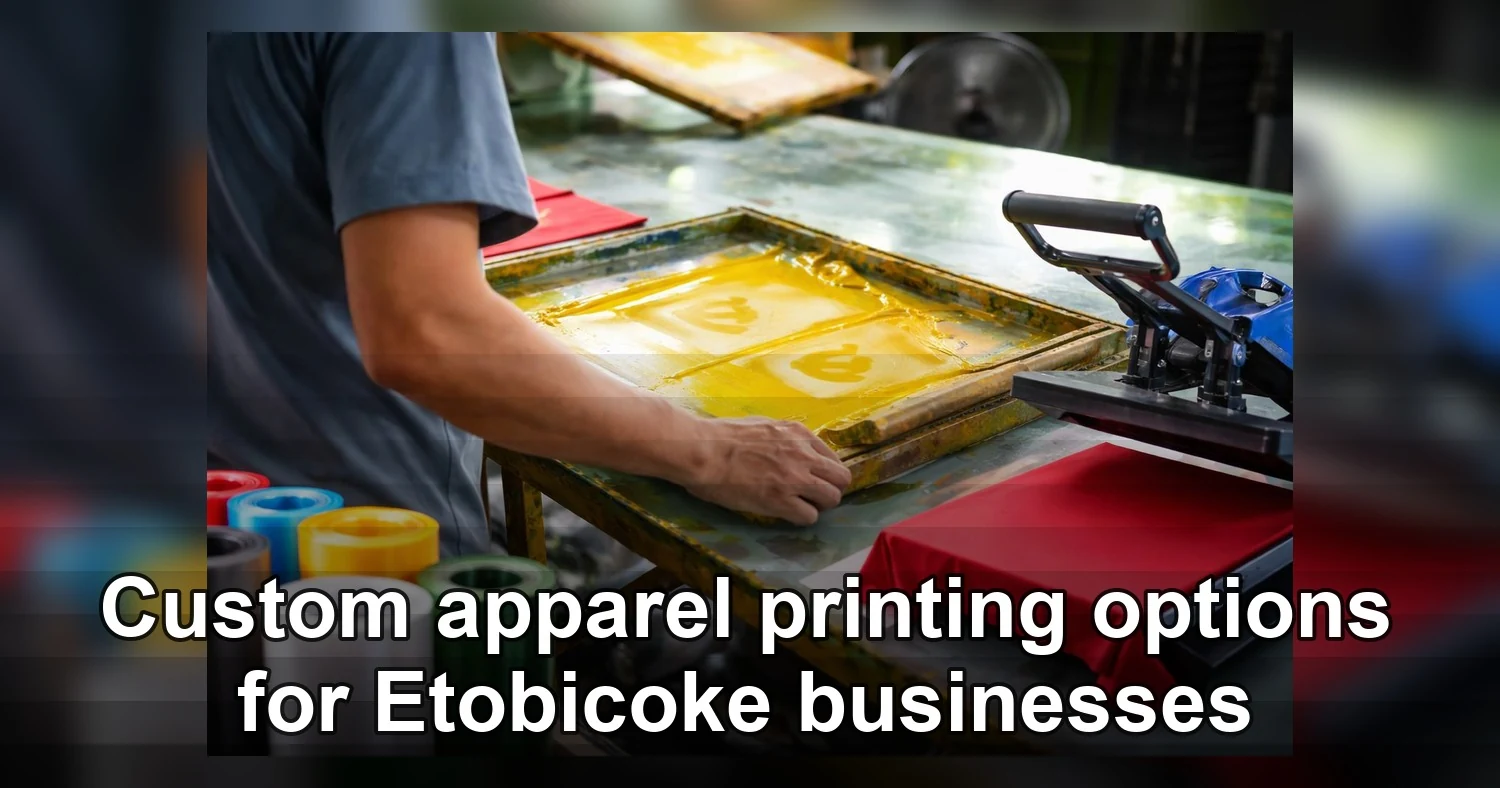
The best custom apparel printing options for Etobicoke businesses depend on the garment, the artwork, and how many pieces you need. Screen printing is usually best for larger orders and bold designs, embroidery suits premium uniforms and durable branding, and direct-to-film printing is a good fit for detailed art, mixed fabrics, and smaller runs. A good shop should help you match the method to the job instead of forcing one process onto every order.
| Method | Best for | Typical strengths | Common limits | Best order size |
|---|---|---|---|---|
| Screen printing | T-shirts, hoodies, event wear, promo runs | Low unit cost at volume, strong color coverage, durable on cotton | Setup cost, fewer colors are more economical, less ideal for tiny runs | Medium to large |
| Embroidery | Polos, jackets, hats, uniforms | Premium look, long-lasting, sharp on logos and text | Not ideal for tiny details, gradients, or large front graphics | Small to medium |
| Direct-to-film printing | Detailed logos, mixed garments, small batches | Great for full color art, flexible on fabric types, quick setup | Can feel less traditional than embroidery, pricing varies by print size | Small to medium |
| Heat-applied decoration | Names, numbers, short-run personalization | Fast for customization, useful for one-off items | Not always the best for high-wear uniforms or large logos | Very small to small |
How the main methods compare
For cotton men’s cotton t-shirts, screen printing is usually the most cost-effective option when the same logo appears on many pieces. It handles simple shapes, solid fills, and designs that need strong coverage without much production complexity. If you are ordering for a fundraiser, staff event, or promotional campaign, it is usually the best place to start.
For outerwear and headwear, embroidery gives a cleaner finish that reads more premium. A branded trucker hat usually looks better with stitch work than with a large printed design, especially when you want the logo to feel like a uniform mark rather than a poster.
If you need detailed artwork, small text, or a multicolor logo without paying for multiple screens, direct-to-film printing is usually the most flexible choice. For businesses ordering across different garment types, browsing a full range of custom apparel categories can help you keep one visual identity while choosing the right decoration method for each item.
Heat-applied decoration is useful when you need quick personalization, such as names, numbers, or event-specific identifiers. It is practical for short runs, but it is usually not the first choice for premium uniforms or apparel that will be worn hard and washed often.
How to choose between screen printing, embroidery, and DTF
The right choice comes down to how the apparel will be used. Screen printing is best when you want a strong, economical logo on a lot of identical garments. Embroidery is best when the goal is a premium uniform look. Direct-to-film printing is best when your artwork is detailed, colorful, or needed in smaller quantities.
When screen printing is the smartest pick
Choose screen printing for staff T-shirts, trade show giveaways, construction crews, charity events, and branded promo wear. It works well on simple logos, solid colors, and larger quantities. Screen printing is especially efficient when the same design is repeated across multiple items, because the setup cost is spread over the whole order.
It is also a strong option when you need consistent results on a familiar garment. A two-color chest logo on 100 cotton tees, for example, is usually simpler and more affordable than a complex print on a stretch fabric or a performance polo. The tradeoff is flexibility. If your artwork changes often, includes many colors, or only needs 12 pieces, setup can make it less attractive than DTF or embroidery.
When embroidery adds the most value
Embroidery is the best fit for polos, jackets, caps, and client-facing uniforms. It gives a more finished look and tends to hold up well through repeated washing and wear. That makes it a strong choice for service businesses, offices, and any team that wants a high-end brand presentation without a loud graphic.
Embroidery also works well when the garment itself should feel elevated. A small left-chest logo on a fleece, woven jacket, or structured cap can communicate quality quickly, even from a distance. The tradeoff is detail. Fine gradients, tiny lettering, and oversized graphics do not translate well into stitches. If your logo is very intricate, you may need to simplify it or choose print instead.
When DTF is the most practical option
Direct-to-film printing is often the most flexible option for small runs, mixed-fabric orders, and colorful logos. It works well when you need speed, sharp detail, or a design that would be costly to separate into multiple screens. For Etobicoke businesses testing a new campaign or doing a one-time event, DTF can be a smart way to launch without overcommitting to inventory.
It is also useful when your order includes different garment types. If one team member needs a T-shirt and another needs a performance top or a hoodie, DTF can often keep the artwork consistent across materials that would otherwise call for different decoration methods. Its limitation is feel and finish. DTF can look excellent, but for premium uniforms or items that need a stitched, upscale look, embroidery may still be the better choice.
What affects pricing, minimums, and turnaround time
Pricing is driven by setup, artwork complexity, garment choice, and quantity. Minimums and turnaround time usually improve when the design is simple, the pieces are consistent, and the order is large enough to spread production costs across more units. Rush jobs can still be done, but they usually cost more because they interrupt the normal production schedule.
Setup fees and artwork preparation
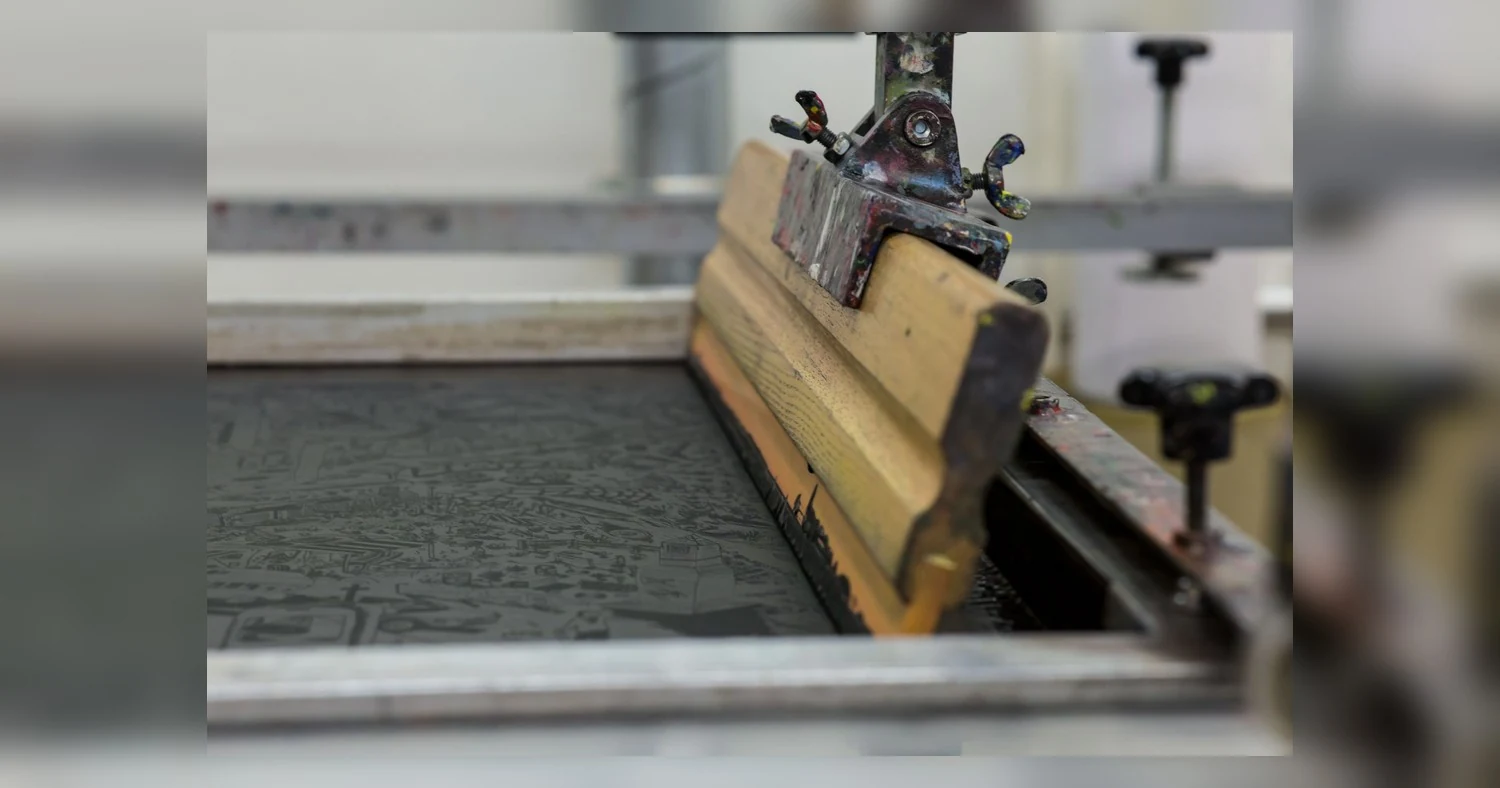
Screen printing often has the highest setup impact because each color may require its own screen. More colors usually mean more prep time and higher cost. If a design has three ink colors, the shop has to separate the art, prepare each screen, and test the print order so the final result lines up cleanly.
Embroidery pricing is affected by digitizing, which converts artwork into a stitch file. More complex logos, gradients, and small text can increase digitizing time and stitch count. A simple left-chest mark is usually easier to digitize than a full front crest with multiple line weights and small copy.
DTF typically has lighter setup than screen printing, but pricing still depends on print size, artwork quality, and whether the design needs cleanup before production. A crisp vector file will usually move through production faster than a blurry logo pulled from a website footer.
Garment type and decoration complexity
The item itself matters. A basic cotton T-shirt is usually easier and cheaper to decorate than a heavy jacket, moisture-wicking polo, or structured cap. Thicker materials can take more time to finish, and some garments need different equipment or handling to get a clean result.
- More colors often increase screen printing costs.
- More stitches increase embroidery costs.
- Larger print areas can increase DTF costs.
- Special fabrics may limit method choice and add handling time.
That is why a quote should always be based on the exact item, not just the logo. A small chest print on a cotton tee is not the same job as the same logo on a high-visibility jacket or a textured fleece.
Quantity, minimums, and rush timing
Higher quantities usually lower the per-piece price, especially for screen printing. Smaller runs are easier to approve with DTF or embroidery, but the unit price is usually higher because the setup cost is spread over fewer garments. Rush orders compress production schedules and can trigger priority fees if the shop has to move your job ahead of others.
For better planning, ask for pricing based on your exact garment, decoration location, number of colors or stitch count, and desired delivery date. That gives Etobicoke buyers a quote that reflects the real job, not just a rough estimate.
Best apparel choices for staff, events, and giveaways
The smartest apparel choice depends on how the item will actually be used, not what looks good in a catalog. For Etobicoke businesses, the best-performing orders usually come down to a few reliable staples: cotton t-shirts for events, practical polos or fleece for daily staff wear, trucker hats for promotions, and high-visibility outerwear for outdoor crews.
Staff uniforms that hold up
For front-line staff, comfort and repeat washing matter more than trend. Restaurants, retail teams, and service counters in Etobicoke often do best with midweight tees, polos, or zip hoodies in cotton or cotton-poly blends. A 100% cotton shirt feels soft and familiar, while a 50/50 or 60/40 blend tends to wrinkle less and keep its shape longer after weekly washing.
If employees wear the garment several days a week, choose darker colours, tagless styles when possible, and fabric weights that are not too thin. Lightweight promo shirts can work for one-day use, but they rarely feel premium enough for long-term staff uniforms. For many teams, a slightly better shirt pays off because it lasts longer and presents the brand more consistently.
Event apparel and promotional giveaways
For festivals, trade shows, school events, and community sponsorships, simple usually works best. Cotton t-shirts are easy to size, easy to hand out, and familiar to recipients. They also give you enough print area for event branding, sponsor logos, or volunteer identification.
Giveaway items need a different approach. Instead of trying to fit a full ad onto a garment, choose one visible logo on something people actually keep. Trucker hats are a strong choice for seasonal promotions, contractor branding, golf outings, and summer events because they fit a wide audience and avoid the sizing issues that come with shirts.
Outerwear for crews and visibility
For warehouse teams, road crews, drivers, and site staff, visibility and weather protection matter first. Branded safety jackets are often a better investment than lighter tops when employees work outdoors, load vehicles, or move between indoor and outdoor spaces. In those cases, the best apparel is the piece workers will actually wear on the job, not the cheapest item on the quote.
If the garment will be worn over layers, choose a decoration method and placement that still reads clearly. A small left-chest logo may work on a jacket, while a larger back mark may be better if visibility is the priority. The right balance depends on how far away the logo needs to be seen and how often the item will be worn in poor weather or low light.
Artwork, file prep, and proof approvals that prevent rework
Most expensive rework starts before production, not during it. If the logo file is weak, the placement is vague, or the proof is rushed, even a good print shop can only do so much. For Etobicoke buyers ordering branded apparel on a deadline, clean files and clear approvals protect both quality and turnaround.
Start with the right logo files
Vector art is the safest starting point for apparel decoration. AI, EPS, SVG, or press-ready PDF files allow the artwork to scale cleanly for a left chest logo, a full back print, or a cap front without getting blurry. If vector files are not available, use a high-resolution raster file at final size, ideally 300 dpi or higher.
Low-resolution website logos, screenshots, and images pulled from social media are common causes of fuzzy edges and production delays. Fine lines, tiny text, and gradients also need extra review because different apparel decoration methods reproduce artwork differently. A design that looks fine on a monitor may need simplification before it is ready for print or stitch.
Approve placement and sizing visually
A proof should show more than just the logo. It should confirm the exact garment colour, decoration size, placement, and orientation. For example, a left chest logo at 3.5 inches wide will look very different from a 4.5 inch version, and a full front print that looks balanced on a medium may feel oversized on a small.
Ask for a mockup that shows:
- Front, back, and sleeve placements if more than one location is being decorated
- Actual imprint width and height in inches
- Distance from collar or centerline when placement needs to be precise
- How the art will sit on dark, bright, or high-visibility garments
What local buyers should sign off on
Before production starts, approve the final art file, garment style number, garment colour, size breakdown, spelling, quantities, and target date for pickup or delivery in Etobicoke. If brand consistency matters, confirm Pantone references or the closest available thread or ink match. One careful proof approval can save a full reorder.
Common mistakes Etobicoke buyers make when ordering printed apparel
The costliest apparel mistakes usually come from choosing the wrong garment or approving the wrong order details, not from the printing itself. Businesses in Etobicoke often lose money when they treat branded apparel like a generic office supply instead of a wear-tested product with fit, fabric, and decoration limits.
-
Choosing fabric based only on price. A low-cost tee may work for a one-day promo, but not for landscaping crews, kitchen staff, or warehouse teams. Thin cotton can twist, fade, or feel too hot on the job. Match the fabric to the work environment, wash frequency, and expected lifespan.
-
Ignoring shrinkage and garment feel. Even pre-shrunk cotton can tighten up after the first wash. If the shirts are fitted to begin with, that can create instant sizing complaints. For uniforms, many buyers are better off sizing with a little margin or choosing blends that hold shape more consistently.
-
Ordering the wrong size mix. Guessing the breakdown is expensive. Too many mediums and not enough XL or 2XL is a common issue for staff orders. Use actual headcount data, ask employees to confirm sizes, and account for new hires. For public events, order a broader size range than you think you need.
-
Picking a decoration method that does not suit the design. Tiny text on hats, very fine lines on textured garments, or oversized prints on lightweight outerwear can all produce disappointing results. A logo that works on a website header may need to be simplified for apparel.
-
Forgetting garment colour affects the final look. Dark shirts may need a white underbase for bright prints. Safety yellow, orange, heather, and moisture-wicking fabrics can all change how colours appear. Always review the art on the actual garment colour, not on a plain white mockup.
-
Underordering for future needs. Reordering 12 more pieces later can cost more per unit and may not match the first batch exactly if the garment is discontinued. If you know your Etobicoke team adds seasonal staff or attends recurring events, build that into the first order.
How to work with a local decorator in Etobicoke for better results
The fastest way to get better apparel results in Etobicoke is to treat the decorator as a long-term vendor. For local business orders, clear communication, quality checks, and easy reordering usually matter more than shaving a small amount off the first run.
Vet the shop before you place the first order
- Ask for 2 to 3 recent examples of work similar to yours, not just a generic portfolio. If you need staff uniforms, ask to see jobs on men’s cotton t-shirts, outerwear, or hats that match your order.
- Read Google reviews with a buyer’s eye. Useful reviews mention print consistency, on-time delivery, fast proof revisions, and how the shop handled mistakes.
- Request one physical sample or an undecorated garment spec if brand, weight, or fit is important.
- Confirm whether they regularly handle the method you need. Different decoration methods perform differently for detail, texture, and garment types, so you want a shop that can show real examples, not just say yes to everything.
- If your team wears specialized garments, ask whether they have decorated items like a quilt polyester traffic safety jacket or structured headwear before.
Set communication, pickup, and delivery expectations early
- Name one approver on your side for artwork, garment selection, and final quantities.
- Ask for a written workflow: quote, proof, approval cutoff, production window, and completion date.
- Confirm pickup in Etobicoke versus GTA delivery, including packaging. For multi-location businesses, ask whether orders can be bagged by employee, department, or store.
- Clarify what happens if sizes change after approval and what the reorder cutoff is for adding a few pieces.
Build a repeat-order system from the start
- After the first run, keep a simple order record with garment brand, color code, logo size, placement, thread or ink colors, and approved proof version.
- Do a spot check when the order is ready. Count cartons, inspect 3 to 5 random pieces per size, and check spelling, placement, color match, and stitching or print cleanliness.
- Ask whether the shop saves your artwork, digitized files, and production notes for future orders across other custom apparel categories.
- For repeat business orders, request a consistent quality standard. That means the same garment style when possible, the same logo dimensions, and notice before any stock substitution.
Before you ask for pricing, narrow the order to three decisions: the garment, the decoration method, and the expected quantity. Send your logo file, size mix, and intended use to a local Etobicoke decorator, then ask for a proof, a clear quote breakdown, and a realistic turnaround before you approve production. That prep usually leads to better-looking apparel, fewer revisions, and an easier reorder later.
Related Products and Services
If you are planning a similar project, these related options may help.
Helpful External Resources
These sources provide supporting background and additional context.
-
Which custom apparel printing options are best for small Etobicoke orders?
For small orders, direct-to-film printing and embroidery are often the most practical choices because they work well with lower quantities and different garment types. Screen printing can still be a good fit, but it usually becomes more cost-effective as the order size grows. Ask a local printer about minimums, setup fees, and whether they can mix sizes or apparel styles in one order.
-
Is screen printing or embroidery better for uniforms and staff wear?
Embroidery is usually better for uniforms, polos, jackets, and staff wear when you want a polished, durable look. Screen printing is a strong option for larger front or back graphics, especially on T-shirts and hoodies. If the design is simple and you want a professional finish that holds up well through repeated washing, embroidery is often the safer choice.
-
How does direct-to-film printing compare with screen printing for short runs?
Direct-to-film printing is usually better for short runs because it does not require the same setup as screen printing, so it can be faster and more flexible for small quantities. Screen printing is often better for larger runs and simpler designs when you need a lower per-unit cost. If you need multiple colors, quick turnaround, or a small batch, DTF is often the more efficient option.
-
What should I ask a local printer about pricing, proofs, and turnaround?
Ask for the price based on quantity, print method, number of colors, decoration locations, and garment type. Confirm whether a digital proof is included, how many revision rounds are allowed, and what file formats they prefer. Also ask about production time, rush options, pickup or delivery in Etobicoke, and whether there are additional charges for digitizing, setup, or artwork cleanup.
-
What file types and artwork quality do I need for custom apparel printing options?
Vector files like AI, EPS, or PDF are usually best for clean printing and embroidery. If you only have a JPG or PNG, make sure it is high resolution and clear, especially for logos and text. A local printer can often help adjust artwork, but sending the best possible file upfront helps reduce delays and proof changes.
Get a Free Quote Today
Contact us at +1-(416) 288-8661 or Email us at info@Brandingcentres.com and let's get started.