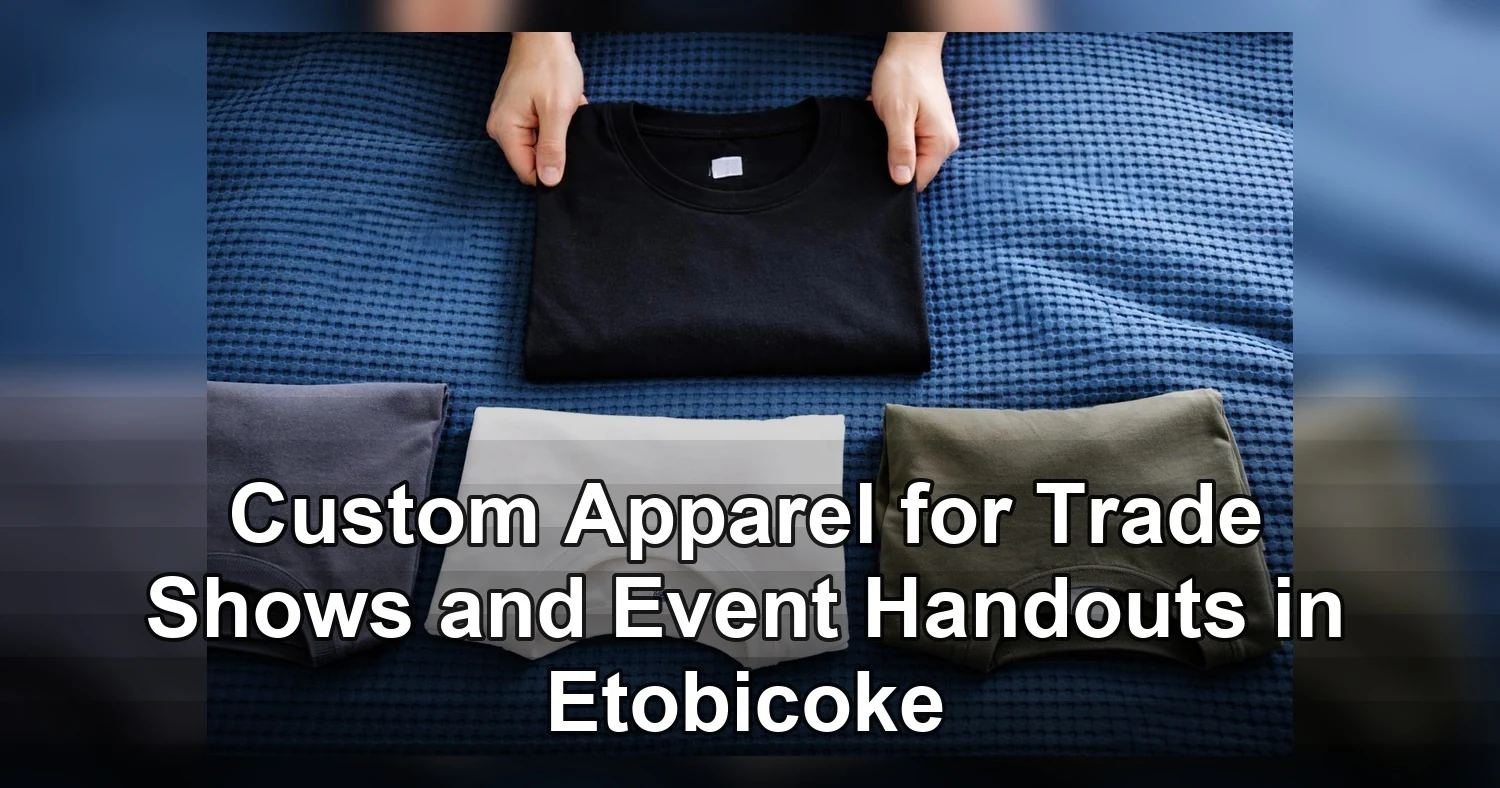
Choosing custom apparel for trade shows and event handouts comes down to a few practical choices: what your staff will wear, what guests are likely to keep, which print methods hold up, and how much time you need before the event. For local teams, the best results usually come from separating polished staff wear from lower-cost giveaway pieces and matching each item to comfort, visibility, and repeat use.
Last updated: August 2026
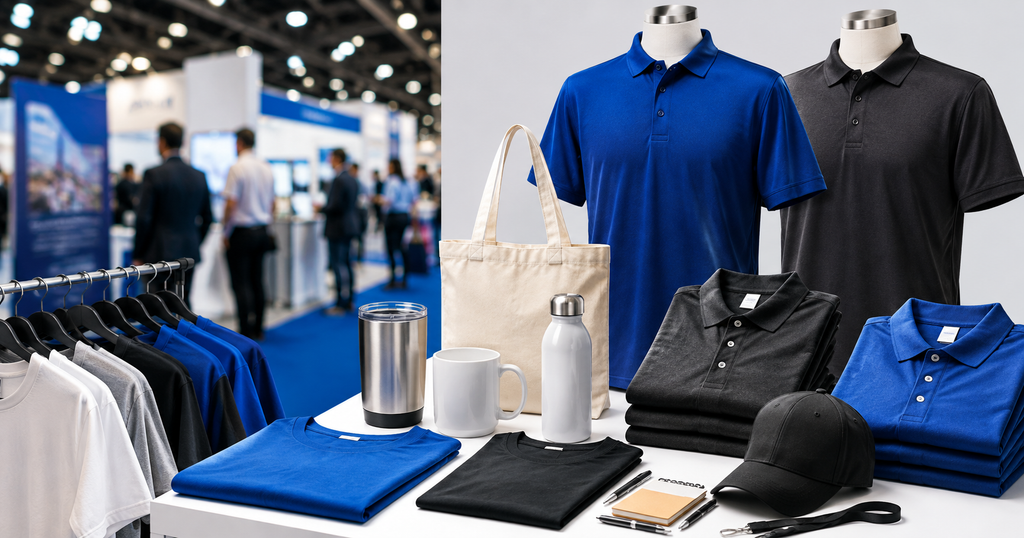
If you run a business in Etobicoke and you are exhibiting at Toronto trade shows or handing out merch at community events, compare fabrics, decoration methods, minimums, and turnaround before you order. A good starting point is to review custom apparel categories for events and promotions, then narrow the list to items your team will wear and your audience will keep. Many exhibitors choose wearable swag because practical branded items often get used after the show, a point also made in trade show swag recommendations.
Why Etobicoke businesses use apparel at the booth
For local exhibitors, custom apparel for trade shows and event handouts does more than carry a logo. It helps people spot your team faster, trust the booth sooner, and remember the brand after the event.
That matters in Etobicoke, where businesses often exhibit at Toronto convention venues, local business expos, school fundraisers, BIA street events, and community festivals. Traffic moves quickly. If attendees cannot tell who works your booth in the first few seconds, you lose chances to start conversations.
It improves first impressions immediately
Consistent exhibitor apparel makes a booth look organized, established, and ready to help. Matching polos, clean tees, or branded caps tell visitors the business planned for the event instead of putting it together at the last minute. Even a simple color system can make a smaller booth look more professional beside larger competitors.
For example, a service business from Etobicoke showing at a Toronto trade show may put sales staff in navy polos, product specialists in black tees, and team leads in branded outerwear for setup and teardown. That visual order reduces confusion and makes interactions smoother.
It makes staff easy to identify in busy venues
Trade show floors are noisy and crowded. Clear branding on the chest, sleeve, or back helps attendees find your team from a distance. That matters when staff step into aisles, demo areas, or registration lines.
- Front left chest logos work well for greetings and one-to-one conversations.
- Large back prints help people find your team after walking away.
- Branded hats help identify staff above crowded sightlines.
Many businesses use basics such as men’s cotton t-shirts for casual events and switch to layered pieces for convention halls with unpredictable temperatures.
It extends recall after the event
When attendees see your logo on staff throughout the day, brand recall improves. If they also take home wearable branded merch, the booth interaction lasts longer than the event itself. Practical wearables often outperform novelty items because people keep and reuse them. Many trade show marketers choose useful swag for that reason, as seen in this overview of best company swag for trade shows.
The result is simple: better visibility during the event, easier staff recognition, and more post-event reminders for local prospects who may contact you days or weeks later.
Choose apparel by role, not one size for everyone
The best custom apparel for trade shows and event handouts usually comes from splitting your order into two jobs: polished apparel for staff and budget-smart pieces for attendees. One garment rarely does both well.
Use staff apparel and giveaway apparel differently
Staff-only apparel should prioritize brand presentation, fit consistency, and all-day comfort. These are the pieces people associate with your company image at the booth. Polos, premium tees, quarter-zips, and lightweight jackets usually work best because they look coordinated in photos and hold up through setup, long standing hours, and repeat use.
Giveaway apparel should prioritize broad size flexibility, lower unit cost, and easy appeal. Standard cotton tees, ring-spun promo tees, and trucker caps are common choices because they are easy to distribute and simple for attendees to wear casually after the event.
If your event calendar includes both indoor expos and outdoor community activations in Etobicoke, it helps to review broader custom apparel categories before choosing one item for every season.
Match the item to the audience
A B2B trade show crowd will usually respond better to polished apparel, especially if your team is demonstrating software, professional services, or industrial equipment. A community fair or school fundraiser may be better suited to low-pressure handouts like tees or caps that families can take home and use later.
A simple way to decide is to ask who needs the item. If the answer is your staff, choose durability, comfort, and a cleaner finish. If the answer is the audience, choose an item that is easy to wear, easy to size, and easy to justify keeping.
Quick comparison for common event apparel choices
| Item type | Typical unit price range | Durability | Best use | Notes |
|---|---|---|---|---|
| Branded polo shirt | $18 to $35 | High | Staff-only apparel | Professional look, easy team matching, works well with embroidery |
| Standard cotton T-shirt | $7 to $15 | Medium | Large giveaway runs, casual staff events | Best for simple screen prints and broad size ordering |
| Premium soft-style T-shirt | $12 to $22 | Medium to high | Higher-value event giveaways | Better feel improves the chance attendees will keep it |
| Trucker hat | $10 to $20 | High | Selective giveaways, outdoor promotions | Useful for summer festivals and easy one-size distribution |
| Quarter-zip or lightweight layer | $28 to $60 | High | Team leads, sales staff, cooler venues | Best for repeat event use, not typical for mass handouts |
Simple buying rules for Etobicoke exhibitors
- Choose staff pieces first, then spend the remaining budget on giveaway volume.
- Order giveaways in fewer sizes than staff apparel. Unisex cuts in M through XL usually move fastest.
- Keep artwork simpler on handout items to control setup and print costs.
- Use premium giveaway pieces only for qualified leads, VIP meetings, or sponsor packages.
A common mistake is spending too much on expensive staff jackets and handing out low-quality shirts no one keeps. A better mix is polished team apparel plus one useful, wearable handout item that matches your audience and season.
Decoration methods and fabric specs that hold up under event use
If you want apparel to stay presentable through setup, long booth hours, and repeat wear, focus on decoration method and fabric specs before you approve artwork. The right combination keeps your brand looking sharp instead of cracked, faded, stiff, or uncomfortable by midday.
Pick decoration based on the garment and logo style
Screen printing is usually the best value for T-shirts and larger giveaway runs. It works well for bold logos, event dates, and simple front or back graphics. For staff tees, ask about ink coverage and placement size so the print stays breathable and does not feel heavy.
Embroidery is better for polos, hats, quarter-zips, and jackets where you want a cleaner corporate look. It adds texture and durability, but small text can become harder to read if the logo is too detailed. This is why many businesses use simplified chest logos on polos and save full graphics for printed tees.
Heat transfer works well for short runs, names, numbered garments, and full-color artwork. It can be useful when you need quick personalization for event staff, but low-quality transfers may show wear faster than embroidery or a good screen print.
Fabric weight and feel matter over a full event day
For indoor trade shows, 4.3 oz to 5.3 oz cotton or cotton-blend tees usually balance structure and comfort. Lighter shirts feel cooler but can show through or lose shape faster. Heavier shirts often look more premium but may feel warm under booth lighting.
For polos, moisture-wicking polyester or poly-cotton blends help staff stay comfortable during long hours. For outdoor community events, caps such as a trucker hat can add visibility and comfort without forcing everyone into heavier outerwear.
Sizing and comfort choices reduce event-day problems
- Order size curves based on your real team, not generic assumptions.
- Ask whether the garment runs slim, standard, or oversized before approving quantities.
- Choose tagless or tear-away labels for giveaway shirts when possible.
- Test one washed sample if the event order is large or recurring.
The most reliable event apparel is not necessarily the most expensive. It is the piece with the right fabric weight, a decoration method that fits the garment, and sizing that staff will actually wear confidently from morning setup to end-of-day networking.
What drives pricing for branded merch orders in Etobicoke
The biggest pricing drivers for custom apparel for trade shows and event handouts are the blank item itself, the quantity you order, and how complex the decoration is. For Etobicoke businesses, the cheapest quote is rarely the best value if the item looks thin, fits poorly, or needs to be replaced after one event.
1. Unit cost starts with the garment or giveaway
A basic cotton tee will usually cost far less than a premium ringspun shirt, performance polo, quarter zip, or fleece layer. If your booth team only needs one-day wear, simple men’s cotton t-shirts often make sense. If staff will wear the pieces at multiple expos, a better blank usually pays off in comfort and repeat use.
Price also changes by brand, fabric weight, and garment construction. A 100% cotton promotional tee is not priced the same as a soft tri-blend or moisture-wicking polyester piece, even before decoration is added.
2. Quantity breaks lower the per-piece price
Most branded merch orders get more efficient at common break points such as 24, 48, 72, 144, and 250 units. That matters for both apparel and handout items. The blank cost may drop, and your setup cost gets spread across more units.
- 12 pieces: higher cost per item, best for small staff teams
- 24 to 72 pieces: common range for local trade show crews and moderate giveaways
- 144+ pieces: better for larger campaigns, multi-event use, or broader event giveaways
If you are comparing options across custom apparel categories, ask for pricing at two or three quantity levels rather than only one. A small increase in quantity can sometimes produce a better overall budget.
3. Decoration details can change the quote fast
A one-colour front print is usually cheaper than a full front print plus back print plus sleeve logo. More decoration locations mean more labour and more setup. Screen printing is typically priced by colour count and number of print locations, while embroidery is often affected by stitch count and logo size.
- Left chest only: lower cost, cleaner look for exhibitor apparel
- Full front or full back: more impact, but a higher total
- Multiple colours: often increases print cost
- Individual names or numbering: adds personalization charges
- Setup fees: often charged per design, per location, or per decoration method
- Rush charges: common when approval is late or the event date is close
In Etobicoke, rush fees can become significant if you need artwork cleaned up, proofs revised, and production squeezed into a few business days. The easiest way to budget accurately is to ask for an all-in quote that separates blank cost, decoration, setup, tax, and delivery or pickup.
How much lead time Etobicoke teams need before a trade show
Most Etobicoke teams should allow at least 2 to 3 weeks for a straightforward apparel order and 3 to 5 weeks for larger or more customized trade show programs. The tighter the deadline, the fewer product options you will have and the more likely rush charges become.
Ideal timeline for a standard order
For a simple run of tees, polos, or hats with approved artwork, a practical schedule looks like this:
- Day 1 to 2: choose items, sizes, quantities, and submit logo files
- Day 2 to 4: receive digital proofs and request revisions if needed
- Day 5: approve final proof
- Day 6 to 12: production for standard decoration
- Day 13 to 15: local delivery or pickup, sorting, and internal distribution
If you are ordering a mix of shirts, outerwear, and headwear, or comparing several custom apparel categories, add extra approval time. Most delays happen before production starts, not during printing.
Build in time for venue rules and internal deadlines
Trade show venues often have receiving cutoffs, exhibitor move-in schedules, and rules for labeled boxes. If your event is at the Toronto Congress Centre, Enercare Centre, or another GTA venue, work backward from the exhibitor kit deadline rather than the opening day.
- Set your own internal approval deadline at least 7 business days before the venue cutoff
- Confirm whether items are shipping to your office, to a hotel, or directly to the venue
- Leave one extra day to check counts, sizes, and print quality before the event
What to do for last-minute events
If you have less than 10 business days, keep the order simple. Choose in-stock garments, limit decoration to one location, and avoid multiple proof rounds. Local pickup can save time compared with waiting on courier transit.
For truly urgent shows, prioritize the essentials first: staff apparel, one hero giveaway, and a backup quantity for new hires or damage. A smaller on-time order is usually better than a larger order that misses move-in.
Common mistakes that make event giveaways feel cheap or forgettable
Most disappointing event giveaways are not ruined by one big decision. They miss because several small choices add up: weak logo placement, the wrong fit mix, poor readability, and items that do not feel worth keeping. For custom apparel for trade shows and event handouts, avoiding these errors protects both your budget and your brand impression.
Putting the logo in the wrong place. A tiny logo buried near a seam or too low on the chest gets missed. A giant front logo can feel more like a uniform than a giveaway. For exhibitor apparel, left chest or a balanced full-front layout usually works best. For handout pieces, make sure the branding is visible when the item is worn, not folded on a table.
Ordering the wrong size mix. Too many mediums and not enough XL or 2XL is a common event mistake. Ask for a recommended size curve before approving quantities. For public-facing event giveaways, unisex fits usually reduce leftovers better than highly fitted styles.
Using poor contrast. Dark ink on a dark shirt or light embroidery on a pale cap may technically match brand colors, but it will not read well from a booth aisle. Test the logo against the actual garment color, not only on a white mockup.
Choosing blanks that feel disposable. Thin fabric, scratchy neck labels, and awkward fit are fast ways to make branded merch land in a bag and never get worn again. Useful, wearable trade show swag ideas tend to perform better because people keep items that feel practical and comfortable.
Over-ordering the wrong item. It is easy to get tempted by a lower unit price and buy too many niche items. Before you commit to a large run of trucker hats or another style-specific product, ask whether your audience actually wears it. For Etobicoke events with mixed foot traffic, broad-appeal items usually move more consistently than trend-driven pieces.
A simple check before ordering helps avoid wasted spend: confirm visibility, comfort, size range, audience fit, and leftover risk. If an item fails two of those five tests, it is probably not the right giveaway.
A simple order checklist for your next Etobicoke event
The fastest way to place custom apparel for trade shows and event handouts is to decide three things upfront: who is wearing it, who is taking it home, and what result you want from the order. For Etobicoke businesses preparing for a trade show, hiring fair, school activation, or community booth, that split prevents last-minute changes and helps your quote stay accurate.
1. Separate staff apparel from giveaway items
Start by listing what your team needs to wear at the booth and what attendees will actually keep. Exhibitor apparel should make your staff easy to spot from a distance, while event giveaways should be simple, useful, and easy to carry. Many businesses pair men’s cotton T-shirts for booth staff with a low-commitment giveaway like a cap or a limited-size tee run.
That approach also matches what many event marketers recommend, since practical trade show swag tends to get more repeat use than novelty items people toss before they leave the venue.
2. Get your artwork and counts organized before asking for pricing
Have your logo files ready in vector format if possible, such as AI, EPS, or print-ready PDF. If you only have a PNG or JPEG, note that early so your supplier can confirm whether the file is usable for print or embroidery.
Next, estimate quantities by purpose, not just by total. Example: 12 staff shirts, 24 backup shirts, 75 giveaway caps, and 150 promo tees. For apparel, include a size run instead of guessing evenly. A practical adult mix for many Etobicoke teams is S to 2XL, with the heaviest counts in M, L, and XL.
3. Use this pre-order checklist
- Event name, date, and Etobicoke venue or delivery location
- Main goal: booth visibility, team uniforming, lead generation, VIP gifting, or general event giveaways
- Products needed for staff versus products needed for attendees
- Artwork files attached, with notes on logo placement such as left chest, full front, sleeve, or cap front
- Branding priorities: maximum visibility, premium feel, lowest cost per piece, or broadest quantity reach
- Total quantities by item, plus realistic size runs for each wearable product
- Colour choices for garments and ink or thread
- Any special use case, such as outdoor crews needing visibility gear or weather-ready layers
- Budget range if you want options matched to spend
- Browse next if you are still narrowing products: general custom apparel categories, a promotional trucker hat, or basic event tees for volume orders
If you can send that list in one message, your order usually moves from quote to approval much faster and with fewer revisions.
Before you order, confirm your event date, staff headcount, size run, giveaway quantity, logo files, and whether you need pickup or rush production in Etobicoke. If you want better event results without overspending, start with one staff apparel option and one handout item, then request a quote based on your deadline and target quantity.
Related Products and Services
If you are planning a similar project, these related options may help.
Helpful External Resources
These sources provide supporting background and additional context.
-
What is the best custom apparel for trade shows and event handouts?
For most events, branded polos or tees work well for staff, while low-cost tees or caps are a better fit for attendees. Staff apparel should look polished and be easy to spot on the show floor. Giveaway apparel should be comfortable, broadly sized, and useful enough that people will keep wearing it after the event.
-
Should staff wear the same item as giveaway apparel?
Not necessarily. Staff should wear a more polished, consistent garment so they stand out clearly and look coordinated. Giveaway apparel can be a simpler version, as long as it uses the same logo, colours, and overall branding style.
-
How early should I order branded merch before an Etobicoke event?
Plan for 2 to 3 weeks for a straightforward order and 3 to 5 weeks for larger or more customized programs. That gives enough time for artwork review, proof approval, production, and local pickup or delivery. If your event date is close, choose in-stock items and limit decoration to one location.
-
Is embroidery or print better for exhibitor apparel?
Embroidery is usually best for polos, hats, quarter-zips, and jackets when you want a more professional look. Print is better for T-shirts, larger artwork, and lower-cost giveaway runs. The right method depends on the garment, the design detail, and how the apparel will be used.
-
What file should I send for custom apparel artwork?
Vector files such as AI, EPS, or print-ready PDF are ideal because they keep logos crisp and scalable. If you only have a PNG or JPG, send the highest-resolution version you have. If possible, include brand colour notes and any placement preferences, such as left chest, full front, or sleeve.
Get a Free Quote Today
Contact us at +1-(416) 288-8661 or Email us at info@Brandingcentres.com and let's get started.