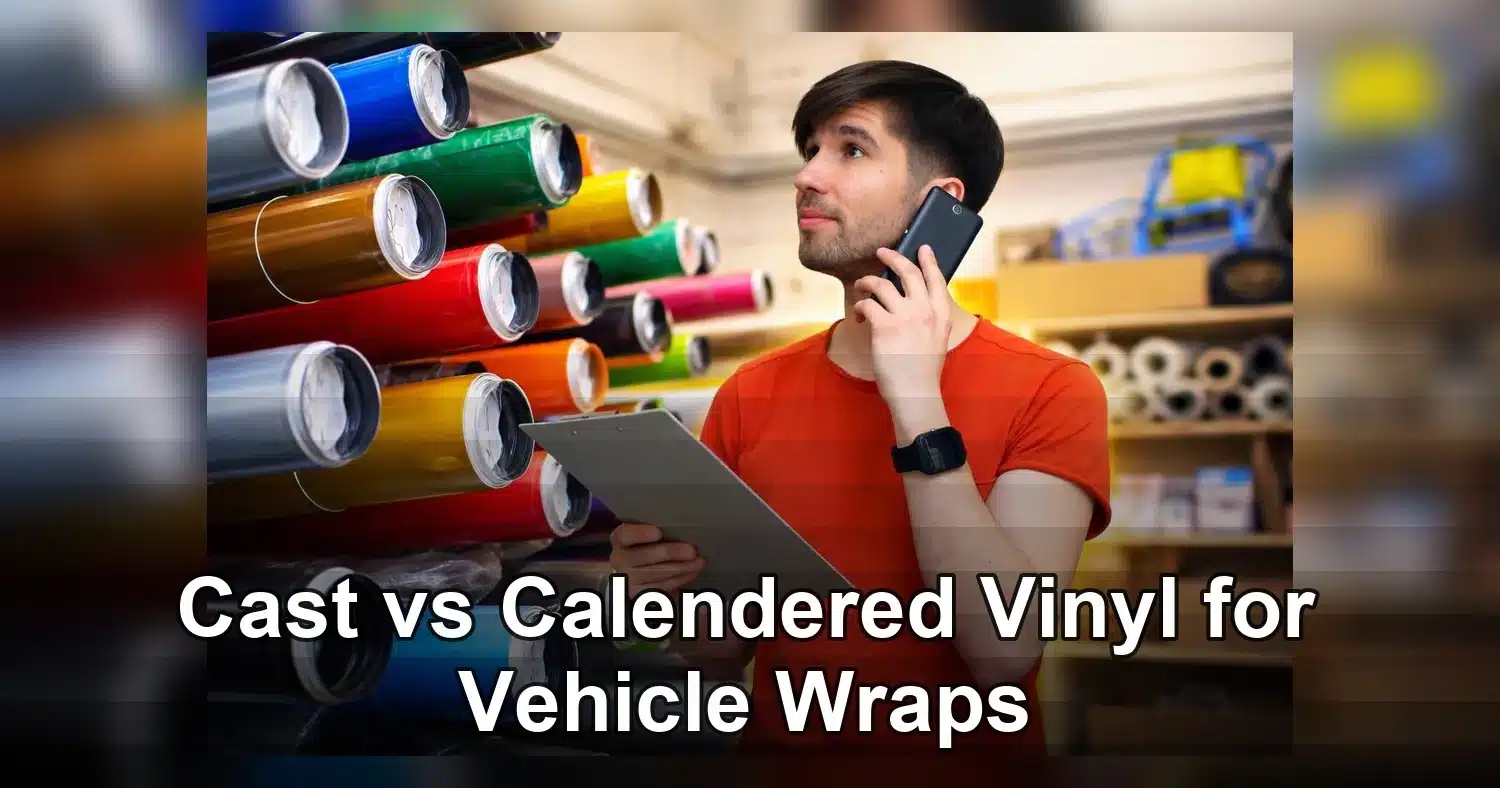
The biggest mistake buyers make is choosing wrap film by price alone. In a cast vs calendered vinyl comparison, cast is usually the better choice for full wraps, deep curves, and longer service life. Calendered film often makes more sense for flatter panels, trailers, simple graphics, and short-term promotions.
Last updated: May 2026
For fleet managers balancing uptime and replacement cycles, and for owners wrapping a single car or van, the real difference is how each film is made and how that affects stretch, shrinkage, install time, and removal later. As PRINTING United Alliance explains in its cast versus calendered overview, cast films are made for demanding curves and dimensional stability, while calendered films are thicker and better suited to less complex surfaces. If your project is limited to accent graphics or van stripes and simpler panel layouts, a quality calendered film may be enough. A full wrap on a contoured vehicle usually is worth the step up to cast.
cast vs calendered vinyl: side-by-side comparison
The main difference in cast vs calendered vinyl is how the film is made, and that manufacturing method affects stretch, shrinkage, thickness, finish, and how well the film handles curves, recesses, and long outdoor exposure.
Cast film starts as a liquid coating, while calendered film is extruded and rolled into shape. That matters because rolling introduces more internal stress. On a vehicle, that built-in memory can show up later as edge lift, more shrink at seams, and less forgiveness around deep channels or compound curves.
Cast vinyl is usually thinner, often around 2 mil, and more dimensionally stable. It lays down smoothly over rivets, body lines, mirrors, and door recesses. Calendered vinyl is usually thicker, often around 3 to 4 mil, and works best on flatter panels, simple curves, and shorter-term graphics. Many premium wrap lines from 3M vinyl and Avery vinyl are cast because full wraps need high conformability and low shrink.
| Factor | Cast vinyl | Calendered vinyl | Best fit |
|---|---|---|---|
| How it is made | Liquid cast onto a liner and cured | Extruded and stretched through rollers | Cast for premium wraps, calendered for flatter graphics |
| Typical thickness | About 2 mil | About 3 to 4 mil | Thinner cast film conforms better |
| Stretch and conformability | Excellent on curves, channels, rivets | Fair to good on flat or simple curves | Cast for full wraps and complex body shapes |
| Shrinkage and memory | Low shrink, low memory | Higher shrink, more memory | Cast for long-term edge stability |
| Outdoor durability | Often 5 to 10 plus years depending on line and climate | Often 2 to 6 years depending on line and climate | Cast for long ownership cycles |
| Cost | Higher material cost | Lower material cost | Calendered for budget-driven, short-term jobs |
In shop terms, cast vinyl is the safer choice when failure would be expensive to redo. Calendered vinyl makes sense when the surface is simple, the campaign is shorter, or the budget matters more than maximum wrap performance.
Appearance matters too. Cast film generally settles into the panel with fewer tension marks, which helps a wrap look smoother on modern vehicles with sculpted body lines. Calendered film can still look clean on flat surfaces, but once you start pushing it around deep features, the finish is more vulnerable to lifting, bridging, or visible stress.
Which wrap projects are best for each film?
The right film depends on body shape, annual mileage, and how long you plan to keep the graphic on the vehicle. If the vehicle has deep contours or will stay branded for years, choose cast vinyl. If the surface is mostly flat and the message is temporary, calendered vinyl can be the smarter spend.
Best jobs for cast vinyl
- Fleet vans with corrugations, door recesses, and long service cycles
- Service trucks that see daily highway mileage, sun, heat, and frequent washing
- Passenger cars with bumpers, mirrors, and compound curves
- Trailers getting full coverage, especially large graphics across panel seams and rivets
For example, a plumber’s van kept in service for five years should usually be wrapped in cast film, especially if the design crosses sliding doors, handles, and lower body contours. The same logic applies to trailer full wraps, where large panels, rivets, and long viewing distances make clean seams and stable edges critical.
Best jobs for calendered vinyl
- Short-term promotions on flat-sided vans or box trucks
- Basic door lettering and spot graphics on simple panels
- Temporary campaign graphics for leased vehicles being cycled out soon
- Budget-sensitive striping on flatter surfaces
Calendered film can also work for simpler van stripes and some car stripes, provided the design does not need to sink into deep channels or wrap tight corners. If the job is mainly decorative rather than a full coverage branding project, calendered can be a practical middle ground.
Quick decision factors
- If the vehicle will be sold or de-fleeted in 12 to 24 months, calendered often pencils out.
- If the wrap must survive 3 to 7 years of road use, cast is usually the better total-cost choice.
- If the body has complex curves, textured areas, rivets, or recesses, cast is the safer install.
- If you are matching premium OEM-style finish and appearance, cast film usually looks better after installation.
Removal is worth thinking about up front as well. A short-term calendered graphic on a lease vehicle may be fine if it comes off before the film ages too hard. For a long-term commercial wrap, cast is often the better spec because it stays stable during service and is less likely to create a labor-heavy removal problem later.
How long each wrap material lasts in real use
In real use, cast vinyl usually lasts longer and ages more predictably than calendered vinyl, but actual lifespan depends as much on the vehicle environment and care routine as the film spec sheet.
Typical real-world lifespan
On a daily-driven vehicle, cast vinyl wrap film often gives a practical service life of about 5 to 7 years, with premium products sometimes going longer on vertical surfaces. Calendered vinyl often lands closer to 2 to 4 years in fleet use, sometimes longer on flat, lightly used vehicles and sometimes shorter in harsh sun or heavy-duty service.
Those ranges are usually more useful than headline claims. A sample tested under ideal conditions is not the same as a truck parked outside every day, washed weekly, and driven on salted roads all winter.
What shortens life fastest
- Constant UV exposure, especially on hoods, roofs, and upper rear doors
- High heat and sun-baked parking lots
- Frequent pressure washing, especially too close to edges and seams
- Road salt, de-icers, fuel spills, and harsh detergents
- Improper post-heating on channels, recesses, and stretched areas
Horizontal panels almost always age first. A wrap may still look good down the sides while the hood and roof start fading, drying out, or lifting earlier. High-mileage service trucks and delivery fleets usually see this sooner than owner-driven cars.
Climate and storage also matter
A vehicle that lives indoors at night and spends most of the day in moderate weather usually gets more life from either material. In hot climates, the adhesive sees more stress and the film can age faster. In cold regions, repeated freeze-thaw cycles and winter washing can be harder on seams and edges. That is one reason cast is often favored for vehicles that stay in service across multiple seasons and multiple drivers.
Warranty limits buyers should understand
Most warranties are not a blanket promise that every panel will look perfect for the full term. Coverage may differ by color, print system, laminate, climate zone, and panel orientation. Damage from poor prep, neglected cleaning, pressure-washer misuse, collision repair, or unsupported installation methods is commonly excluded.
For buyers comparing cast vs calendered vinyl, the practical rule is simple: use the warranty as a baseline, then subtract for heat, sun, mileage, wash frequency, and winter road salt. If the wrap needs to stay sharp through years of real road abuse, cast vinyl gives you more margin for error.

Install complexity, curves, and shop labor
The more shape a vehicle has, the more the install favors cast vinyl over calendered vinyl. Flat panels are simple. Deep recesses, rivet lines, textured bumpers, mirror caps, and compound curves are where film choice shows up in labor time and finished quality.
Why complex bodies take longer
On a box truck, service van, pickup, or trailer, installers spend extra time working around body seams, door handles, wheel arches, and tight bumper transitions. Each of those areas adds trimming, heat management, and post-heating. If the film resists conforming, the shop may need more relief cuts or extra panel seams, which increases the risk of edge lift later.
Cast vinyl generally stretches and settles more evenly on complex surfaces. Premium cast films from brands like 3M vinyl and Avery vinyl are popular in wrap shops because they reduce fighting the material. That usually means fewer reworks, cleaner edges, and less time spent chasing bubbles or memory back-out on corners.
Where labor is saved
- Deep recesses and channel lettering that need the film to relax without lifting.
- Bumpers and fascias with tight curves that can crack lower-grade film if pushed too hard.
- Riveted panels, where conformability affects how cleanly the wrap lays between fasteners.
- Large fleet installs, where shaving even 30 to 60 minutes per unit affects turnaround.
For simple striping and partial graphics, calendered vinyl can still be a good fit, especially for car stripes or van stripes. But once the design wraps around complex shapes, premium cast film often saves labor by reducing install risk and rework.
What good installation looks like
A proper install is not just about making the film stick. The best shops control stretch, use heat carefully, keep edges clean, and post-heat stressed areas so the vinyl settles instead of fighting back later. That matters on mirrors, bumpers, handles, and deep channels where the wrong pull can create a failure point even if the film grade is correct.
What changes the price of a vehicle wrap?
The upfront price of a wrap depends on more than square footage. Material grade, print coverage, prep work, and labor hours all affect the quote, and the cheapest bid is not always the lowest total cost over the life of the wrap.
Main cost drivers
- Material cost: Cast vinyl usually costs more than calendered vinyl, especially for premium films, laminates, and specialty finishes.
- Print coverage: Full coverage wraps use more ink, more laminate, and more install time than spot graphics or partial branding.
- Labor hours: Complex body lines, tight curves, and large vehicle surfaces add install time.
- Prep work: Decontamination, degreasing, badge removal, and minor surface correction can materially affect pricing.
- Rework risk: If a film is hard to conform, the shop may need to redo panels, which raises total cost.
How to compare quotes fairly
A lower quote can hide shortcuts. For example, a simple one-color stripe package from vinyl stripes products is usually priced very differently than a full printed fleet wrap because the wrap coverage and install complexity are not the same. A quote should clearly state the film grade, whether it is cast or calendered vinyl, what prep is included, and whether removal of trim or emblems is part of the job.
Fleet managers should also factor downtime. If one material installs faster, holds edges better, and reduces returns for repairs, that can beat a cheaper roll price. For larger units like trailers, the labor difference can be even bigger, which is why a full wrap project such as trailer full wraps often needs a more detailed cost breakdown than a small car graphic.
Why the cheapest roll is not always cheapest overall
If a lower-grade calendered film starts shrinking at seams or lifting on a curved area, the repair cost can erase the savings quickly. On the other hand, paying for cast on a basic flat-panel graphic can waste budget with no real gain. The best value comes from matching the material to the actual surface and the expected life of the job.
Common mistakes that shorten wrap life
The most expensive wrap mistakes usually happen before the first mile is driven. Wrong film choice, poor prep, and rushed installation can cut service life dramatically, especially on fleet vehicles that see daily weather, washing, and road vibration.
Using the wrong vinyl for the shape
One of the biggest errors is installing calendered vinyl on complex curves or deep recesses because the material was cheaper. Calendered film has more memory and less conformability, so it can pull back at edges, bridge over channels, or crack after repeated flexing. On straightforward panels it can perform well, but on compound curves the risk goes up fast.
Over-stretching the film
Even good cast vinyl can fail early if it is stretched too far during install. Thin areas may look fine on day one, then shrink back, discolor, or lift at corners later. The problem gets worse when installers chase one-piece coverage over a shape that should have been panel-seamed or relief-cut correctly. Proper heat, tension control, and post-heating matter as much as the roll itself.
Skipping prep or assuming all brands perform the same
Surface prep is not optional. Dirt, wax, silicone, oxidation, and edge contamination weaken adhesion and shorten life. That is why the shop process matters as much as the vinyl wrap film. Different brands and grades also perform differently; premium cast films often have better dimensional stability and adhesive systems than economy films, so expecting identical results is a costly mistake.
- Clean and decontaminate all panels before install.
- Remove old adhesive, wax, and road film.
- Use the right film grade for the vehicle shape.
- Do not over-pull corners or deep channels.
- Post-heat every stressed area to the correct temperature.
For the best lifespan, match the material to the vehicle and the job, not just the price per roll. On busy fleets, that decision usually pays back in fewer callbacks and less downtime.
How to spec the right vinyl wrap film with your installer
The right spec starts with the job, not the brand name. When you compare cast vs calendered vinyl with your installer, the goal is to match the film to the vehicle shape, the expected service life, and the budget so you do not overbuy on simple panels or underbuy on hard curves.
Bring these questions to the estimate
- What parts of the vehicle have deep channels, rivets, compound curves, or bumpers that need higher conformability?
- Is this a short-term promotion, a 3 to 5 year fleet graphic, or a long-term wrap?
- Will the vehicle live outside full time, run local delivery routes daily, or go through frequent washing?
- Are you quoting the same film family for print film and overlaminate, or mixing brands like 3M vinyl and Avery vinyl?
- What warranty applies to the actual surface being wrapped, including doors, recesses, and trailers?
- If a panel gets damaged, can you reprint and color-match one section later?
If you hear that cast film is typically thinner and more conformable, that matters most on complex body lines, not as a general upgrade.
Choose by vehicle shape and graphic type
Ask your installer to spec cast vinyl for full wraps on vehicles with recesses, curved panels, and high-touch edges. That usually means vans, pickups with sculpted bedsides, and many modern SUVs. Calendered vinyl can be a value play on flatter box trucks, simple door graphics, and straight-panel applications where the design does not need to sink into channels.
If your branding is mostly accents rather than a full color wrap, vinyl stripes products may give you the look you want without paying for a full wrap spec.
Know when a mixed-material spec makes sense
A smart installer may use cast on high-stress areas and premium visible zones, then reserve calendered vinyl for flatter sections or short-term campaign elements. That approach can lower total cost without compromising the areas most likely to fail first.
For example, a delivery van might use cast film on the cab and recessed side panels, while simpler branding is handled with van stripes. A box trailer with large flat sides may be better quoted as trailer full wraps with a spec tailored to those broad, less complex panels.
Before you approve a wrap, ask your installer to spec the film around vehicle shape, expected years in service, storage conditions, wash routine, and whether the job includes bumpers, rivets, or deep recesses. A side by side quote for both cast and calendered options usually makes the best choice clear, and it can save you from paying twice through early failure, extra labor, or avoidable rework.
Which is better for a full vehicle wrap, cast or calendered vinyl?
Cast vinyl is usually the better choice for a full vehicle wrap because it conforms more easily to curves, recessed areas, and complex body lines. Calendered vinyl can work on flatter panels, but for a long-lasting, cleaner wrap on a full vehicle, cast vinyl is usually the safer spec.
Why does cast vinyl usually cost more than calendered vinyl?
Cast vinyl costs more because it is made through a more controlled manufacturing process that produces a thinner, more stable film with better conformability. That added performance helps it install better on difficult surfaces and usually improves durability, which is why the price is higher.
Can calendered vinyl work on curved panels, rivets, and bumpers?
Calendered vinyl can handle mild curves, but it is not ideal for deep recesses, rivets, or heavily curved bumpers. It is more likely to lift, wrinkle, or shrink in stressed areas. For those parts, cast vinyl is generally the better fit.
How do 3M vinyl and Avery vinyl compare for vehicle wraps?
Both 3M and Avery offer strong vehicle wrap products, and the best choice depends on the specific film line, not just the brand name. Compare cast versus calendered construction, conformability, warranty, and installation preferences. For complex wraps, look for each brand’s premium cast wrap films.
What should I check before ordering cast vs calendered vinyl?
Confirm the vehicle surfaces, expected lifespan, finish, and installation conditions. Also check whether the vinyl is rated for full wraps, partial wraps, or flat-panel graphics. The right choice in cast vs calendered vinyl depends on the shape of the vehicle and how long the wrap needs to last.
Does cast vinyl require different file prep or installation than calendered vinyl?
The artwork setup is usually similar, but cast vinyl often gives installers more flexibility on complex panels. For either material, make sure files are scaled correctly, edges are clean, and critical text stays away from seams, handles, and deep contours.
Get a Free Quote Today
Contact us at +1-(416) 288-8661 or Email us at info@Brandingcentres.com and let's get started.