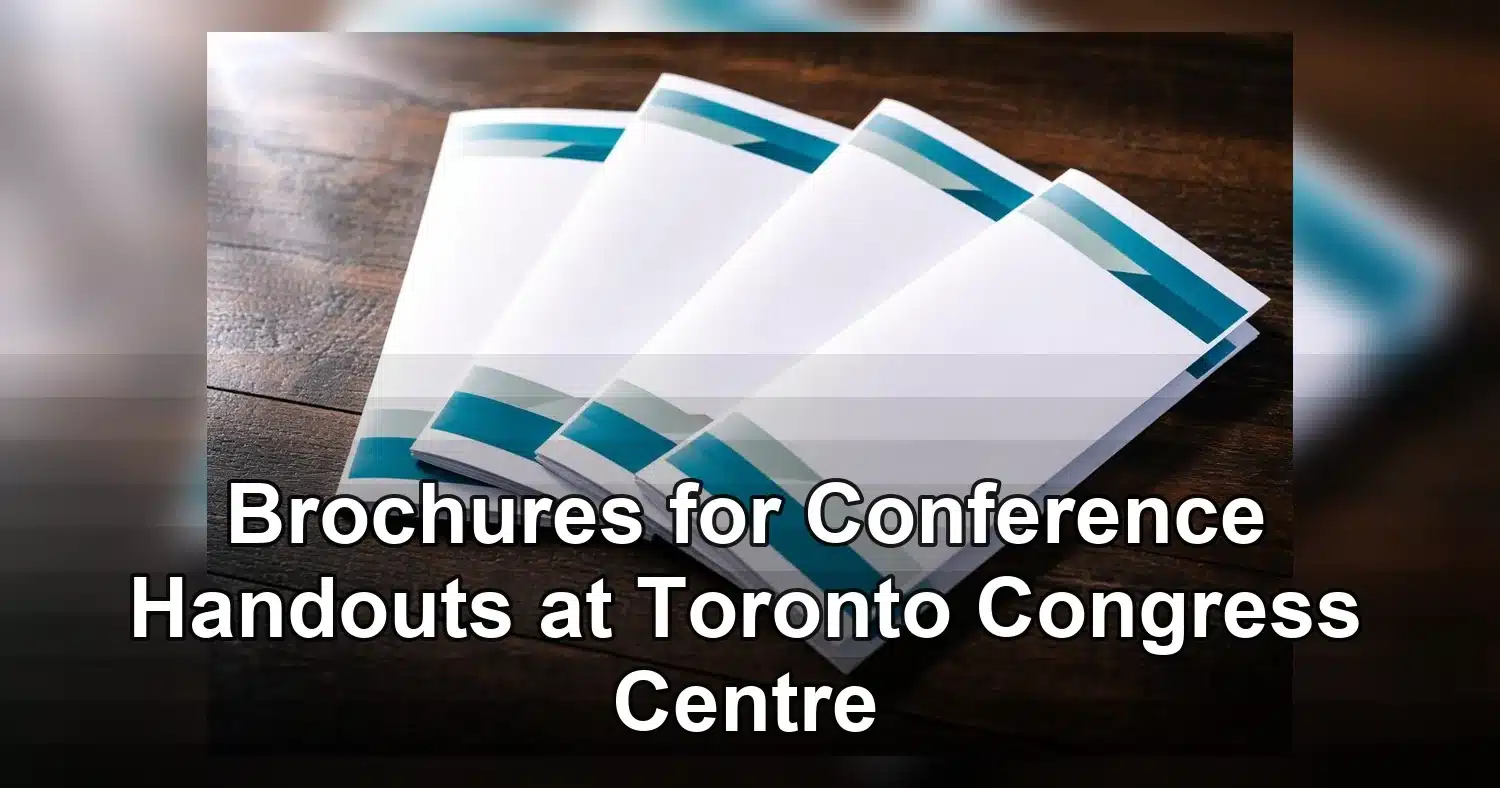
If you need brochures for conference handouts at Toronto Congress Centre, the best choice is a format that matches your booth goal, survives heavy attendee handling, and can be produced on a schedule that fits your event deadline. For conference marketers, event planners, and exhibitors, that usually means a brochure that is easy to scan in a busy aisle, simple to carry between sessions, and built to drive one clear next step such as a meeting request, demo signup, or QR code visit.
Last updated: April 2026
Ready to print brochure printing?
Send your artwork, quantity, and deadline to Branding Centres. We will help confirm specs, turnaround, and the best production option.
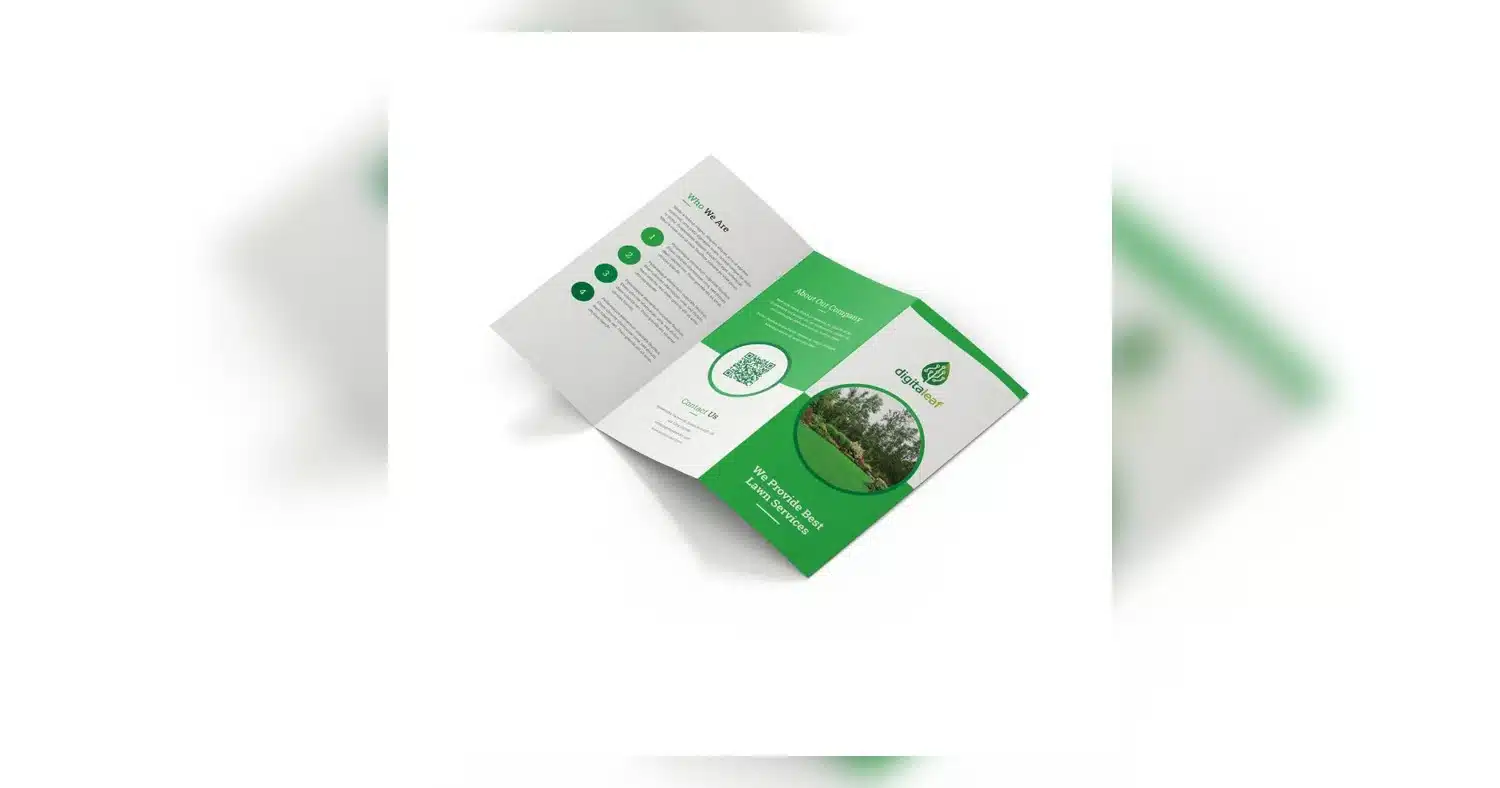
At Toronto Congress Centre, handouts compete with crowded booths, short conversations, and limited attention spans, so format and print specs matter as much as your message. If you are comparing sizes, folds, and finishes, start by reviewing brochure products and format options so your design fits your audience and your budget. Toronto conference print providers also note that direct venue delivery and fast turnaround are common event requirements, as outlined in this Toronto trade show and conference printing overview.
Why conference brochures still work at Toronto Congress Centre
Brochures for conference handouts at Toronto Congress Centre still work because they give attendees something immediate, portable, and useful after the first conversation ends.
At a busy conference, people are scanning badges, checking schedules, and moving between booths and sessions quickly. A printed brochure does one job especially well: it turns a short interaction into a takeaway that can be reviewed later without reopening an email, searching a website, or trying to remember a company name from memory.
Why print still wins on the show floor
Conference brochures help exhibitors, sponsors, and session marketers keep their message in the attendee’s hands. A strong brochure can be skimmed in under a minute, then saved for later when the attendee is back at the office. That matters at Toronto Congress Centre, which hosts trade shows, meetings, and multi-hall events where visitors often collect information from dozens of vendors in a single day.
Printed handouts also solve a practical problem that digital-only follow-up often misses. Not every visitor wants to stop and fill out a form, download a file, or stand in a booth long enough for a full demo. A brochure gives them the headline message, key benefits, contact details, and a QR code for deeper content when they are ready.
Where brochures perform best
- Exhibitor booths that need a quick overview of products, services, and differentiators
- Sponsor activations that want to reinforce branding after attendees leave the area
- Breakout sessions that need a leave-behind with speaker points, resources, or next steps
- Sales teams that want attendees to share information internally with procurement or leadership
The best event handouts are not mini websites. They are decision tools. They help someone remember who you are, what you offer, and what to do next. In a venue where attention is limited and post-event inboxes fill up fast, printed handouts still earn their place.
How to choose brochures for conference handouts at Toronto Congress Centre
The right format depends on what the handout needs to do: start a booth conversation, support a sales follow-up, or summarize a session in a way people will actually keep.
If you are comparing brochure format options, focus on four factors first: message depth, audience intent, portability, and budget. At Toronto Congress Centre, where attendees may be walking long distances between exhibit areas and meeting rooms, compact formats usually outperform oversized pieces unless the content truly needs more space.
| Format | Best use | Audience fit | Portability | Relative cost |
|---|---|---|---|---|
| Single-sheet handout | Fast booth traffic, session recap, product launch summary | Attendees who want the essentials quickly | Excellent | Low |
| Tri-fold brochure | Company overview, service categories, CTA with QR code | General booth visitors and early-stage prospects | Excellent | Low to medium |
| Bi-fold brochure | More visual storytelling, premium product overview, sponsor message | Qualified prospects who need more context | Very good | Medium |
| Booklet | Detailed solutions, case studies, technical specs, multi-offer programs | Buyers, partners, and decision-makers with deeper interest | Good | High |
Quick selection rules
- Choose a single sheet when speed matters more than detail.
- Choose a tri-fold when you need a classic conference brochure that covers who you are, what you do, and how to follow up.
- Choose a bi-fold when design, imagery, and cleaner panel space matter more than packing in text.
- Choose a booklet when the handout must support a longer sales cycle after the event.
For high-volume booth traffic, simpler usually works better. For session takeaways, a concise printed handout with one clear message often beats a thick piece that gets left on a chair. For sponsors and exhibitors targeting qualified leads, use the format that matches the depth of the next conversation, not just what looks impressive on the table.
Print specs that make event handouts easier to read and harder to ignore
Print specs affect results more than most teams expect. Even strong messaging can underperform if the brochure is too glossy under overhead lights, too small to skim while walking, or too flimsy to survive a full conference day.
Size and fold choices that work in real event use
For most conference brochures, 8.5 x 11 inches folded to a tri-fold or bi-fold is the safest starting point. It fits literature racks, tote bags, and jacket pockets without feeling cramped. Single-sheet event handouts also work well at 8.5 x 11 when the goal is a quick read. For longer content, a 5.5 x 8.5 booklet is easier to hold and browse than a larger booklet that feels bulky on the show floor.
Keep fold choice tied to the content flow. Tri-folds suit step-by-step messaging. Bi-folds give you larger panels for visuals and cleaner hierarchy. If attendees need to open the piece fully to understand it, the structure is probably too complicated.
Paper stock and finish decisions
Paper changes how professional the handout feels. An 80 lb or 100 lb text stock is common for brochures that need flexibility. If you want sharper imagery and a more polished sales look, gloss text brochures can make photos and brand colors stand out. If the audience may write notes on the handout, a matte or Enviro uncoated brochures stock is often the better fit.
Avoid finishes that create heavy glare under exhibit hall lighting. Spotlights and overhead fixtures can make dense glossy panels harder to read at a glance.
Readability, color, and QR code performance
- Use high-contrast body text. Dark text on a light background is easiest to scan.
- Keep body copy around 10 to 12 pt for comfortable reading in busy environments.
- Limit each panel to one main message and one action.
- Make QR codes large enough to scan quickly and leave clear space around them.
- Test color choices under bright indoor lighting before final print approval.
A practical rule for printed handouts is this: if someone cannot understand the offer, find the contact details, and scan the QR code in under 10 seconds, the brochure needs refinement. At Toronto Congress Centre, where attention is split between speakers, booths, and networking, clarity beats complexity every time.
Turnaround time and delivery planning for a Toronto Congress Centre event
The safest plan is to treat brochure production as a multi-step schedule, not a last-minute print job. For brochures for conference handouts at Toronto Congress Centre, build in time for proofing, press production, finishing, transit, and a final buffer for show-day handoff or pickup.
Plan backward from your handout deadline
Start with the time your team needs the Toronto Congress Centre event schedule to be fully set up, then work backward. If brochures must be on-site before doors open, aim to have final print-ready files approved at least several business days earlier. That gives room for one round of revisions, a final PDF proof, and production without rush charges.
For standard conference brochures, the biggest timing risks are delayed content approval and late artwork changes. If your brochure includes speaker lists, sponsor logos, session times, or booth details, lock those items early. A change to one phone number can still trigger a full reproof, so the closer you get to print, the more expensive every edit becomes.
Build in production and delivery buffers
Use this practical planning order:
- Proofing and approvals: 1 to 2 days
- Production and finishing: 2 to 5 business days depending on quantity and stock
- Shipping or courier delivery: 1 to 2 days in the Toronto area
- On-site pickup or handoff: schedule an extra buffer in case dock access, traffic, or event registration timing changes
If you are choosing heavier stocks or specialty coatings from conference brochure products, add more time because these options may require extra finishing steps. If you want a polished visual finish, gloss text brochures can be a strong option, but confirm drying and binding time before committing to a tight deadline.
For same-week events, confirm whether delivery should go directly to the venue, to your hotel, or to a local team member who can carry materials in. That small decision can prevent missed drop-offs, re-delivery fees, and stress on show day.
What drives brochure pricing for conferences and how to budget smart
The price of conference brochures is driven by a few predictable variables: quantity, page count, paper stock, coating, color coverage, finishing, and turnaround time. Once you understand those inputs, comparing quotes becomes much easier and far more accurate.
The main cost drivers
Quantity matters first. Higher quantities usually lower the per-piece price, but only up to the point you truly need. Ordering too many can waste budget if speaker details, session times, or sponsor pages change after the event.
Page count is the next big factor. A 4-page folded piece costs less than an 8-page or 12-page booklet because it uses less paper and less press time. If your content is light, condensing it into a simpler format can save money without hurting impact.
Stock affects both cost and feel. Lighter uncoated stocks are often budget-friendly and easy to write on, while premium coated options create sharper images and a more polished look. If you want a more natural feel for brochures for conference handouts at Toronto Congress Centre, consider Enviro uncoated brochures.
Coating and ink coverage can change pricing as well. Heavy full-color backgrounds, large photo areas, and rich blacks use more ink and may raise production costs. A cleaner layout with disciplined color use can reduce spend while still looking professional.
Finishing includes folding, scoring, trimming, stapling, and binding. More complex folds or booklet styles cost more than simple folded sheets. Rush production is another major add-on, especially if files arrive late or the brochures need to be delivered on a compressed timeline.
How to budget smart
- Choose the shortest format that still covers the message.
- Match stock to use case, not just visual preference.
- Request quotes with the same size, page count, and finishing so pricing is comparable.
- Build in a small overage for last-minute handouts and replacements.
- Leave room in the budget for shipping or local delivery to the venue.
If you compare quotes using the same specifications, you will quickly see whether one vendor is genuinely cheaper or simply quoting a lower-quality version. That makes budgeting for printed handouts far more predictable.
Common brochure mistakes exhibitors make and how to fix them
The most expensive brochure mistakes are usually design and proofing errors, not print defects. For exhibitors using brochures for conference handouts at Toronto Congress Centre, the most common problems are crowded layouts, weak calls to action, tiny text, incorrect folds, and rushed approvals.
Overcrowded layouts
If a brochure tries to say everything, attendees usually remember nothing. Dense paragraphs, too many product features, and oversized graphics can make the piece feel hard to scan. Fix this by narrowing the message to one primary offer, a few supporting points, and a clear next step. Use headings, bullets, and white space so the content works in a busy event setting.
Weak or missing calls to action
A brochure should tell readers what to do next. If the call to action is vague, the piece becomes a passive handout instead of a lead tool. Use a direct action such as booking a demo, visiting a booth, scanning a QR code, or contacting a sales rep after the show. Make that action visible on the back panel or final page.
Wrong fold choice
Many exhibitors pick a fold before planning the content. That creates awkward panel order, hidden messages, or information that reads out of sequence. Match the fold to the story. A tri-fold works well for simple service overviews, while a booklet format is better for product lines, schedules, or multi-speaker events. If your piece needs more visual punch, a cleaner finish can help key images stand out, but only if the layout is simple enough to support it.
Tiny text and weak contrast
Small type may save space, but it hurts readability on the show floor. Keep body copy large enough to scan quickly and avoid low-contrast combinations that disappear under venue lighting. If attendees need glasses to read the brochure, the piece is already failing.
Poor proofing
The final proof is where most costly mistakes are caught. Check names, titles, URLs, dates, booth numbers, and QR code destinations carefully. Verify that the printer’s trim, bleed, and fold lines are correct before approving production. One missed typo or wrong date can waste an entire run of event handouts.
A simple preprint checklist helps: confirm content, confirm fold, check legibility, test links and QR codes, and approve only after a second person reviews the file. That process saves money and protects the credibility of your booth materials.
Build a handout package that supports your booth and follow-up
The best brochures for conference handouts at Toronto Congress Centre do not work alone. They perform better as part of a small handout system that helps people remember your booth, scan a code, and respond after the event.
Pair the brochure with one fast next step
Your brochure should carry the full story, but it should not carry every response option. At the booth, attach or bundle it with a business card, a one-sheet insert, or a short offer card that gives visitors an easy reason to act within 24 to 72 hours.
- Business card for direct sales follow-up and personal contact details
- Insert card for a show-only offer, sample request, or demo booking
- QR code that leads to a page built specifically for the Toronto Congress Centre event audience
- Short handwritten note on the brochure cover for top-value conversations
If your audience wants a premium leave-behind, use gloss text brochures for strong color and product imagery. If they are likely to write notes during the conversation, Enviro uncoated brochures are easier to mark up with a pen.
Make QR tracking measurable, not generic
A QR code should not send every attendee to your homepage. Use a dedicated landing page with UTM parameters, a short form, and one clear call to action such as book a call, download a spec sheet, or request pricing. Create separate codes for each campaign if your team is testing different messages, booth staff, or product lines.
For exhibitors handling busy multi-day events, direct-to-venue trade show and conference printing in Toronto is a common workflow, so build your QR destination and follow-up email sequence before the printed handouts arrive.
Use follow-up messaging that matches the handout
Keep the post-show email consistent with the printed piece visitors took home. Match the headline, product image, and offer so recipients recognize it instantly. A simple package usually works best:
- Day 1: Thank-you email with the same headline as the brochure
- Day 3: Helpful resource tied to the insert or QR offer
- Day 7: Sales follow-up with a meeting link or quote request
Before printing, review all brochure products together with your card, insert, and landing page. When conference brochures, event handouts, and follow-up emails share one message, you get more than booth traffic. You get leads you can actually track back to the show.
Before you place your order, confirm four essentials: the brochure format that matches your event goal, the quantity based on expected booth or session traffic, the stock and finish that suit conference lighting and handling, and the production timeline with proofing and delivery buffer included. Those decisions have the biggest impact on readability, portability, and post-show response.
If you are planning an upcoming Toronto Congress Centre event, use these criteria to narrow your options first, then request a quote with your fold, quantity, paper choice, and in-hands date so you can move ahead with fewer surprises and a stronger handout strategy.
Related Products and Services
If you are planning a similar project, these related options may help.
- Enviro Uncoated Brochures
- Uv (High Gloss
- Gloss Text Brochures
- Brochures
Helpful External Resources
These sources provide supporting background and additional context.
What brochure size works best for conference handouts at Toronto Congress Centre?
For brochures for conference handouts at Toronto Congress Centre, the most versatile choice is usually 8.5 x 11 inches folded to a tri-fold or half-fold. That size fits easily into attendee bags, works well at literature racks, and gives enough space for your message, contact details, and a QR code without feeling crowded.
How many brochures should I print for a Toronto Congress Centre event?
Quantity depends on booth traffic and whether the brochure is being handed out at a booth, session, or sponsor area. A smaller exhibit may need 250 to 500 pieces, while a busy show can require 500 to 1,000 or more. It is smart to add a small overage for meetings, replacements, and walk-up visitors.
Which paper stock is best for conference brochures?
If your goal is a polished sales piece, a coated stock such as gloss text can make photos and brand colors stand out. If attendees need to jot down notes or you want a more natural feel, an uncoated or enviro uncoated stock is usually the better option. The right choice depends on whether the brochure is mainly a visual leave-behind or a working handout.
How far in advance should I order brochures for a Toronto Congress Centre show?
It is safest to order at least 1 to 2 weeks in advance, especially if you need proofing, folding, specialty stock, or venue delivery. If your files are already finalized, some projects can move faster, but earlier ordering lowers the chance of rush fees and gives you more time to check every detail.
What file setup should I send for brochure printing?
Send a print-ready PDF with bleed included, images at 300 DPI, and all text kept safely away from trim lines and folds. If the brochure folds in a specific order, make sure the panels are laid out correctly so the content reads in the right sequence. It also helps to test all URLs and QR codes before approval.
Get a Free Quote Today
Contact us at +1-(416) 288-8661 or Email us at info@Brandingcentres.com and let's get started.