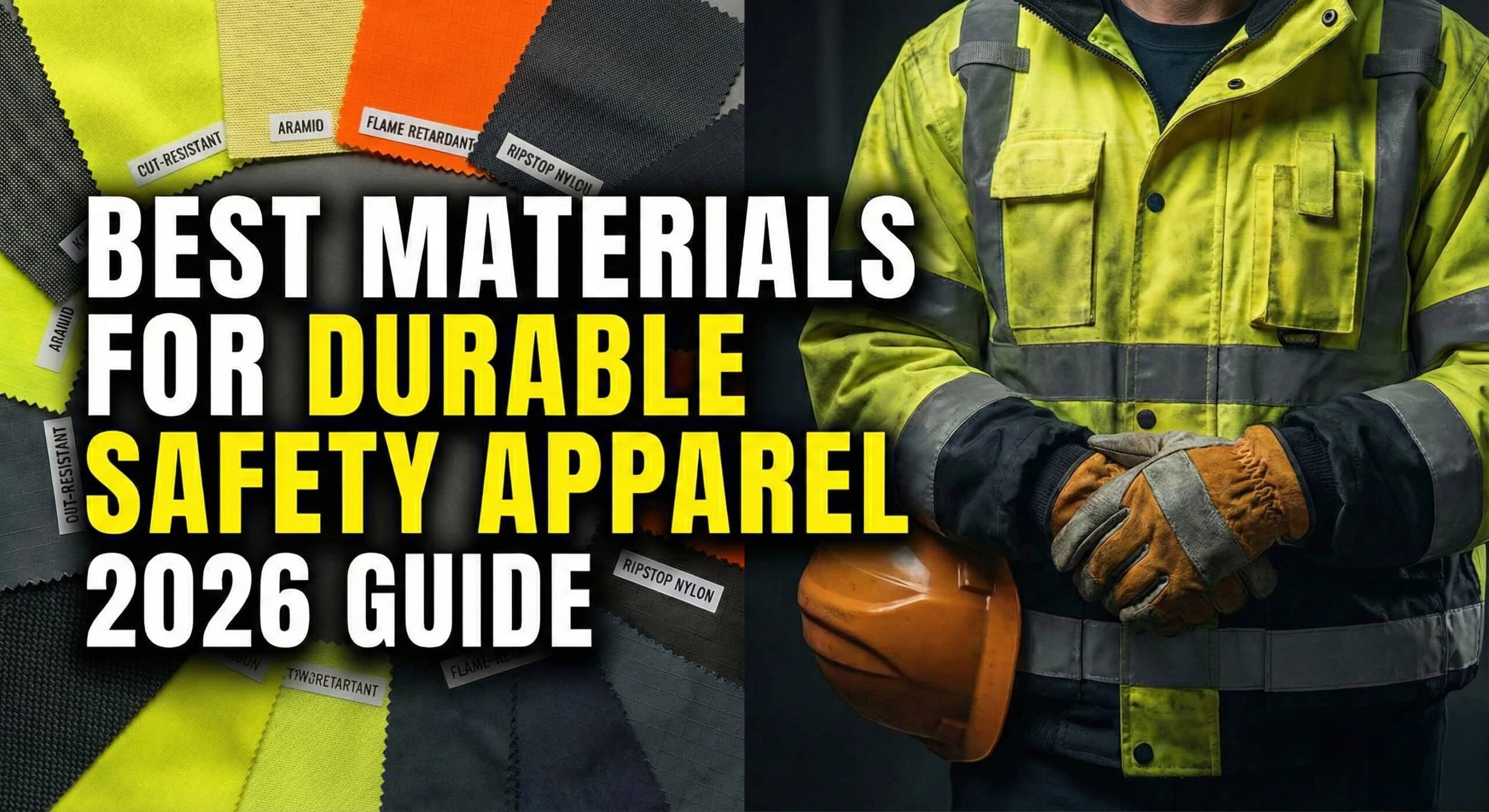
In the bustling industrial hubs of Etobicoke, the high-rise construction sites of downtown Toronto, and the sprawling logistics centers of Mississauga and Brampton, safety is not just a regulation – it is a culture. For fleet managers, construction site supervisors, and business owners across Ontario, choosing the right safety apparel is a critical investment.
However, a safety vest is not just a vest, and a work jacket is not just a jacket. The difference between a garment that lasts a month and one that survives the harsh Canadian winter lies entirely in the material.
At Branding Centres, located in Etobicoke and serving the entire GTA and Canada, we understand that your branded safety gear has two jobs: protecting your team and projecting your professional image. If the fabric tears, fades, or loses its reflectivity, both your safety compliance and your brand reputation take a hit.
This comprehensive guide will explore the best materials for durable safety apparel, dissecting the science of synthetic fibers versus natural blends, and helping you make informed decisions for your workforce.
Why Material Choice Dictates Safety and Longevity
When selecting custom safety apparel, many buyers look at the price tag first. While budget is important, the “cost per wear” is the true metric of value. A cheap polyester vest that rips on a piece of rebar in Vaughan is infinitely more expensive than a durable, heavy-duty safety jacket that lasts three seasons.
The material you choose dictates:
- Compliance: Meeting CSA Z96-15 and ANSI/ISEA 107standards for visibility.
- Durability: Resistance to abrasion, tearing, and industrial laundering.
- Comfort: Breathability in summer and insulation in winter.
- Branding Capability: How well the fabric holds embroidery or screen printing without compromising the safety integrity.
The Titan of Visibility: 100% Polyester
In the world of High-Visibility (Hi-Vis) safety apparel, 100% polyester is the undisputed king. It is the industry standard for a reason, offering a unique combination of luminosity and durability that natural fibers struggle to match.
The Science of Polyester Fluorescence
Safety standards require fluorescent background materials – usually Safety Orange or Safety Yellow/Lime. Polyester fibers are hydrophobic (water-repelling) and smooth, allowing them to hold these ultra-bright fluorescent dyes significantly better than cotton. Cotton tends to absorb dye in a way that dulls the fluorescence, making it difficult to meet strict safety standards over time.
Durability and Maintenance
Polyester is a synthetic polymer. It is inherently resistant to shrinking, stretching, and wrinkling.
- Abrasion Resistance: High-quality polyester, especially in Oxford weaves, resists scraping and scuffing, making it ideal for general construction and logistics work in the GTA.
- Moisture Management: Polyester does not absorb moisture like cotton; it wicks sweat away from the body or sheds light rain, keeping the worker drier.
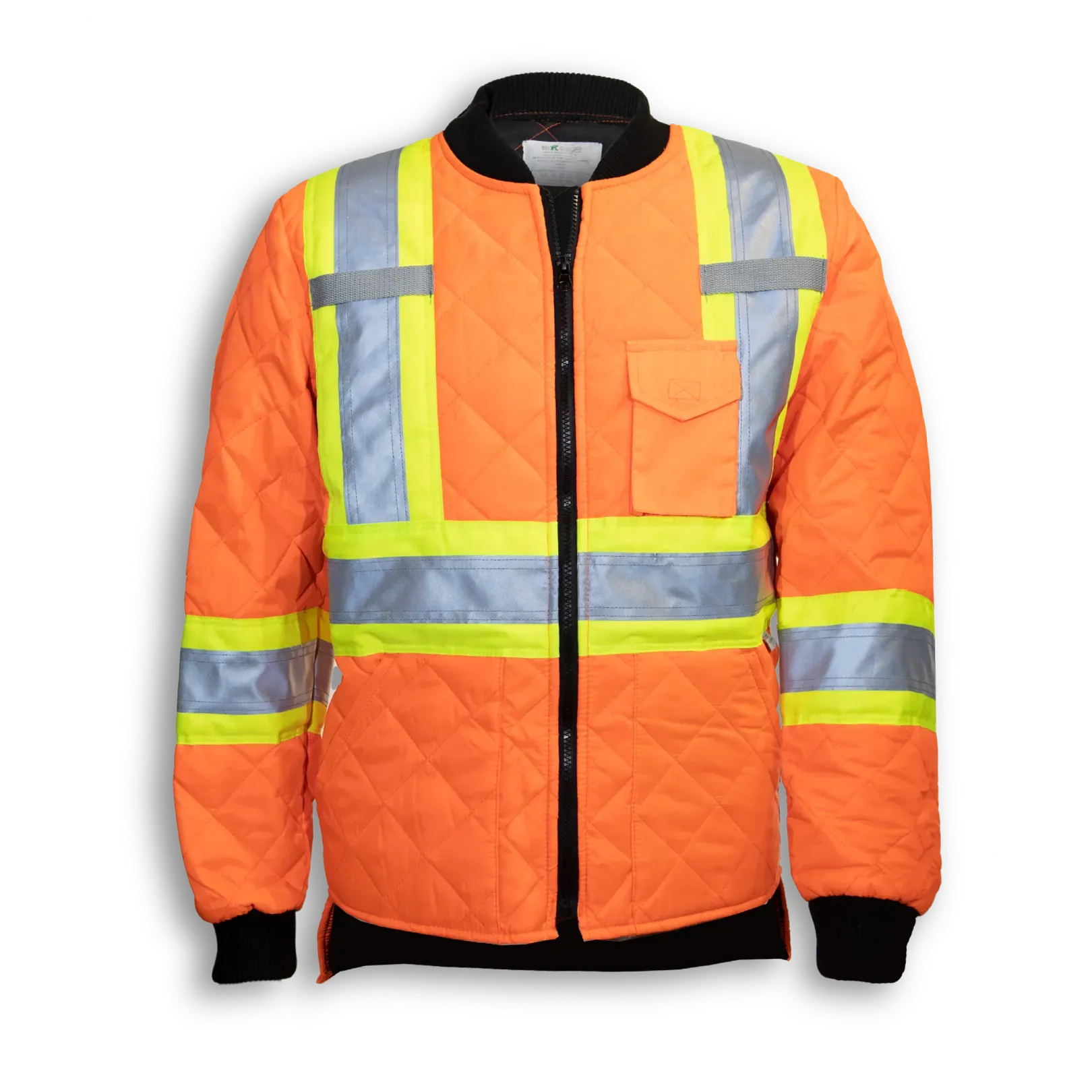
Product Spotlight: The Quilt Polyester Traffic Safety Jacket
At Branding Centres, we utilize high-grade polyester for items like our Quilt Polyester Traffic Safety Jacket. This garment is engineered for the Canadian climate. It features a 100% polyester shell that is durable and water-resistant, combined with a quilted lining for warmth. Because it is polyester, it maintains its high-visibility properties wash after wash, ensuring you remain compliant with CSA standards.
The Rugged Traditionalist: 100% Cotton Duck
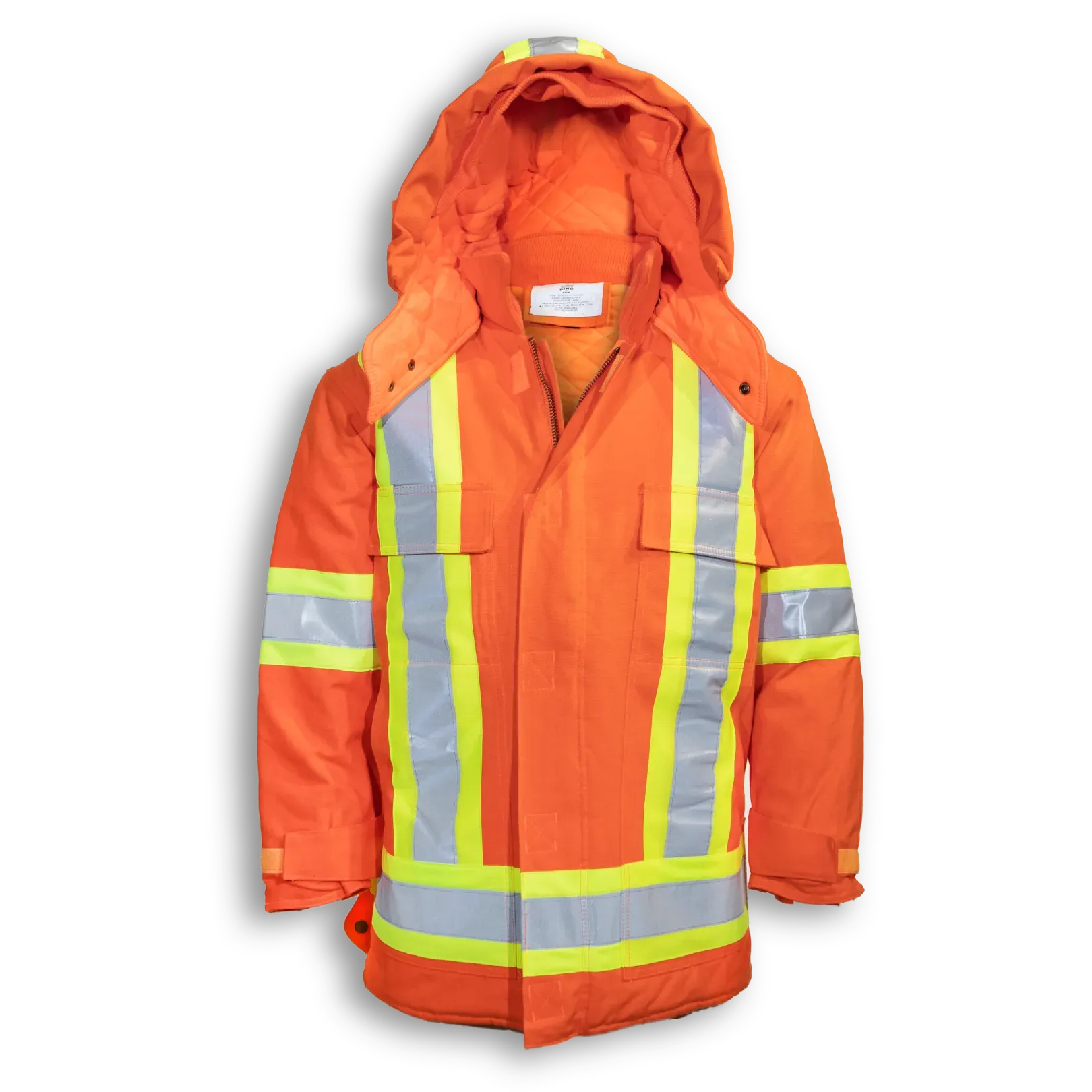
While polyester rules the road, Cotton Duck rules the rugged job site. “Duck” comes from the Dutch word doek, meaning linen canvas. It is a heavy, plain-woven cotton fabric that is incredibly resistant to tearing and snagging.
Why Choose Cotton Duck for Safety?
If your team is working in welding, grinding, or environments with sparks in Mississauga or Hamilton, polyester can be dangerous because it melts. Cotton burns, but it does not melt and stick to the skin.
- Snag Resistance: The tight weave of Cotton Duck prevents sharp objects (like branches, wire, or metal shards) from catching and tearing the fabric.
- Breathability: As a natural fiber, it allows air to circulate, which is vital for hard labor.
- Thermal Protection: Heavyweight cotton acts as a barrier against wind and cold without the “plastic” feel of coated synthetics.
Product Spotlight: 100% Cotton Duck Safety Jacket
For those requiring rugged durability, our 100% Cotton Duck Safety Jacket With Quilt Lining is a top-tier choice. It combines the mechanical strength of cotton canvas with the visibility required for safety. By integrating 3M™ Scotchlite™ reflective material onto a black or heavy-duty orange cotton base, you get the best of both worlds: mechanical toughness and visual safety.
The Hybrid Solution: Poly-Cotton Blends
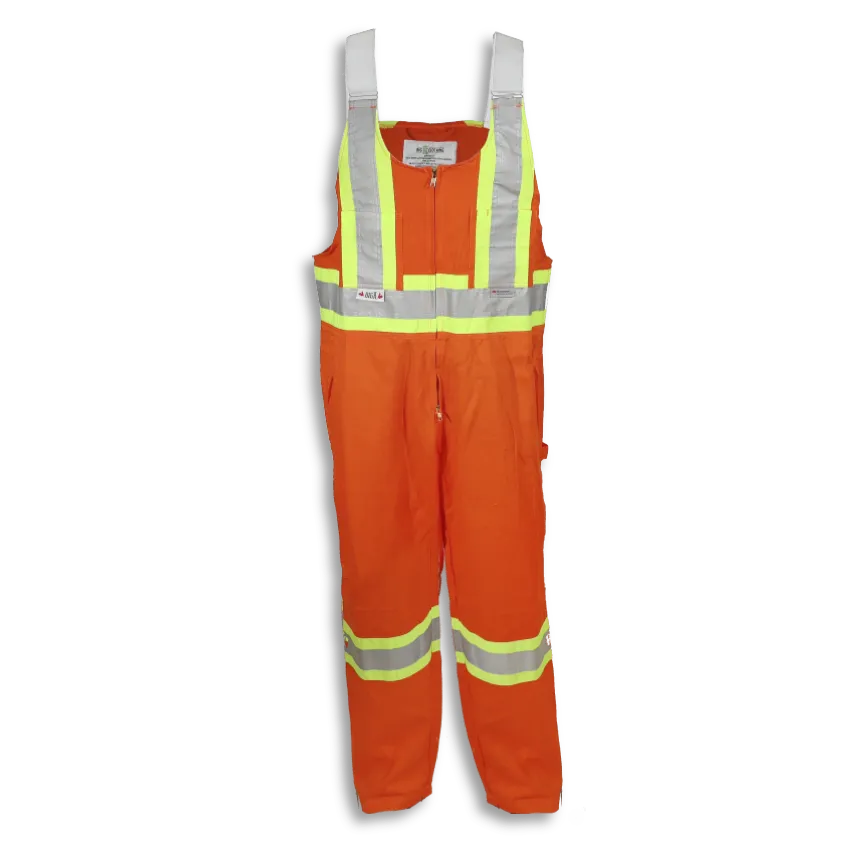
Sometimes, you need the comfort of cotton but the color retention and durability of polyester. Enter the Poly-Cotton blend, typically found in ratios like 65/35 (65% Polyester, 35% Cotton).
The “Industrial Laundry” Standard
Industrial laundering is a harsh process involving high temperatures and strong chemicals to remove grease and oil. 100% cotton can shrink and fade under these conditions. 100% polyester might retain odors. A Poly-Cotton blend offers:
- Dimensional Stability: The polyester skeleton prevents the garment from shrinking.
- Comfort: The cotton content provides a softer hand-feel against the skin.
- Longevity: These blends are specifically designed to withstand 50+ industrial wash cycles without falling apart.
Product Spotlight: Poly/Cotton Traffic Safety Overalls
Our Poly/Cotton Traffic Safety Overalls are the epitome of this hybrid benefit. Designed for mechanics, road crews, and industrial workers in Brampton, these overalls resist grease and grime while remaining breathable enough for all-day wear. They feature 4” reflective tape for compliance and are built to handle the rigors of heavy machinery work.
Specialized High-Performance Materials
Beyond the standard fabrics, high-risk environments require high-performance fibers. While these may come at a premium, they are essential for specific hazards.
1. Ripstop Nylon and Polyester
“Ripstop” refers to a weaving technique where a thicker reinforcement thread is interwoven at regular intervals in a crosshatch pattern. If the fabric gets punctured, the tear stops at the reinforcement thread rather than running down the entire garment. This is excellent for Mesh Polyester Pants or lightweight jackets used by surveyors or landscaping crews in the GTA who walk through brush.
2. Aluminized Fabrics & FR Materials
For extreme heat, aluminized fabrics reflect radiant heat. For electrical arc flash hazards, materials like Nomex (a meta-aramid) or treated cotton-nylon blends are used. These fabrics are inherently flame-resistant (FR), meaning the protection is built into the molecular structure of the fiber and will not wash out.
3. Cut-Resistant Fabrics (Kevlar® & Dyneema®)
While often found in gloves, these materials are increasingly used in forearm patches on safety jackets for glass handlers or sheet metal workers.
- Kevlar (Aramid): Known for heat and cut resistance. It is 5 times stronger than steel on an equal weight basis.
- Dyneema (UHMWPE): Ultra-High Molecular Weight Polyethylene. It is 15 times stronger than steel and floats on water. It is excellent for cut resistance but has a lower melting point than Kevlar, so it is less suitable for high-heat environments.
Weather-Specific Fabric Choices for Ontario
Ontario weather is unpredictable. Your safety gear needs to adapt.
The Microfleece Advantage
For shoulder seasons (Spring/Fall in Toronto), heavy canvas is too hot, but a vest is too cold. Polyester Microfleece is the solution.
- Warmth-to-Weight: It traps body heat efficiently without bulk.
- Hydrophobic: It absorbs less than 1% of its weight in water, keeping you warm even if it gets damp.
- Stretch: Our 11oz Polyester Microfleece Crewneck Sweatshirt offers 4-way stretch, allowing for a full range of motion for overhead work or lifting.
Moisture-Wicking Mesh
For the humid Toronto summers, Mesh Polyester is non-negotiable. It provides the visibility surface area required by law but is perforated to allow maximum airflow. We use this in our Mesh Polyester Pants and standard traffic vests to prevent heat stress.
Durability Comparison Table
To help you select the right gear for your specific industry, we have compiled this durability comparison.
| Material | Abrasion Resistance | Breathability | Color Retention (Hi-Vis) | Ideal Use Case |
| 100% Polyester | High | Low (unless mesh) | Excellent | Traffic control, General Construction |
| 100% Cotton Duck | Very High | Medium | Low (Fades) | Welding, Heavy Construction, Demolition |
| Poly/Cotton Blend | High | Medium | Good | Mechanics, Factory Work, Warehousing |
| Polyester Fleece | Moderate | High | Excellent | Cold Weather Layering, Drivers |
| Ripstop Nylon | High | Low | Good | Surveying, Forestry, Landscaping |
Branding Your Safety Gear: Material Matters
At Branding Centres, we don’t just sell blanks; we brand them. The material you choose affects how we apply your logo.
- Screen Printing: Works beautifully on Cotton and Poly-Cotton. On 100% Polyester (especially red or dark colors), we must use dye blockers to prevent “dye migration” (where the shirt color bleeds into your logo).
- Embroidery: The preferred method for Fleece, Cotton Duck, and Jackets. Heavy materials like Cotton Duck hold stitches perfectly without puckering.
- Heat Transfer: Ideal for Mesh and performance fabrics where a heavy print or heavy stitching might affect the garment’s drape.
Ready to Equip Your Team?
Safety is not an area where you want to cut corners on quality. Whether you need the abrasion resistance of Cotton Duck for a demolition crew in Etobicoke or the high-visibility performance of Polyester for a logistics fleet in Mississauga, Branding Centres has the inventory and the expertise to get it right.
We offer premium packages and rugged workwear solutions designed to withstand the Canadian elements while keeping your team compliant and your brand visible. Don’t settle for gear that fades after one season.
Contact Branding Centres Today
- Phone: +1 (416) 288-8661
- Email: info@Brandingcentres.com
- Location: 24 Ronson Dr Unit #1, Etobicoke, ON M9W 1B4
- Service Areas: Toronto, Mississauga, Brampton, Vaughan, GTA, and across Canada.
Visit our showroom or browse our safety catalog online to start your custom order!
Frequently Asked Questions (FAQ)
-
What is the difference between waterproof and water-resistant safety gear?
Water-resistant gear (often polyester with a coating) repels water to a degree but will eventually soak through in heavy rain. Waterproof gear has sealed seams and a membrane (like PU or PVC coating) that completely stops water penetration. For Toronto winters, waterproof is often necessary for outdoor crews.
-
Can I screen print on a quilted safety jacket?
It is difficult. The uneven surface of the quilting makes screen printing uneven. For quilted items like our Quilt Polyester Traffic Safety Jacket, we highly recommend embroidery or using a patch for a professional look.
-
Why do my safety shirts fade?
UV rays from the sun degrade fluorescent dyes over time. Polyester holds these dyes longer than cotton, but all Hi-Vis gear has a lifespan. If your gear has faded to a pale yellow or pinkish orange, it is no longer compliant with CSA standards and must be replaced.
-
Is 100% cotton ANSI/CSA compliant?
Usually, no. It is very difficult to get 100% cotton to hold the fluorescent dye required for the background material standards of ANSI/ISEA 107 or CSA Z96. Most “cotton” safety gear uses a black cotton base with sewn-on reflective tape (Class 1) or is a 50/50 blend where the polyester carries the fluorescent color.
-
How do I wash my safety apparel to keep the reflective tape intact?
Wash inside out in cold or warm water. Never use bleach or fabric softener, as these damage the glass beads in the reflective tape. Tumble dry low or hang dry. High heat destroys the adhesive on the reflective stripes.
-
What is “Duck” fabric?
Duck is a heavy, plain-woven cotton fabric. It is tighter and smoother than standard canvas, making it more resistant to snagging and wind. It is the standard for heavy-duty work jackets like our 100% Cotton Duck Safety Jacket.
-
Does Branding Centres offer volume discounts for fleet safety gear?
Yes, we specialize in B2B bulk orders. Whether you need 10 jackets or 1,000 vests, we can scale our production to meet your needs in the GTA and across Canada.