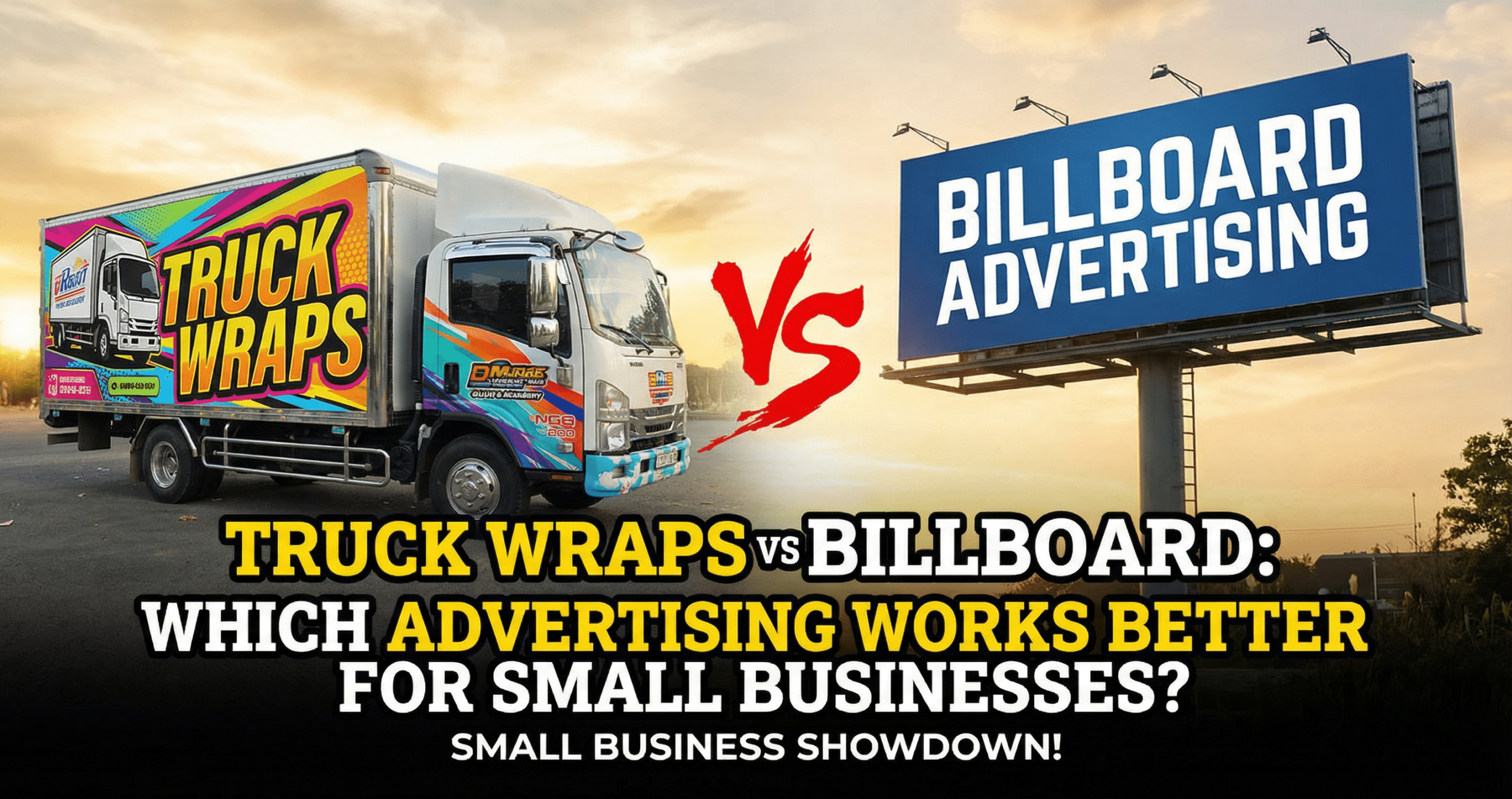
When small business owners compare Truck Wraps vs Billboard advertising, the real question is simple: which option gives you the best visibility, the best value, and the best return for your local market? Both can put your brand in front of thousands of people, but they work in very different ways. A billboard stays in one place and depends on traffic passing that location. A truck wrap turns your vehicle into a moving advertisement that travels through neighborhoods, business districts, job sites, and customer hotspots all day long.
This comparison matters because most small businesses do not have unlimited marketing budgets. Every dollar needs to pull its weight. You are not just buying ad space; you are investing in awareness, trust, and leads. That means you need to look beyond surface-level pricing and think about total cost, audience reach, message retention, installation, maintenance, and how long the advertising asset keeps working for you. What looks cheaper upfront is not always the better deal over time.
In this guide, we will break down the key factors that help owners make a smart decision. We will compare cost, reach, ROI, mobility, targeting, design strategy, upkeep, and performance tracking. We will also cover when each format tends to work best. For example, a company with delivery vehicles or service trucks may benefit heavily from wraps, while a business trying to dominate a single high-traffic corridor may see value in billboard placement.
By the end, you should have a clearer picture of which advertising method fits your goals, your service area, and your budget. If you want practical advice instead of hype, you are in the right place.
Introduction: Why This Comparison Matters for Small Businesses
If you are choosing where to put your advertising dollars, the debate around Truck Wraps vs Billboard is more important than ever. Small business owners usually need marketing that does two things well: create local visibility and deliver a clear return on investment. When every dollar counts, it helps to compare both options side by side before committing to a campaign.
Billboards have long been a recognizable form of outdoor advertising. They can place your brand in front of thousands of drivers each day in one fixed location. Truck wraps, on the other hand, turn a business vehicle into a moving ad that travels through neighborhoods, business districts, and service areas. That mobility changes how often people see your message, where they see it, and how memorable it becomes.
For many local companies, this is not just a branding decision. It is a practical sales decision. A wrap can advertise while your team is driving, parked at a job site, or sitting in front of a customer’s location. A billboard can dominate a high-traffic road and create broad awareness in a single market. Both can work, but they do not work the same way.
What This Comparison Will Help You Evaluate
In the sections below, we will compare truck wraps and billboards using the criteria that matter most to a growing business:
- Upfront and ongoing cost
- Local reach and daily impressions
- Audience targeting options
- Brand recall and message clarity
- Long-term value and ROI
We will also cover creative strategy, because great placement alone does not guarantee results. The right Wrap design or billboard layout can make the difference between being noticed and being ignored.
If your goal is to improve Vehicle Branding, generate local leads, and make smarter advertising decisions, this guide will give you a practical way to compare both options. Whether you run one truck or manage a growing fleet, understanding how Truck Wraps installation compares with billboard advertising can help you invest with more confidence.
Truck Wraps vs Billboard: Cost, Reach, and ROI
When small business owners compare Truck Wraps vs Billboard, the first question is usually simple: which one gives better value for the money? The answer depends on your market, your campaign length, and how often your audience sees the ad.
Cost Comparison
A billboard typically involves recurring rental costs. You pay for the location, the length of the campaign, and often production or installation fees. Premium billboard locations can become expensive quickly, especially if you want consistent visibility over several months.
A truck wrap usually involves a larger one-time upfront cost, but once installed, the vehicle can keep advertising for years. That makes wraps appealing to businesses that already operate service trucks, delivery vehicles, or company pickups.
- Billboard: recurring monthly or campaign-based spend
- Truck wrap: mostly upfront investment with long-term use
- Maintenance: wraps may need care, but they do not require monthly media rent
If you want to explore long-term durability, visit how long truck wraps last in Canada.
Reach and Impressions
Billboards can deliver heavy impression volume in one location. If the placement is excellent, your brand may be seen by a large flow of commuters every day. The tradeoff is that the audience is limited to one corridor or traffic zone.
A wrapped truck reaches people across many routes and neighborhoods. That means your business can build awareness in several parts of your service area without buying separate ad placements. For local companies, that flexibility often creates stronger exposure where customers actually live and work.
ROI for Small Businesses
ROI depends on whether you need broad visibility or repeated local exposure. Billboards can be effective for awareness campaigns, product launches, or businesses targeting a major roadway audience. But for service-based businesses, a branded truck often produces better long-term efficiency because the ad is tied to an asset you already use.
In practical terms, a strong Vehicle Branding strategy can keep generating impressions while your team is already on the move. That makes the wrap feel less like an extra advertising expense and more like a business multiplier. For many owners, that is why truck wraps often win the cost-to-longevity comparison.
Visibility and Audience Targeting: Mobility vs Fixed Placement
The biggest difference in Truck Wraps vs Billboard is visibility style. A billboard stays in one place and depends on traffic passing through that location. A truck wrap moves through your market and can be seen by different audiences throughout the day. That distinction matters if your business relies on local recognition and neighborhood-level trust.
How Truck Wraps Build Local Awareness
A wrapped vehicle works like a mobile billboard. It can be seen on highways, at stoplights, in parking lots, outside customer properties, and in residential areas. That repeated exposure across different settings helps reinforce your brand and make your company feel familiar.
This is especially valuable for businesses such as:
- Contractors
- Landscaping companies
- Plumbers and electricians
- Delivery services
- Home service providers
When your truck is parked at a job site, your Wrap acts as a live endorsement. People nearby can immediately connect your brand to real work being done in their area.
When Billboards Have the Advantage
Billboards can be powerful when location is everything. If your target market consistently drives one major route, a billboard can deliver concentrated awareness at a very high volume. This can work well for retail promotions, events, restaurants near exits, or brands wanting a dominant visual presence on a specific corridor.
However, a billboard cannot follow your audience. If your customers are spread across multiple communities, you may need several placements to match the market coverage a single branded truck can provide.
Which Option Targets Better?
For many small businesses, truck wraps offer more practical local targeting because your vehicles naturally travel where your business operates. That means your ad appears in the same neighborhoods where leads are most likely to come from.
- Choose a truck wrap if you serve multiple local zones and want daily moving exposure.
- Choose a billboard if you want fixed, repeated visibility in one high-traffic location.
- Use both if your budget supports a wider awareness strategy.
If your company depends on local service calls and community recognition, mobile Vehicle Branding often creates a more direct connection between visibility and lead generation.
Design, Message, and Creative Considerations
Whether you choose a truck wrap or billboard, design quality has a direct impact on results. The best ad placement in the world cannot fix a confusing message. In the Truck Wraps vs Billboard decision, creative execution should be part of the strategy from the start.
What Good Truck Wrap Design Requires
A truck wrap needs to be readable at a glance, even while the vehicle is moving. That means your design should focus on fast recognition, not too much detail. The strongest wraps usually feature a bold logo, a short service description, easy-to-read contact information, and colors that stand out in traffic.
- Use large, high-contrast text
- Prioritize your logo and core service
- Include a phone number or website only if it remains legible
- Keep imagery clean and brand-focused
If you are considering options, you can review examples of truck full wraps, truck partial wraps, and truck decals and lettering.
What Makes a Billboard Effective
Billboards need even more restraint. Drivers have only a few seconds to process the message. A strong billboard usually includes one headline, one visual focal point, and one clear call to action. If you overload it with text, most people will miss the point.
Think of a billboard as a quick brand reminder, not a brochure. Simplicity wins.
Creative Strategy That Improves Recall
For both formats, consistency matters. Your colors, logo, slogan, and contact details should match the rest of your marketing so people recognize your business later when they search online or ask for a recommendation.
Small business owners should also think beyond looks. Good Truck Wraps installation ensures the design fits the vehicle correctly, avoids awkward seams over critical text, and maintains a polished professional appearance. A well-produced Wrap does more than advertise; it builds trust.
If your goal is calls and leads, keep your message simple, your branding bold, and your offer easy to understand. Clear creative almost always outperforms clever but confusing advertising.
Installation, Maintenance, and Longevity of Wraps and Billboards
When small business owners compare Truck Wraps vs Billboard options, the practical side matters just as much as cost and visibility. You are not only buying ad space. You are also buying installation time, upkeep, and expected lifespan.
What to Expect With Truck Wraps Installation
Truck Wraps installation usually starts with design, vehicle measurement, print production, surface preparation, and professional application. A full Wrap takes more time than simple logos or lettering, but it also delivers the strongest visual impact for Vehicle Branding.
For many small businesses, installation is a one-time setup that can keep working for years. Once applied, your wrapped truck becomes a moving ad during service calls, deliveries, parking, and daily commuting.
- Full wraps create the biggest brand presence.
- Partial wraps lower upfront cost while still adding visibility.
- Truck partial wraps work well for budget-conscious campaigns.
- Truck decals and lettering are ideal for simple local branding.
Maintenance Needs for Wrapped Vehicles
Wrap maintenance is usually straightforward. Regular washing, avoiding harsh chemicals, and fixing damage early help protect appearance and extend life. If a panel gets scratched or damaged, it can often be repaired or replaced without redoing the entire vehicle.
That gives wraps an advantage for businesses that want flexibility. You can update contact details, swap out a section, or refresh the design as your brand evolves.
Billboard Installation and Upkeep
Billboards involve a different process. You typically pay for design production, placement, and a recurring rental period. The billboard company handles installation, but your ad only works in that one location for as long as you keep paying. If weather, fading, or campaign changes require updates, production and replacement costs can return quickly.
Unlike a truck wrap, a billboard does not become a business asset you keep using after the campaign ends. It remains a rented platform.
Longevity Comparison
In a practical Truck Wraps vs Billboard comparison, wraps often offer longer value for the money. A quality truck wrap can last several years with proper care. If you want a better sense of expected lifespan, see how long truck wraps last.
For small businesses focused on steady local exposure, wraps usually provide simpler logistics, easier updates, and longer-term visibility without ongoing location rental fees.
Measuring Results and Calculating Local ROI
One of the biggest questions in Truck Wraps vs Billboard decisions is simple: how do you know what is actually working? Small business owners do not need complicated analytics to measure results. You just need a consistent tracking system.
How to Track Campaign Performance
Vehicle Branding and billboard ads are both top-of-funnel marketing tools, so they often influence awareness before a customer calls or buys. The goal is to connect that visibility to real inquiries, booked jobs, and sales.
- Use a dedicated phone number for each campaign.
- Add a custom landing page URL.
- Include a simple promo code.
- Ask every new lead, “How did you hear about us?”
- Track service area and location patterns in incoming leads.
Measuring Truck Wrap Results
A Wrap on a business truck often performs best in local markets where repeated exposure matters. If your vehicles drive the same neighborhoods each week, you can compare lead volume before and after Truck Wraps installation. You can also look at increases in branded searches, direct website visits, and call volume from routes where your trucks are most visible.
Wrapped vehicles also create impressions while parked. That makes them especially useful for contractors, delivery companies, home service providers, and mobile businesses.
Measuring Billboard Results
Billboards can be tracked using the same tools, but response patterns are often broader and less precise unless the creative includes a memorable offer or call to action. Because billboard exposure is tied to one location, results often depend on traffic quality, commuter relevance, and whether the message is easy to absorb in seconds.
Simple ROI Formula for Small Businesses
Use this basic formula:
ROI = (Revenue from campaign – Campaign cost) / Campaign cost x 100
For example:
- You spend $4,000 on a truck wrap.
- The wrap helps generate $12,000 in new profit-producing work.
- Your ROI is (($12,000 – $4,000) / $4,000) x 100 = 200%.
To make comparisons fair, track each campaign over the same time period. In many Truck Wraps vs Billboard evaluations, wraps perform well because the initial cost is spread across months or years of daily use. That can make local ROI easier to sustain, especially for businesses with active service vehicles already on the road.
Which Option Is Best for Your Small Business: Decision Framework and Next Steps
If you are deciding between Truck Wraps vs Billboard advertising, the best choice depends on how your business operates, where your customers are, and how long you want your ad dollars to keep working.
A Simple Decision Checklist
- Do you already have trucks or vans on the road every day?
- Do you serve a specific local area rather than a wide regional market?
- Do you want one investment that keeps producing visibility over time?
- Do you need flexible messaging that can be updated later?
- Do you want your brand seen both while driving and while parked?
If you answered yes to most of these, Vehicle Branding is often the stronger fit.
When Truck Wraps Make the Most Sense
Truck wraps are a smart move for:
- Contractors and trades
- Landscaping companies
- Delivery services
- Cleaning businesses
- Home service brands
- Any company with regular local driving routes
These businesses benefit from repeated neighborhood exposure and the trust that comes from a clearly branded vehicle.
When Billboards May Be the Better Choice
Billboards can be effective if you want to dominate a specific corridor, promote a short-term campaign, or reach high-volume commuter traffic near a retail location. They can also support brand awareness when your business does not operate vehicles regularly.
Best Next Steps
- Define your monthly advertising budget.
- Identify where your customers are most likely to see your message.
- Decide whether you need long-term visibility or short-term impact.
- Choose the format that matches your daily business operations.
- Start with a design that is bold, simple, and easy to read fast.
For many small business owners, the most practical winner in Truck Wraps vs Billboard comparisons is a truck wrap because it turns an existing vehicle into a long-term local marketing asset.
If you are ready to get more value from every mile you drive, explore professional truck wrap options and choose a Vehicle Branding solution that fits your budget, service area, and growth goals.
There is no one-size-fits-all answer to truck wraps or billboards, but for many small businesses, vehicle wraps deliver strong long-term value, repeated local exposure, and better flexibility for the money. Billboards can still be effective when location and mass visibility are the top priorities. The best choice comes down to your service area, budget, sales cycle, and how your customers find you.
If you want help deciding which option fits your business best, or you are ready to turn your work vehicles into high-visibility marketing assets, a quick consultation can point you in the right direction.
Related Products and Services
If you are planning a similar project, these related options may help.
Helpful External Resources
These sources provide supporting background and additional context.
How much do truck wraps cost compared to billboards for a local campaign?
Truck wraps are typically a one-time expense—commonly $2,000–$8,000 for design and full or partial wraps—while billboards involve ongoing monthly rents that can range from a few hundred to several thousand dollars depending on market and location; for short-to-mid term local campaigns wraps often deliver lower long‑term cost per impression because you pay once and advertise for years.
How long do truck wraps last and what does Truck Wraps installation involve?
High-quality vinyl wraps generally last 3–7 years with proper care; installation involves surface cleaning, measuring and plotting the vinyl, heating and conforming the film to contours, trimming and finishing, and professional post-install inspection to avoid bubbles and lifting.
Can mobile vehicle branding generate the same number of impressions as a highway billboard?
Mobile branding can generate comparable or even higher local impressions in dense urban areas because vehicles travel multiple routes and are seen repeatedly; highway billboards can deliver very high daily impressions on specific corridors but are less flexible and less targeted to varied neighborhoods.
Which option provides better local targeting for my small business—wraps or billboards?
Truck wraps generally provide better hyperlocal targeting for small businesses because they travel to neighborhoods, trade areas, and customer locations you serve; billboards are better for consistent exposure along fixed commuter routes or high-traffic intersections.
Do truck wraps require permits or ongoing maintenance like billboards do?
Truck wraps rarely require advertising permits beyond standard vehicle regulations, but billboards often need zoning permits and recurring fees; both need maintenance—wraps require washing and occasional repair, while billboards require rental payments and maintenance by the landlord or owner.