
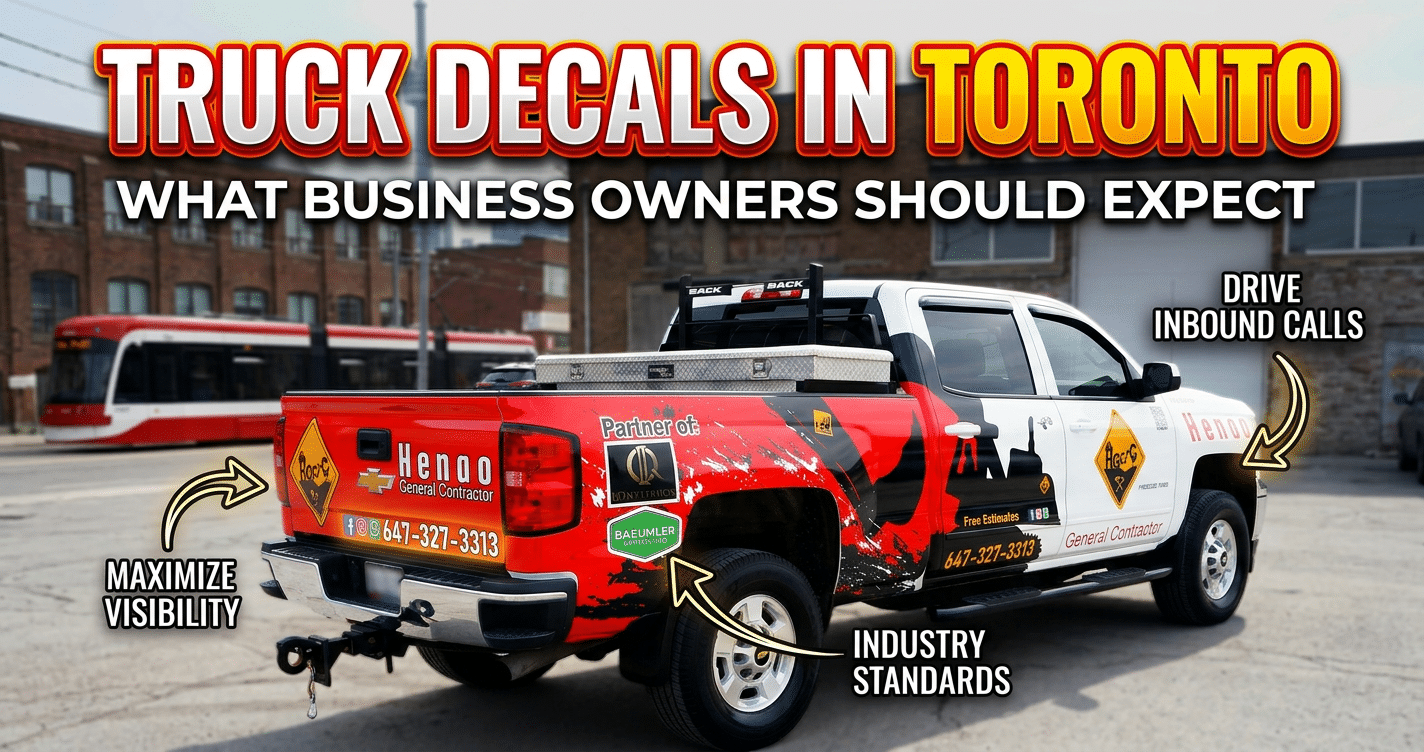
Truck Decals are one of the most practical ways for Toronto business owners to turn every trip into a brand impression. Whether you run a service fleet, a delivery route, or a single work truck, custom graphics can build recognition, support local credibility, and keep your marketing working while you drive. If you want a quick overview of formats and options, see our truck decals and lettering solutions. For a helpful industry perspective on why decals are effective for local fleets, this overview from a Toronto vinyl specialist is also worth reviewing.
Last updated: March 2026
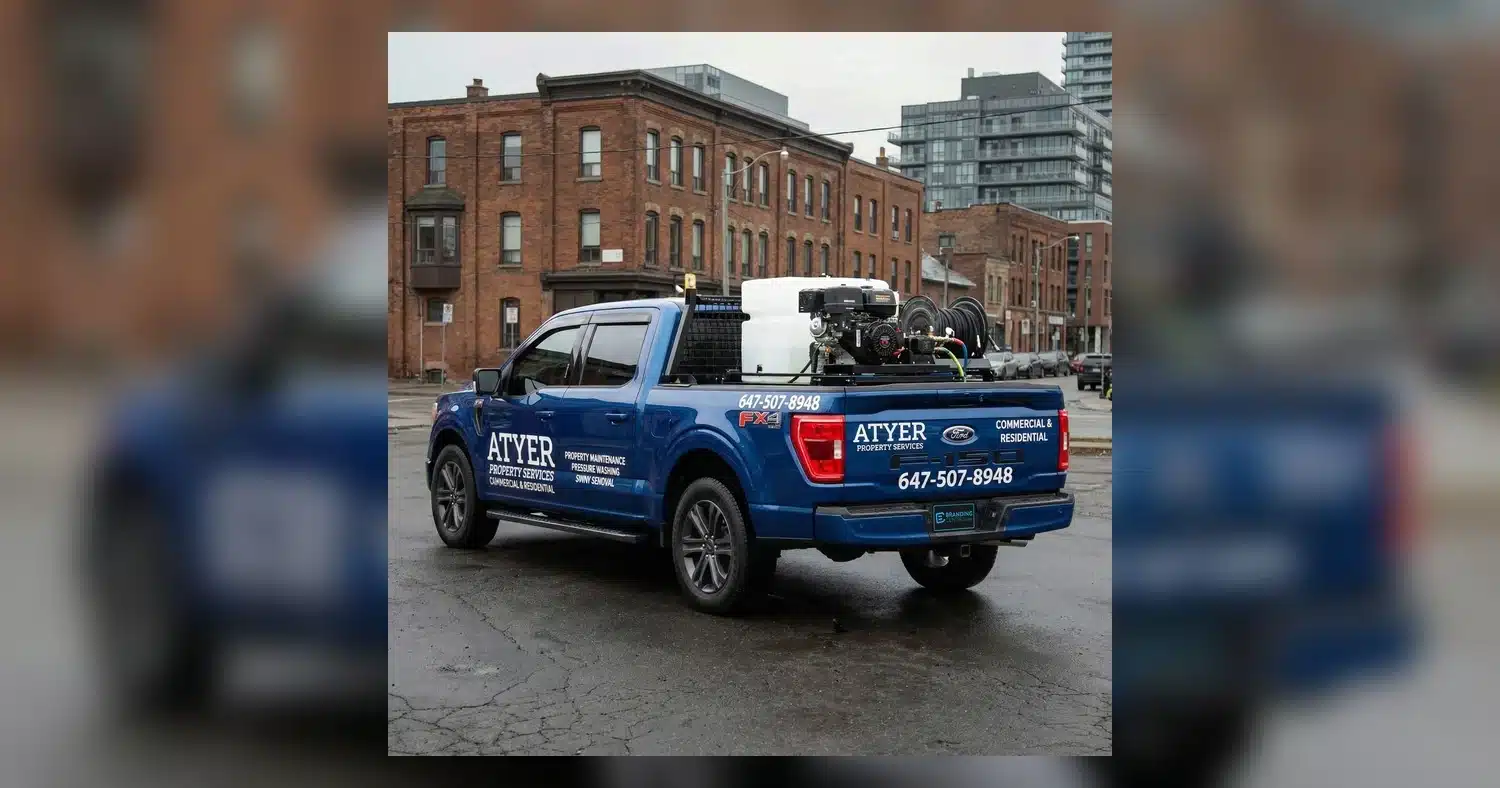
In this guide, you will learn what to expect from custom design, material choices, pricing, installation, and maintenance so you can make a confident decision for your business.
Why Truck Decals Are a Smart Marketing Choice for Toronto Businesses
For Toronto businesses, Truck Decals turn everyday driving into consistent local Marketing. A service vehicle that moves through downtown streets, industrial zones, job sites, and residential neighborhoods can generate visibility long after the initial installation. Unlike many ads that disappear after a few seconds, truck branding keeps working whenever the vehicle is on the road, parked at a client site, or sitting in traffic.
That visibility matters because local customers often need repeated exposure before they remember a company name. Well-designed Decals help build that familiarity while reinforcing your Branding across every route your fleet takes. For contractors, delivery companies, trades, and service businesses, a branded truck can signal professionalism before a salesperson ever speaks to a prospect.
Industry estimates often suggest a wrapped or decal-covered vehicle can generate thousands of impressions per mile in urban driving, especially in dense areas where traffic is slow and sightlines are close. In a city like Toronto, those impressions can add up quickly during daily commutes, site visits, and curbside parking. The exact number varies by route, traffic volume, and design visibility, but the basic value is clear: mobile advertising reaches people where they live and work.
Truck Decals also support broader brand goals by keeping the look of your fleet consistent. If you already use the same logo, colors, and messaging on your website, business cards, and uniforms, decals help tie everything together. That consistency makes your company easier to recognize and can improve trust over time.
For business owners comparing options, truck decals and lettering are often one of the most cost-effective ways to expand local reach without recurring ad spend.
Custom Design Considerations: Branding, Visibility, and Local Regulations
Strong Truck Decals start with a design that supports both branding and readability. The most important elements are your logo, company name, core service, and contact details. If the vehicle is used for sales or lead generation, the design should make it obvious who you are and what you do within a few seconds.
Placement and readability
Logo placement should work with the shape of the truck, door seams, handles, and panel lines. A large logo on the doors is often the most visible choice, while rear panels are ideal for phone numbers or web addresses because drivers behind you have time to read them. Keep text short and use large enough lettering so it remains readable at speed and from a distance.
Color contrast and brand consistency
High contrast is essential. Dark text on a light background, or light text on a dark background, improves visibility in traffic and changing weather. If your brand colors are low contrast, you may need a design adjustment to preserve legibility without losing identity. The goal is to make the truck look polished while ensuring the message can be read quickly.
Toronto-specific compliance concerns
Toronto businesses should also consider local signage and vehicle rules before printing. Depending on how much of the vehicle is covered and where the truck is parked or operated, you may need to avoid anything that could be mistaken for a traffic sign, emergency marking, or obstructive display. Make sure decals do not block windows, mirrors, plates, lights, or required safety markings. For larger fleets or specialized vehicles, it is smart to review applicable municipal and provincial requirements before production.
If you are planning a full vehicle branding strategy, it helps to compare your truck with other fleet formats such as van decals and lettering so the design system stays consistent across all vehicles.
Materials, Vinyl Types, and Durability for Toronto Weather
The material you choose has a major impact on how long Truck Decals stay sharp in Toronto’s climate. Most commercial decals are made from cast or calendared vinyl. Cast vinyl is thinner, more flexible, and better suited for curves and long-term use. Calendared vinyl is often more affordable and works well for flatter panels or shorter-term applications.
For most business vehicles, the right choice depends on how long you plan to keep the graphics and how exposed the truck is to the elements. If the truck is on the road every day, spends time outdoors, or carries a premium brand image, upgrading to higher-grade vinyl is usually worth it. A protective laminate adds another layer of defense against scratches, moisture, and fading, while also improving the finish.
Finish options and protection
Gloss laminate can make colors pop and help the design stand out in sunlight. Matte laminate creates a more subtle, modern look and can reduce glare. UV resistance matters in both cases because sunlight can fade lower-quality films over time. A well-made decal system with laminate typically keeps colors stronger and edges cleaner for longer.
How Toronto weather affects lifespan
Toronto winters can be hard on vehicle graphics. Road salt, slush, temperature swings, and frequent washing all shorten the life of poor-quality materials. In summer, direct sun and heat can cause fading or adhesive stress if the vinyl is not designed for outdoor use. Trucks that are parked outside year-round need more durable materials than vehicles stored indoors.
For businesses comparing value, it is useful to think in terms of total lifespan rather than just price. A cheaper decal that fails early can cost more over time than a premium product that stays presentable for several years. Some operators, especially those with seasonal service fleets, also look at weather-tough options for specialized applications such as water truck decals in Toronto, where exposure and visibility requirements can be even more demanding.
Comparing Costs and ROI: Decals, Truck Wraps, and DIY Options
When comparing Truck Decals, full Truck Wraps, and DIY options, the best choice depends on budget, brand goals, and how long you plan to use the vehicle. Decals are usually the most affordable professional option for businesses that want strong branding without covering the entire truck. Wraps cost more upfront but offer a larger visual impact. DIY projects can reduce labor costs, but they often come with higher risk and a shorter useful life if the installation is not done well.
| Option | Typical Upfront Cost | Installation Time | Expected Lifespan | ROI Potential |
|---|---|---|---|---|
| Professional Truck Decals | Low to moderate | Short | 3 to 5 years | Strong for local lead generation and branding |
| Full Truck Wraps | Moderate to high | Longer | 5 to 7 years | High visual impact, best for maximum exposure |
| DIY Decals or Kits | Lowest | Variable | Short to moderate | Lower if finish quality or durability suffers |
| Partial Branding Package | Moderate | Short to moderate | 3 to 5 years | Good balance of cost and visibility |
For many Toronto business owners, professional decals deliver a practical return because they keep advertising costs fixed while impressions continue every day. A truck that is already in service can produce repeated exposure without recurring media spend, which is why mobile branding often compares well against paid local ads over time. For more detail on pricing factors and design choices, see truck decals cost, design, and ROI.
DIY may look cheaper at first, but misalignment, bubbling, and premature fading can reduce both appearance and lifespan. That can hurt brand perception, especially for businesses where trust and professionalism matter. If the vehicle represents your company at job sites or client locations, the value of a clean, durable finish usually outweighs the savings of a do-it-yourself install.
Professional Installation vs DIY: Time, Quality, and Risk
For many business owners, the choice between professional installation and a DIY kit comes down to time, finish quality, and the cost of mistakes. DIY can work well for simple lettering or small truck decals and lettering on a clean, flat panel, especially if you already have the space and tools to install carefully. It is usually the lower upfront option, but it requires patience, a dust-free environment, and a steady hand.
What professional installers bring
A professional crew can speed up the job, align graphics accurately, and reduce the chance of bubbles, stretching, or edge lift. That matters on curved body panels, riveted box trucks, textured surfaces, and older vehicles with chipped paint or prior branding. In Toronto, where delivery schedules are tight and weather can interrupt outdoor work, a pro installation often saves time and avoids costly rework.
Common DIY mistakes to avoid
- Installing on dirty or damp surfaces
- Skipping surface prep, including wax and road film removal
- Applying graphics in cold temperatures or direct wind
- Misaligning decals across doors, seams, and body lines
- Using too much heat or pressure and distorting the vinyl
DIY can also become expensive if the first attempt has to be removed and replaced. If your fleet needs a consistent look across multiple vehicles, or if your design includes complex contours, reflective elements, or installed branding on a commercial schedule, hiring a pro is usually the safer choice. For a broader cost comparison, see truck decals cost, design, and ROI.
Maintenance, Repairs, and Extending the Life of Your Decals
Proper care helps Truck Decals stay sharp longer and protects your branding investment. The best routine is simple: wash the vehicle regularly, remove road salt and grime quickly, and inspect edges after winter or long highway use. A gentle hand wash with mild soap and clean water is usually the safest option for printed vinyl and laminate finishes.
Cleaning best practices
Avoid abrasive brushes, strong solvents, and high-pressure spraying directed at the decal edges. If you use a pressure washer, keep the nozzle at a safe distance and angle it away from seams. For spot cleaning, use a soft microfiber cloth and a non-abrasive cleaner that is safe for vehicle graphics. This helps preserve color, adhesive performance, and surface gloss.
Fixing chips, lifting edges, and wear
Small issues are easier to repair early. If a corner begins to peel, a technician can often re-adhere the edge with heat and pressure before the damage spreads. Minor chips, scratches, or scuffs may be addressed with localized patching or replacement of a single panel or decal section, which is especially useful for branded delivery vehicles and van decals and lettering that see frequent urban driving.
For heavily faded, cracked, or impact-damaged graphics, partial replacement is often more efficient than a full rebrand. Keep the original artwork files, vinyl specs, and installation notes so matching replacement pieces is easier. If your fleet includes water service or municipal-style units, having a reference for maintenance standards can also help with consistency, such as the approach shown in water truck decals in Toronto. Routine inspection and quick repairs can add years to the life of your decals while keeping your trucks looking professional.
Permits, Liability, and Best Practices for Mobile Truck Branding in Toronto
Most Truck Decals do not require a separate permit in Toronto when they are applied as vehicle graphics, but businesses should still confirm that the design follows local advertising, visibility, and safety expectations. If the vehicle operates near construction zones, residential streets, or controlled-access sites, the placement of branding should not block lights, mirrors, windows, plates, or required safety markings. Some clients and job sites may also have their own vehicle identification rules, so it is worth checking before installation.
Insurance and liability considerations
From a risk standpoint, keep records showing that the vehicle graphics were installed correctly and do not interfere with operation. That documentation can help if there is ever a claim related to visibility, peeling material, or paint damage during removal. Businesses with leased trucks should confirm the lease terms before applying decals, since improper removal can create chargebacks or repair obligations. If the fleet is insured, note the branding changes in the vehicle file so records stay current.
Best practices for fleet consistency
- Use the same logo files, colors, and placement rules across all vehicles
- Document decal dimensions, panel locations, and material specifications
- Photograph each installed vehicle for reference and future reorders
- Track installation dates, repair dates, and replacement schedules
- Review designs for visibility at night and in heavy traffic
Consistent branding makes a fleet look more professional and reduces confusion when vehicles are parked at job sites or seen on the road. It also helps when you need a quick refresh or a partial replacement. For companies managing multiple vehicle types, keeping brand standards aligned across truck and van decals and lettering makes future scaling simpler and faster.
Done well, custom Truck Decals can deliver strong visibility, professional branding, and a solid return for Toronto businesses. If you are comparing options, start with your goals, budget, and how long you want the graphics to last.
For help planning the right setup, explore our truck decal cost, design, and ROI guide or request a quote to get started.
Related Products and Services
If you are planning a similar project, these related options may help.
Helpful External Resources
These sources provide supporting background and additional context.
How much do Truck Decals typically cost in Toronto?
Truck Decals in Toronto usually range from a modest cost for simple lettering or logos to a higher price for full-side graphics or custom designs. Pricing depends on decal size, material quality, design complexity, and installation. For the most accurate estimate, request a quote based on your truck model and branding needs.
How long do commercial truck decals last in Toronto climate conditions?
High-quality Truck Decals can last several years in Toronto when professionally installed and properly maintained. Durability depends on the vinyl grade, lamination, exposure to sun and road salt, and how often the vehicle is washed. Regular care helps extend the life of the graphics.
Are Truck Decals or full Truck Wraps a better investment for small businesses?
Truck Decals are often the better choice if you want a lower-cost, flexible branding option with targeted messaging. Full Truck Wraps offer more visual coverage and stronger impact, but they cost more. The best investment depends on your budget, branding goals, and how much of the truck you want to use for advertising.
Do I need permits or special insurance for branded truck decals in Toronto?
In most cases, Truck Decals do not require special permits in Toronto if they follow standard vehicle advertising rules. You should still confirm that your design does not obstruct windows, lights, or license plates, and check with your insurer if the branding changes how the vehicle is used for business.
Should I choose professional installation for truck decals?
Professional installation is recommended for Truck Decals because it helps prevent bubbles, peeling, and alignment issues. A trained installer can also ensure the decals bond properly to curved surfaces and hold up better in daily commercial use.
Get a Free Quote Today
Contact us at +1-(416) 288-8661 or Email us at info@Brandingcentres.com and let's get started.