
Decals, Partial, or Full? The Ultimate Guide to Vehicle Wrap Coverage
It happens at almost every intersection in the city. You are sitting at a red light in your work truck. It is clean, functional, and reliable. But then, a competitor pulls up in the lane next to you.
Their vehicle isn't just a truck; it is a rolling event. It features high-definition graphics, bold colors, and a clear call to action that dominates the visual space. You watch as pedestrians on the sidewalk turn their heads. You see the driver in the car behind them snap a photo of the back doors.
In that moment, the difference is painful. They are a brand; you are just a white van. They are generating leads while sitting in traffic; you are just burning gas.
As a fleet branding consultant with over 15 years in the industry, I hear this story constantly. Business owners know they need to upgrade their image, but they get stuck on the logistics. They ask the same fundamental question: "How much coverage do I actually need to get noticed, and what is it going to cost me?"
The answer isn't a simple price tag. It is a balance between visual impact, asset protection, and marketing strategy. Whether you are running a single plumbing van or managing a logistics fleet of fifty trucks, understanding the three tiers of vehicle coverage - Spot, Partial, and Full - is the key to maximizing your Return on Investment (ROI).
The Fleet Authority Suite
Before we dive into the technical details and marketing psychology, visualize the options. Use our interactive tool below to toggle between coverage levels. Watch how the estimated daily impressions and installation times shift as you move from simple decals to a complete color change.
Fleet Authority Suite
Visualize ROI, explore material science, and understand the process.
Fleet Brand Domination
See how your reach multiplies based on visual impact.
Material Science: The 3M Difference
Hover over the stack to reveal the technology protecting your vehicle.
Premium Cast Vinyl Technology
- Laminate: UV barrier prevents fading & scratches.
- Cast Vinyl: Conforms to complex curves without lifting.
- Adhesive: Air-Release channels for bubble-free install.
- Paint Safe: Removes cleanly after 7 years.
From Concept to Fleet
Design
Mockups & Proofs
Hi-Res Latex
Prep
Decontamination
Install
Climate Control
Level 1: Lettering & Decals (The Compliance Tier)
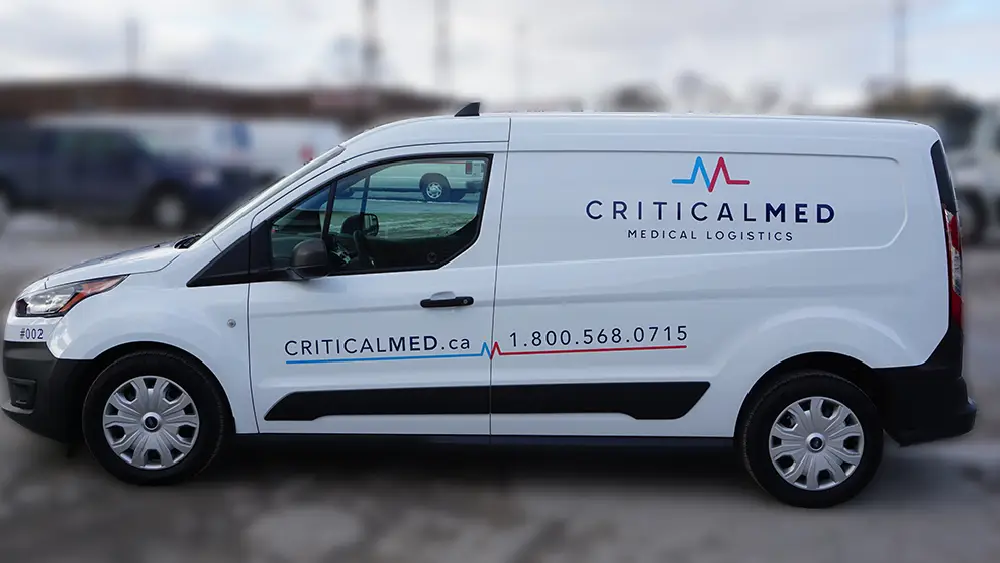
Cost Indicator: $ Primary Goal: Identification & Compliance
Spot graphics, often referred to as "decals" or "lettering," represent the entry point into fleet branding. When you select "Spot Graphics" on the tool above, you aren't looking for a complete transformation. You are looking for legitimacy.
The Anatomy of Spot Graphics
Spot graphics typically involve applying die-cut vinyl letters and logos to specific, flat surfaces of the vehicle - usually the driver and passenger doors, and occasionally the rear tailgate. This approach utilizes the vehicle's existing paint color as the background canvas.
This tier is strictly functional. It answers three questions for the viewer:
1. Who are you? (Logo)
2. What do you do? (Service descriptor)
3. How do I reach you? (Phone/Website)
The Strategic Use Case: Service Fleets
For many businesses, particularly those in the industrial, construction, or logistics sectors, spot graphics are the logical choice. If you manage a fleet of 50 delivery box trucks, a full wrap on every unit might destroy your marketing budget.
However, spot graphics are often a legal necessity. For commercial vehicles over a certain weight class, displaying a USDOT number or GVW (Gross Vehicle Weight) is not a marketing choice; it is a federal requirement. Spot graphics allow you to meet these compliance standards while maintaining a uniform, professional fleet identity.
Pros:
• Lowest Barrier to Entry: The most affordable way to brand a fleet.
• Fast Installation: Can often be installed in hours rather than days, minimizing fleet downtime.
• Easy Replacement: If a phone number changes or a door gets dinged, replacing a decal is trivial compared to repairing a wrap.
Cons:
• Low Visual Impact: You will not turn heads or stop traffic.
• Zero Paint Protection: The vinyl only covers a tiny fraction of the vehicle, leaving the rest of the paint exposed to UV rays and road debris.
• Ghosting: Over 3–5 years, the sun will fade the exposed paint, while the paint under the decal remains brand new. When you eventually peel the decal off, a "ghost" image of your logo will remain permanently etched in the fade lines.
Level 2: Partial Wraps (The ROI Sweet Spot)
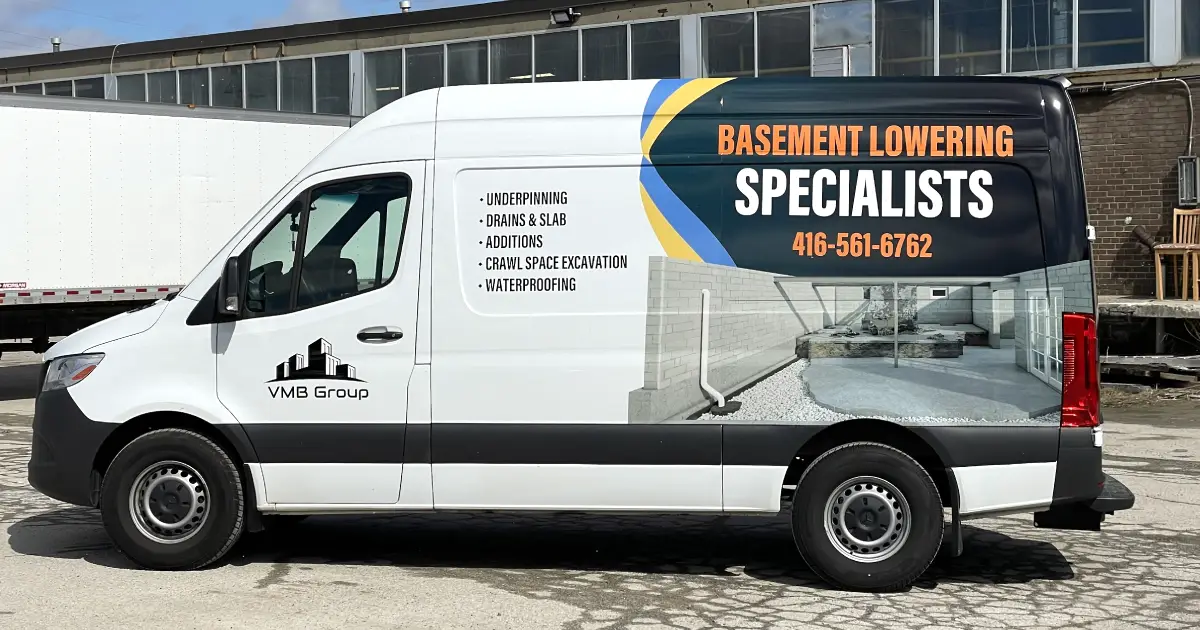
Cost Indicator: Primary Goal: Maximum Impact for Minimal Spend
If you toggle the tool to "Partial Wrap," you will notice a jump in estimated impressions without a massive leap in installation time. This is what I call the "ROI Sweet Spot." A well-designed partial wrap allows a small business to look like a national corporation without the national corporation budget.
The Art of Negative Space
The secret to a successful partial wrap is integrating the vehicle's base color into the design. If you have a white van, you don't pay for white vinyl. Instead, we design graphics that flow organically from the back to the front, perhaps covering 50% to 75% of the vehicle.
By wrapping the rear doors (the most valuable real estate in traffic) and the rear side panels, while fading the design into the factory paint toward the front, you create the optical illusion of a full wrap. To the average consumer driving past at 60 km/h, the vehicle looks fully branded.
The "Rule of 7" in Motion
In marketing psychology, the "Rule of 7" states that a prospect needs to hear or see your message at least seven times before they take action. A partial wrap is the most efficient way to accelerate this process locally.
Because partial wraps are cost-effective, you can afford to wrap more vehicles for the same price as fewer full wraps. If you have a budget of , you might be able to fully wrap two vans or partially wrap four. Wrapping four vehicles doubles your physical presence in the community, doubling the frequency at which your neighbors see your brand. That saturation helps you hit the "Rule of 7" faster, establishing you as the dominant player in your specific territory.
Pros:
• High Visual Impact: Looks like a full wrap to 90% of observers.
• Cost Efficiency: You aren't paying for vinyl on the roof, bumpers, or difficult curves that require high labor hours.
• Strategic Branding: Focuses budget on high-visibility areas (the back and sides) rather than low-visibility areas (the hood and roof).
Cons:
• Design Limitations: The design must account for the vehicle’s base color. You can’t put a navy blue partial wrap design on a bright red truck without it looking disjointed.
• Uneven Wear: Like spot graphics, the exposed paint will age differently than the wrapped sections, potentially affecting resale value if left on too long.
Level 3: Full Wraps (The Authority Tier)
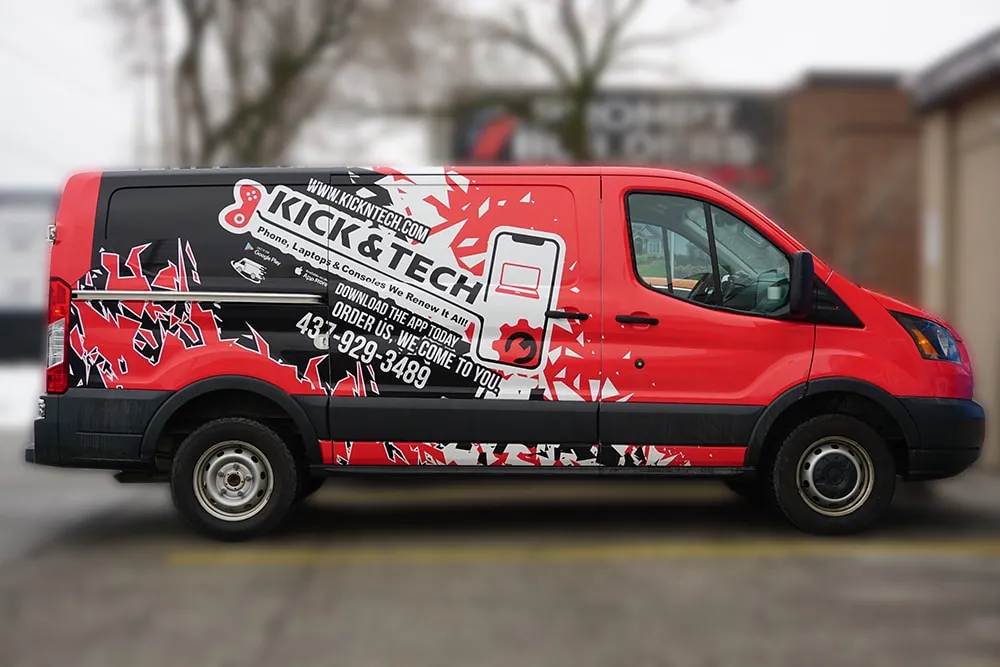
Cost Indicator: $ Primary Goal: Brand Dominance & Asset Protection
When you select "Full Wrap" on the tool, you are entering the territory of high-end branding. This covers 100% of the painted surfaces of the vehicle. It transforms the color entirely, turning a boring work truck into a vibrant, mobile masterpiece.
Commanding Authority
A full wrap signals success. When a fully wrapped plumbing or HVAC van pulls into a driveway, it tells the homeowner, "This company is established, professional, and here to stay." It eliminates the "white van stigma" that some consumers associate with fly-by-night contractors.
A full wrap allows for complete creative freedom. You are not restricted by the vehicle's paint color. You can turn a black truck into “Safety Yellow” or a white van into “Electric Blue.” You can use photographic imagery, complex patterns, and 360-degree messaging that ensures you are seen from every angle - including from high-rise buildings looking down on your roof.
The Hidden Financial Benefit: Asset Protection
While the marketing value is obvious, the financial argument for a full wrap often comes down to resale value.
Commercial vehicles live a hard life. They are subjected to gravel, road salt, UV radiation, and minor scratches daily. A full wrap acts as a sacrificial barrier. It takes the beating so your paint doesn't have to.
Consider this scenario: You buy a fleet of trucks for $50,000 each. You run them for five years.
• Truck A (Unwrapped): The paint is faded, chipped, and scratched. It looks like a used work truck. Trade-in value: $12,000.
• Truck B (Fully Wrapped): You peel the wrap off before trading it in. The paint underneath has been hermetically sealed for five years. It looks showroom fresh. Trade-in value: $18,000.
In this scenario, the wrap didn't just advertise your business; it put money back in your pocket at the end of the vehicle's lifecycle. You are essentially "renting" the paint condition.
Pros:
• Maximum Attention: The highest number of daily impressions (30k - 70k).
• Paint Protection: Preserves the OEM paint, significantly boosting resale value.
• Creative Freedom: No design limitations based on the underlying vehicle color.
Cons:
• Higher Upfront Cost: Requires more material and significantly more labor skill to install around bumpers, mirrors, and door handles.
• Longer Downtime: A full wrap installation typically requires the vehicle to be in the shop for 2–4 days.
The Math of Mobility: Cost Per Impression (CPM)
Why do fleet managers and marketing directors continue to pour money into vehicle wraps? Because when you run the numbers, traditional advertising cannot compete.
Advertising efficiency is measured in CPM (Cost Per Mille), which stands for the cost to reach 1,000 people.
• Television Ads: Can cost $20.00 to $25.00+ per 1,000 impressions. You pay every time the ad runs. When you stop paying, the ad disappears.
• Radio: Averages $10.00 to $15.00 CPM. It is fleeting and lacks visual recall.
• Outdoor Billboards: Average $3.56 CPM. They are big, but they are stationary. You have to wait for customers to drive past them.
• Vehicle Wraps: Average $0.48 to $0.77 CPM.
Why is the cost so low? Because you own the media channel. Once you pay for the wrap, that vehicle generates impressions for 5 to 7 years with zero recurring monthly media fees.
If a single vehicle generates 30,000 impressions a day, that is roughly 10 million impressions a year. Over a 5-year lifespan, that is 50 million impressions. When you divide the cost of a wrap by 50 million views, the cost is microscopic. It is the only form of advertising that you pay for once and reap the rewards from for half a decade.
Material Science: Not All Vinyl Is Created Equal
A critical warning for business owners: If you get a quote that seems "too good to be true," it is likely because the shop is using the wrong material.
There are two main types of vinyl used in this industry: Calendered and Cast.
Calendered Vinyl (The "Dough")
Calendered vinyl is made by squeezing a PVC innovations through rollers, like rolling out pizza dough. It is thick and cheap. However, like dough, it has a "memory" - it wants to shrink back to its original shape.
• Use Case: Flat signs, temporary promo stickers.
• Danger: If used on a vehicle with curves, it will shrink. This leads to the vinyl popping out of door handles (tenting) and cracking in the sun within 1–2 years.
Cast Vinyl (The Premium Standard)
Cast vinyl is created by pouring a liquid mixture onto a casting sheet and baking it. It is incredibly thin (like a coat of paint) and has no memory.
• Use Case: Vehicle wraps.
• Benefit: It conforms to complex curves, rivets, and bumpers without shrinking.
• Durability: When paired with a matching laminate, premium Cast Vinyl (like the films manufactured by 3M or Avery Dennison) is rated to last 5 to 7 years vertically.
The "Air Release" Revolution
Modern premium vinyl also features "Air Release" technology. If you look at the adhesive side of the film under a microscope, you will see tiny channels. These allow air to escape when the squeegee passes over it, ensuring a bubble-free installation. This technology is vital for a smooth, paint-like finish that looks professional rather than a giant sticker.
Conclusion: Stop Renting Eyes, Start Owning Them
Your fleet is going to be on the road regardless of whether it is branded or not. You are already paying for the fuel, the insurance, the maintenance, and the driver. The canvas is there.
Leaving that canvas blank - or doing the bare minimum with a tiny door sticker - is a wasted opportunity. It is "invisible money."
• Choose Spot Graphics if you need compliance and budget protection.
• Choose Partial Wraps if you want to aggressively grow your market share and hit the "Rule of 7" quickly.
• Choose Full Wraps if you want to dominate your local market, protect your assets, and project an image of unshakeable authority.
The road is the last true mass-media channel that hasn't been fragmented by algorithms. Don't just drive on it. Own it.
Contact Branding Centres today at +1 (416) 288-8661 or email info@Brandingcentres.com to get your project started.
Frequently Asked Questions (FAQs)
1. Will a vehicle wrap damage my fleet’s original paint?
No. When installed correctly on factory-original paint, a vinyl wrap actually serves as a protective layer against UV rays, minor scratches, and road debris. However, if the vehicle has been repainted with low-quality paint or the paint is already chipping, removal could pull up the finish. Always consult with a professional to assess your vehicle's paint condition before wrapping.
2. How long does a commercial vehicle wrap typically last?
A high-quality wrap using cast vinyl (like 3M or Avery Dennison) generally lasts between 5 to 7 years on vertical surfaces. Horizontal surfaces, such as hoods and roofs, take more direct UV damage and may need attention sooner. Regular cleaning and garaging your vehicles can significantly extend this lifespan.
3. Is a partial wrap really effective for marketing?
Absolutely. By strategically placing graphics on the most visible areas - the rear and sides - a partial wrap can generate nearly as many impressions as a full wrap for a fraction of the cost. Using your vehicle’s base color as a background element allows you to stretch your marketing budget across more vehicles, increasing your overall brand frequency.
4. Can I wash my wrapped vehicle in an automatic car wash?
It is generally recommended to avoid automatic car washes with mechanical brushes, as the bristles can lift the edges of the vinyl and scratch the laminate. Touchless car washes are safer, but hand washing with a mild detergent is the gold standard for maintaining the gloss and longevity of your fleet graphics.
5. How long does the installation process take?
Downtime varies by coverage level. Spot graphics can often be completed in a few hours. A partial wrap might take 1–2 days, while a full wrap typically requires 2–4 days to ensure proper cleaning, disassembly of hardware, installation, and post-heating.
6. Are vehicle wrap costs tax-deductible for my business?
Yes, in most cases. Because vehicle wraps are considered a form of advertising and marketing, the cost is typically 100% tax-deductible for business owners. This makes fleet branding an even more efficient use of capital compared to other assets. Always verify with your tax professional for your specific situation.