Choosing the right finish for your Business Cards can make a bigger difference than most small business owners expect. Matte and gloss may sound like a simple style choice, but each one changes how your card looks, feels, and supports your brand in real-world advertising. If you want a card that feels polished, professional, and memorable, the finish matters just as much as the design.
In this guide, we’ll compare matte and gloss in plain English so you can quickly understand which option fits your business best. You’ll see how each finish affects color, readability, durability, and first impressions, plus when it makes sense to invest in alternatives like soft-touch coatings. Whether you hand out cards at networking events, include them in packaging, or use them as part of your local marketing, the goal is simple: help you choose a finish that works hard for your brand.
By the end, you’ll know when matte gives a more refined, easy-to-read look, when gloss delivers bold visual impact, and how to match your choice to your industry, audience, and budget. Think of this as practical advice from an advertising-minded print partner: clear, honest, and focused on helping your business stand out.
Matte vs Gloss: A Quick Overview for Small Business Owners
When you order Business Cards, the finish you choose does more than change the look of the paper. It shapes first impressions, supports your business branding, and can even influence how people respond to your Advertising. For small business owners, that makes matte vs gloss an important decision, not a minor detail.
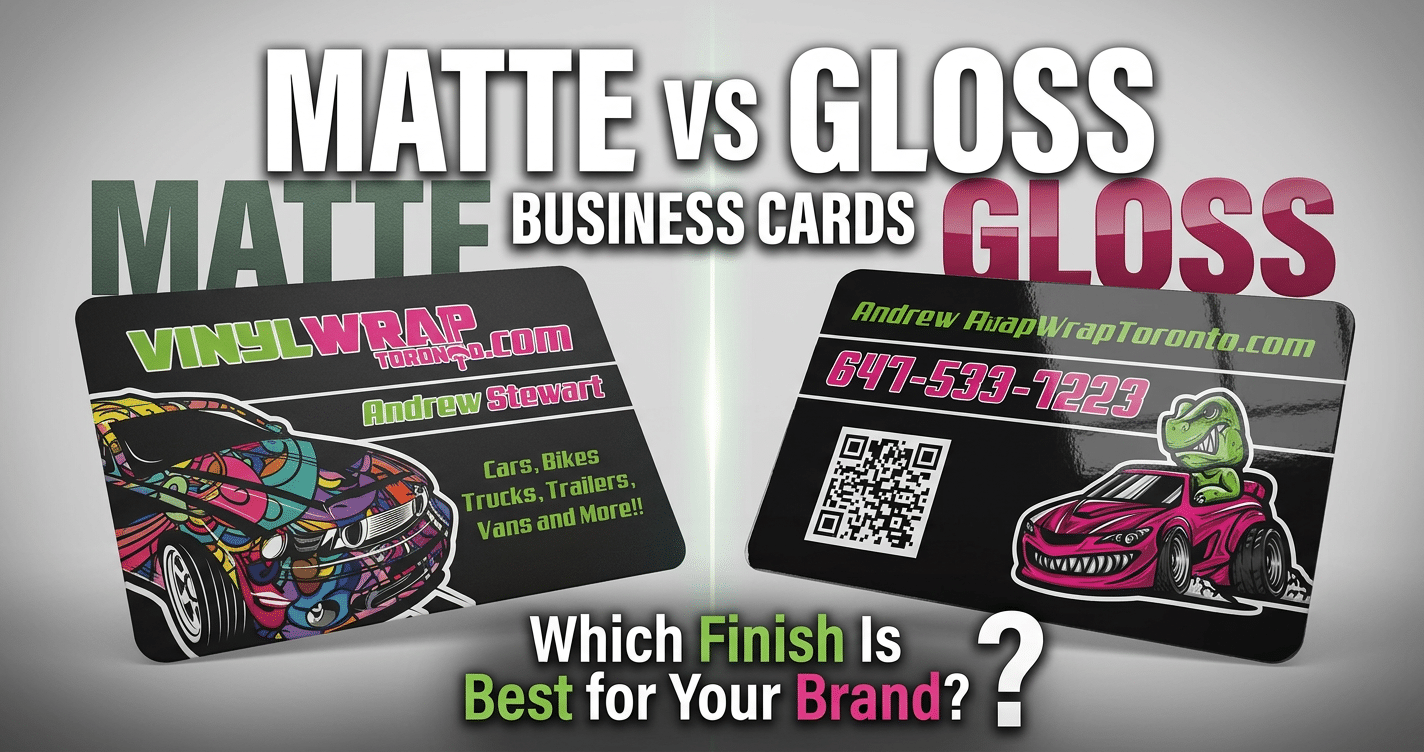
In simple terms, a matte finish has a smooth, low-shine surface. It looks refined, soft, and easy on the eyes. A gloss finish has a shiny, reflective surface that makes colors appear brighter and images look more vivid. Both can work well, but each sends a different message about your brand.
If you want a Business card that feels understated, professional, and easy to write on, matte is often a smart pick. If you want something bold, polished, and visually striking, gloss may be the better fit. Neither option is universally better. The right choice depends on your design, your industry, and the audience you want to impress.
What small business owners should expect from each finish
- Matte: subtle, elegant, modern, readable, often easier for handwritten notes
- Gloss: vibrant, eye-catching, image-friendly, slick, often stronger for photo-heavy designs
This article will help you compare both finishes in practical terms. You will learn how they differ, how they affect color and readability, and how to choose the best fit for your brand personality. If your goal is to make your marketing materials work harder, the finish on your Business Cards deserves careful attention.
Think of it this way: your card is a mini billboard in someone’s hand. The right finish helps that message land faster and more memorably. That is exactly what smart branding and effective Advertising are supposed to do.
Understanding Finishes: What Matte and Gloss Mean
To choose the right finish, it helps to understand what matte and gloss actually mean at a print level. The difference is mostly about surface sheen, coating, and the way the card interacts with light.
A matte finish has very little reflection. It creates a flat or softly muted appearance that reduces glare. This is why matte cards often feel more relaxed, premium, and text-friendly. A gloss finish reflects more light because it uses a shinier coating or laminate. That reflective layer can make colors look richer and photos appear sharper.
Common finish types
- Matte finish: low-shine coating with a clean, non-glossy look
- Gloss finish: shiny coating that boosts contrast and color vibrancy
- Lamination: a protective film added to the card surface for durability and feel
- Soft-touch lamination: a matte-style laminated finish with a velvety texture
In many print products, matte and gloss are created through coatings or laminates. A coated stock changes how ink sits on the paper and how the finished piece reflects light. Laminated cards add another layer, which can improve durability and give the card a more premium hand feel. Soft-touch sits in a category many small businesses love because it combines the quieter look of matte with a luxury texture.
How light changes the way each finish looks
Under bright light, gloss tends to catch reflections quickly. That can make photos pop, but it can also create glare. Matte absorbs more light instead of bouncing it back, so text is often easier to read from different angles. This is one reason service-based brands, consultants, and professionals often lean toward matte for their Business card designs.
Print providers commonly note that gloss enhances image intensity while matte delivers a softer, more sophisticated presentation. Both are accurate, useful options. The best choice comes down to what you want your Business Cards to communicate the moment someone holds them.
Business Cards: Choosing Matte or Gloss for Your Brand
Your finish should match your brand personality. The best Business Cards do not just share contact details. They reinforce who you are, what you sell, and why customers should remember you.
If your business is built around trust, professionalism, and a calm premium image, matte is often the safer and stronger option. It works especially well for law firms, consultants, accountants, coaches, therapists, and B2B service providers. A matte Business card feels polished without trying too hard.
If your brand is energetic, visual, and designed to grab attention, gloss can be a smart sales tool. It suits restaurants, beauty businesses, real estate, entertainment, travel, retail, and photo-driven brands. For these businesses, shine can support stronger visual Advertising and help memorable imagery stand out.
Choose based on brand personality
- Pick matte if your brand feels: modern, professional, minimal, premium, trustworthy
- Pick gloss if your brand feels: bold, creative, vibrant, youthful, promotional
Think about your audience
Ask yourself what your customers expect. A luxury service client may respond better to a soft, elegant finish. A consumer-facing audience shopping quickly may notice brighter colors and stronger shine first. Your finish should support the experience people already associate with your business branding.
For many small businesses, matte is the more versatile choice because it balances professionalism and readability. Gloss becomes the stronger recommendation when your design relies on strong visuals, saturated colors, or photography.
If you want a clean, upscale feel, consider matte silk laminated business cards or matte finish options. If visual punch matters most, gloss laminated business cards can be an excellent fit. If you need a practical starting point, best value business cards can help you test what works for your market.
Design Considerations: Color, Imagery, and Readability
Finish affects design more than many business owners expect. The same artwork can feel completely different in matte and gloss. That means your finish choice should support your colors, images, and text, not compete with them.
Color performance
Gloss usually makes colors appear deeper, brighter, and more saturated. This can be excellent for bold brand palettes, product shots, and cards that need strong visual energy. Matte tends to soften the final appearance slightly, which often looks more refined and controlled. If your brand uses muted colors, neutrals, or minimalist layouts, matte often complements that style beautifully.
Photography and graphics
If your card uses photography, gloss often gives images more contrast and punch. That is helpful for restaurants, photographers, salons, and retail brands. Matte can still look excellent with images, but it usually creates a more subdued and editorial effect rather than a high-impact glossy look.
Text and readability
For text-heavy Business Cards, matte often wins. Lower glare makes names, titles, phone numbers, and small details easier to read in different lighting conditions. This matters when networking in bright offices, events, or trade shows. Gloss can still work with text, but careful contrast is essential.
Quick design tips
- Use matte for small text, elegant layouts, and understated business branding.
- Use gloss for photo-heavy designs, bright colors, and visually led Advertising.
- Choose strong contrast between background and text, no matter the finish.
- Avoid overloading a glossy card with too much fine print.
- If you want a luxury feel without shine, consider soft-touch or silk-laminated matte styles.
For non-designers, here is the simplest rule: if your card needs to feel readable, premium, and professional, lean matte. If it needs to feel lively, visual, and instantly eye-catching, lean gloss. A well-chosen finish makes your Business card work harder before you even say a word.
Practical Factors: Durability, Feel, and Cost
For small business owners, the best finish for your Business Cards is not only about looks. It is also about how the card performs in the real world. A great-looking Business card should survive pockets, wallets, trade shows, front desks, and frequent handoffs without losing its impact.
Durability and Daily Wear
Gloss-coated Business Cards usually offer strong surface protection. The coating helps colors stay vibrant and can add resistance to minor moisture and surface wear. This makes gloss a practical choice if your cards will be handled often or displayed in busy environments.
Matte Business Cards also hold up well, especially when printed on quality stock. They tend to hide small scratches better than high-shine finishes, which can be helpful if your cards are carried around for long periods. If you want a polished but understated look, matte often gives better long-term visual consistency.
Smudges, Fingerprints, and Writing
If fingerprints are a concern, matte usually has the advantage. It is less likely to show oily marks or glare, which helps the card stay clean-looking after repeated handling. For many small businesses, that can matter more than a high-shine appearance.
Gloss, on the other hand, can attract more visible fingerprints and smudges. It also tends to be harder to write on. If you plan to add appointment times, direct phone numbers, or personal notes, a matte finish is often the safer option for your business branding.
Tactile Impression
The feel of a Business card influences first impressions. Matte feels smooth, refined, and professional. It often suits brands that want to communicate trust, expertise, or premium service.
Gloss feels slick, bright, and energetic. It supports bold Advertising, photo-heavy designs, and brands that want a more promotional style.
Upfront Cost vs Lifetime Value
Price differences between matte and gloss Business Cards are usually modest, but your real decision should be based on value, not just unit cost.
- Choose matte if you want easy readability, easier writing, and a more elegant brand feel.
- Choose gloss if you want stronger color pop and a more eye-catching promotional effect.
- Consider how long the card will stay in use and whether it reflects the quality of your business branding.
A slightly higher upfront investment can pay off if the finish helps your Business card look better longer and generate more responses.
Use Cases: When to Pick Matte, Gloss, or Alternative Finishes
The right finish depends on how you use your Business Cards and what message your brand needs to send. Small business owners should match the finish to their industry, design style, and Advertising goals.
When Matte Makes the Most Sense
Matte Business Cards are ideal when clarity, sophistication, and a professional feel matter most. They work especially well for service-based businesses that rely on trust and strong one-to-one relationships.
- Consultants, accountants, and legal professionals who want a clean, credible look
- Real estate agents who may write notes, showing times, or contact details on the card
- Medical, wellness, and coaching businesses that benefit from a calm and polished presentation
- Luxury brands that prefer subtle business branding over flashy finishes
If your design uses light backgrounds, fine text, or minimal layouts, matte often improves readability and supports a more premium feel.
When Gloss Is the Better Choice
Gloss Business Cards are best when your design depends on bold color, rich contrast, or high-impact visuals. This finish is popular for businesses that want their card to function like a mini advertisement.
- Restaurants featuring food photography or vibrant branding
- Creative businesses promoting colorful artwork or product images
- Entertainment, events, and nightlife brands that want energy and shine
- Retail and promotional businesses using Business Cards as direct Advertising tools
If your card includes strong imagery, a glossy finish can help visual elements stand out faster.
When to Consider Soft-Touch or Specialty Coatings
Some brands want something beyond standard matte or gloss. Soft-touch finishes create a velvety texture that feels upscale and memorable. They are a strong choice for creative agencies, boutique services, salons, premium hospitality, and high-end business branding.
Specialty coatings can also add value when used with purpose. Spot UV, foil accents, or raised effects can highlight logos, taglines, or important details. These upgrades work best when you want your Business card to support premium positioning, not just decoration.
For many small business owners, the rule is simple: choose matte for professionalism, gloss for visual punch, and specialty finishes when brand experience is a key part of the sale.
How to Order: Proofing, Samples, and Recommended Products
Ordering Business Cards should be simple, but a few smart steps can save money and improve results. Before you place a full order, make sure the finish, paper, and design all support your brand and your practical needs.
Start With the Intended Use
First, decide how your Business card will be used. Will you hand it out at networking events, leave it at counters, add notes by hand, or use it as a mini Advertising piece? Your answer helps determine whether matte or gloss is the better fit.
- For a refined, writable option, consider 14pt/16pt Matte Finish Business Cards.
- For a more polished laminated look, explore Matte Silk Laminated Business Cards.
- For brighter colors and shine, review Gloss Laminated Business Cards.
- If budget is your top priority, compare Best Value Business Cards.
Always Proof Before Printing
Before approving your order, check every detail carefully. A proof is your best protection against expensive reprints.
- Confirm spelling, phone numbers, website URLs, and email addresses.
- Review margins and safe zones so text is not too close to the trim edge.
- Check color expectations, especially if your brand relies on deep blacks or bright tones.
- Make sure fonts are readable at actual size.
- Think about glare and writeability based on the finish you choose.
When to Request Samples
If you are choosing between matte and gloss for the first time, request samples whenever possible. This is especially important if your business branding depends on texture, color accuracy, or a premium first impression. Samples help you compare thickness, coating, readability, and overall feel in your hand, not just on a screen.
For small business owners, that extra step can make the difference between ordinary Business Cards and cards that actively support sales. Order with your brand goal in mind, proof carefully, and choose the finish that makes your Business card work harder for you.
Matte and gloss both have real advantages, and the best choice comes down to how you want your brand to be seen, handled, and remembered. If you want a clean, modern, easy-to-write-on look, matte is often the smart pick. If you want brighter color and more visual punch, gloss can be a strong advertising tool.
If you’re still deciding, compare samples or request a proof before placing your full order. A small finish choice can have a big impact on how confidently your business shows up.
Related Products and Services
If you are planning a similar project, these related options may help.
Helpful External Resources
These sources provide supporting background and additional context.
Are matte or glossy business cards better for readability and legibility?
Matte finishes reduce glare and reflections, making small text and fine details easier to read under bright light; glossy finishes make colors and images appear more saturated but can create glare that reduces legibility. For text-heavy layouts on Business Cards, matte or soft-touch is usually the better choice.
Which finish is more durable for cards that see a lot of handling?
Gloss coatings (including aqueous or UV coatings and glossy lamination) generally resist scuffs, moisture, and fingerprints better than uncoated matte paper. High-quality matte options like soft-touch lamination can also be very durable, but plain uncoated matte will show wear faster than coated gloss.
Do matte or glossy business cards cost more to print?
Basic matte and glossy finishes are often similar in price, but specialty matte treatments (soft-touch, velvet) or additional coatings (spot UV, thick lamination) usually increase cost. Paper weight, print run size, and special finishes (foil, embossing) have a bigger impact on final price than a standard matte vs. gloss choice.
Can I use matte or gloss finishes with dark backgrounds or metallic inks?
Yes—gloss enhances deep colors and metallic inks, making dark backgrounds and metallic effects pop, while matte can tone down contrast and reduce metallic shine. For metallic inks or foil, check printer specifications and consider combining matte with spot gloss or a UV/foil treatment to preserve legibility and the metallic effect on Business Cards.