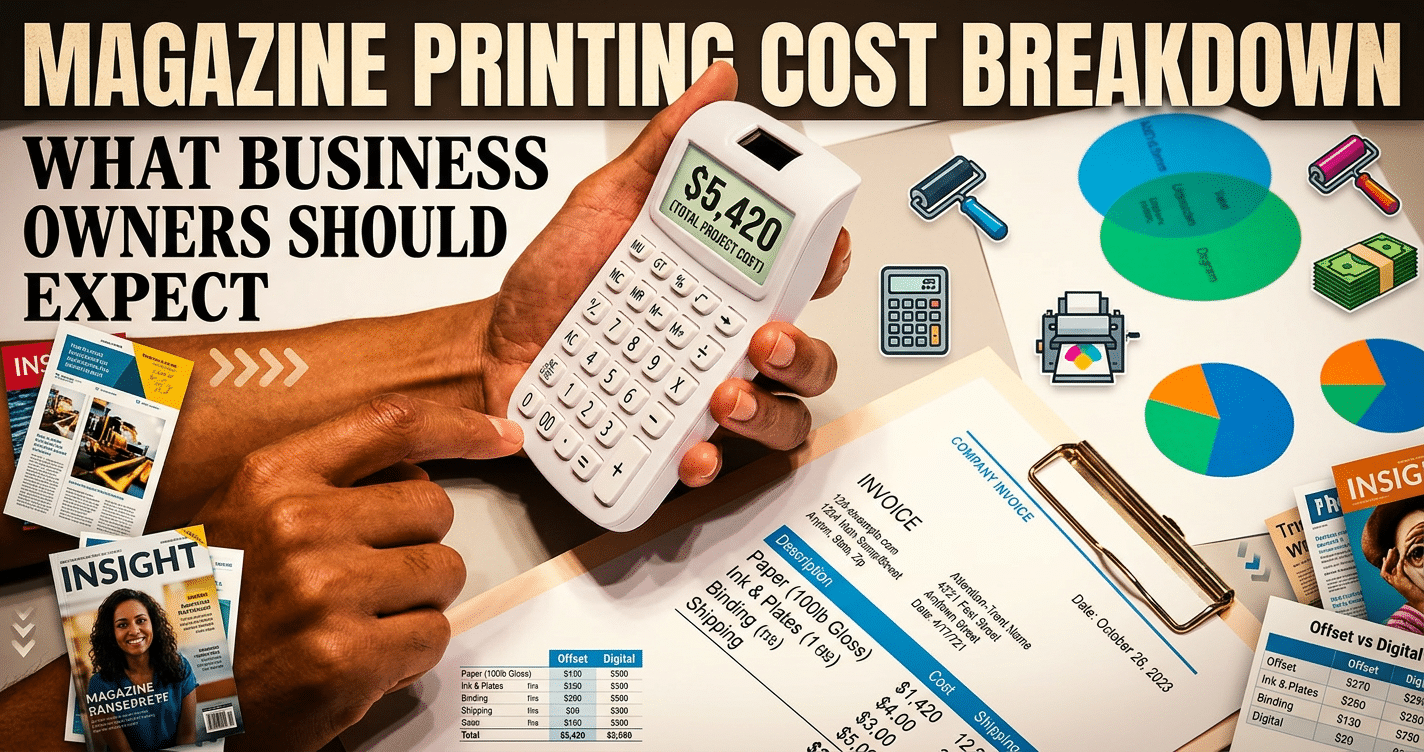
Magazine Printing Cost is easiest to understand when you break it into two buckets: fixed setup charges and variable per-copy charges. Setup covers prepress review, plate or digital preparation, color calibration, proofing, and press make-ready. Variable cost covers paper, ink, finishing, packing, and freight. That is why a short run can look expensive per copy while a larger run lowers the unit price quickly.
Last updated: March 2026
Ready to print booklet printing?
Send your artwork, quantity, and deadline to Branding Centres. We will help confirm specs, turnaround, and the best production option.

For business owners, the goal is not simply to find the lowest quote. It is to match the print specification to what the magazine needs to do. A lead-generation piece, a sponsor-driven publication, a retail lookbook, and an internal newsletter do not need the same paper, finish, or turnaround. The smartest budget decisions are usually made before design is final, because page count, trim size, and stock selection have the biggest effect on the quote.
This guide explains the pricing drivers that matter most, how digital and offset printing change the math, where hidden fees usually appear, and how to spend where readers will notice it while trimming the parts they will not. If you are comparing print budgets across different marketing materials, this print cost guide for branded apparel is also a useful reference point. For a current industry example of how run size, page count, paper, and binding influence magazine quotes, see this magazine printing cost overview.
Magazine Printing Cost: What Actually Goes Into the Price
The final Magazine Printing Cost is driven by a handful of core variables: how many copies you order, how many pages your issue has, the physical size, the paper stock, the amount of color used, the binding method, and how much setup and freight are involved. If you change any one of those inputs, the quote changes too.
Printers usually build the price from fixed costs plus variable costs. Fixed costs are the things that happen before the first copy is produced, such as file checks, plate creation for offset jobs, proofing, and machine setup. Variable costs rise as the run gets bigger, because more paper, ink, time, finishing, and packing are needed. That is why a 500-copy order often looks much more expensive per magazine than a 5,000-copy order, even if the larger invoice is higher in total.
| Cost factor | What it changes | How it affects price | Typical business impact |
|---|---|---|---|
| Quantity | Setup spread across more copies | Higher run sizes lower cost per magazine | Best lever for reducing unit cost |
| Page count | More paper and more press time | Costs rise as page count increases | Extra pages add material and production cost |
| Trim size | Sheet usage and imposition efficiency | Larger or custom sizes can cost more | Custom sizes may increase waste and setup complexity |
| Paper stock | Weight, coating, and finish | Premium stocks increase material cost | Cover and interior paper choices can move the quote quickly |
| Color and coverage | Ink usage and press configuration | Full-color printing usually costs more than limited color | Photo-heavy issues often cost more than text-heavy ones |
| Binding and finishing | Saddle-stitch, perfect bind, trimming, coatings | More finishing steps add labor and machine time | Binding choice often depends on page count and brand look |
| Shipping and delivery | Packing, freight, and destination | Distance and timing can raise the final total | Rush freight can outweigh paper savings |
Setup charges matter especially on smaller jobs. Prepress checks, proof approval, color adjustment, and press make-ready all create fixed costs before the first copy is printed. That is why two magazines with similar specs can still land at very different totals if one is rushed or requires extra proofing.
Shipping also deserves attention. A quote may look strong until freight, split shipments, or weekend delivery get added. For business owners, the real number is not just the print price. It is the landed cost per copy delivered to the right place, on time, and in usable condition.
Page Count, Trim Size, and Paper Stock: The Specs That Move Your Budget
Page count, trim size, and paper stock usually create the biggest swings in Magazine Printing Cost. If you want to control budget, start with those specs before you finalize design details. They affect paper usage, press efficiency, folding, trimming, and how the job is imposed on the sheet.
Smaller formats like digest size often use less paper and can be cheaper to ship, while larger letter-size magazines feel more premium but may require more sheet coverage and different press setup. The more custom the trim size, the more likely you are to pay for extra waste and setup adjustments. Standard sizes are usually more efficient because printers can run them faster and with less material loss.
Paper stock choices that move the quote
Coated paper is common for image-heavy magazines because it improves photo sharpness and color pop. Uncoated stock gives a softer, more editorial feel, but it may require more ink to achieve the same visual impact. Premium stocks, heavier weights, and specialty textures all add material cost before printing even starts.
Cover stock is another major factor. A heavier cover makes the magazine feel more substantial, but it increases cost because it uses more paper and can require different finishing steps. If you add a laminated, gloss, matte, or UV-coated cover, budget for another price bump. Those upgrades are most useful when the cover is meant to create a strong first impression or survive repeated handling.
How extra pages affect both material and press time
Each added spread means more paper and more press work. For short magazines, adding four pages can change the cost noticeably because it may push the job into a different imposition layout or binding method. For longer issues, page increases also affect folding, trimming, and packing time. When the page count rises, costs tend to rise in more than one place at once.
A practical checklist for spec decisions:
- Choose the smallest trim size that still fits your layout and brand
- Match paper weight to the magazine’s purpose, not just its look
- Use coated stock for photo-driven content and uncoated for text-first content
- Confirm whether the cover needs a heavier sheet or special finish
- Lock page count early to avoid re-quoting and reflow changes
In short, the biggest budget mistake is designing first and pricing later. Print specs should be part of the planning stage, not the last step.
Quantity, Digital vs Offset, and Why Rush Jobs Cost More
Quantity is one of the clearest drivers of Magazine Printing Cost: the more copies you print, the lower your per-copy price usually becomes. That happens because setup costs are spread across a larger run, so each magazine carries less of the fixed expense.
For short runs, digital printing is often the better fit. It avoids some of the upfront plate and press setup associated with offset, which makes it practical for small test runs, regional editions, event publications, and magazines with variable content. Offset printing usually becomes more cost-effective as volume rises because the unit price drops when the press is running longer. That is especially true for recurring issues where the layout stays fairly consistent.
Digital printing vs offset printing
- Digital printing: faster setup, good for low quantities, and more flexible for versioned content
- Offset printing: better for higher quantities, usually lower unit cost at scale, and stronger efficiency on repeat jobs
There is no single break-even point that fits every job, but business owners should expect the per-copy price to fall as run size rises. A 500-copy job may cost far more per unit than a 5,000-copy job, even if the total invoice is higher on the larger order. The key question is whether you need the lowest total spend or the lowest cost per magazine.
Rush timelines push pricing up because they disrupt production scheduling. When a printer has to move your project ahead of others, there may be overtime charges, shorter proof windows, labor premiums, or higher material expediting fees. If inventory must be sourced quickly or a press slot is reserved outside normal production, the quote will reflect that.
Expedited shipping adds another layer. Overnight freight, direct-to-event delivery, and split shipments to multiple locations all cost more than standard delivery. If your launch date is fixed, build in enough lead time to avoid paying for speed. A flexible schedule can often save more than switching paper stocks.
For planning purposes, the lowest quote is not always the best deal. The real savings come from matching print method, quantity, and deadline to how the magazine will actually be used.
Finishing Choices That Improve Perceived Value Without Overspending
The best finishing choices make a magazine feel premium without turning the Magazine Printing Cost into a luxury project. In many cases, a simple bind and one standout finish create more impact than stacking multiple upgrades. The goal is to spend where the reader can see and feel the difference.
Choose the binding that matches the page count and audience
Saddle stitching is usually the most budget-friendly option for slimmer magazines, typically best for shorter runs with a page count that stays within the printer’s stitch limits. It keeps production simple, folds cleanly, and works well for newsletters, event programs, and editorial pieces that do not need a heavy spine.
Perfect binding costs more, but it adds a polished, bookstore-style look. It is a stronger choice for thicker magazines, premium brand publications, and issues meant to sit on a shelf or coffee table. If your audience is paying for the magazine or using it as a reference piece, the higher perceived value can justify the upgrade.
Use coatings strategically
Soft-touch coating gives a smooth, tactile feel that signals quality fast, but it should be reserved for covers or special editions because it raises cost more than a standard varnish or aqueous coating. Gloss finishes make photos pop and are common for fashion, retail, and entertainment magazines. Matte finishes feel more restrained and upscale, which can suit corporate, nonprofit, or design-focused publications.
A useful rule is to match the finish to the magazine’s purpose. If the issue is built to impress at first glance, a gloss cover or spot treatment may be worth it. If the goal is professional credibility, a matte finish can look refined at a lower visual risk.
Reserve spot UV for high-impact details
Spot UV is best used sparingly on logos, cover lines, or a single image element. It adds contrast and draw without requiring a full custom build. Using it across too many areas can make a magazine expensive quickly, especially when paired with heavier stocks or specialty inks. Industry guides on cost-to-print magazine factors consistently show that paper, finishing, and binding choices are major drivers of final price.
One practical approach is to spend on the cover and keep the inside pages simpler. That gives you a premium first impression while protecting your budget.
How to Compare Printer Quotes and Avoid Hidden Fees
The headline price rarely tells the full story. To compare Magazine Printing quotes fairly, ask what is included, what is billed separately, and which specs could trigger extra charges later in the job. Itemized quotes are much easier to compare than one-line totals.
Check the setup and proofing details
Start with file setup fees. Some printers include basic prepress checks, while others charge for tasks like file correction, imposition, or image adjustment. Ask whether you are getting a digital proof, a hard-copy proof, or both, and confirm the cost before approving the order.
Proofing matters because a low quote can become expensive if every revision carries a charge. If the magazine has tight branding requirements, layout-heavy spreads, or ads from multiple contributors, proofing policy should be part of the comparison. A printer that includes one or two rounds of proofing can be more affordable than a cheaper quote with revision charges.
Confirm bleed, trim, and file requirements
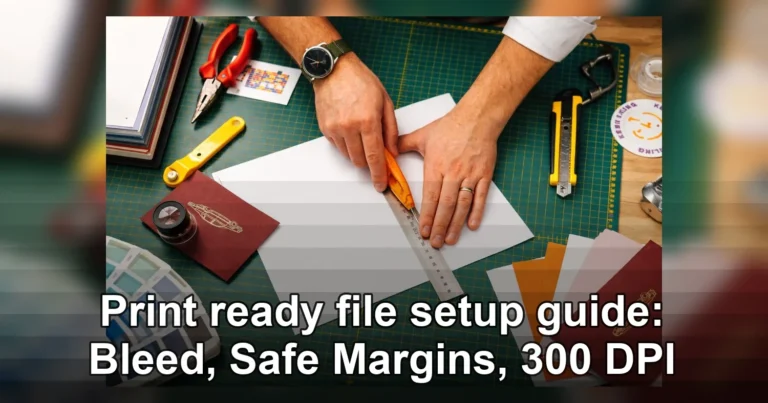
Printers often have strict requirements for bleed, crop marks, safe zones, and embedded fonts. If your files do not match the spec sheet, you may face correction fees or delays. Ask for the exact submission checklist so your in-house team or designer can prep files correctly the first time.
- Required bleed size
- Accepted PDF standard
- Color profile requirements
- Image resolution minimums
- Whether cover and inside pages need separate files
Strong file prep reduces the chance of rework. A clean, print-ready PDF can save time at the prepress stage and lower the risk of an avoidable charge.
Watch freight, taxes, storage, and reprints
Freight can shift the true cost more than the print run itself, especially for heavier stock or larger quantities. Ask if shipping is dock-to-dock, liftgate, or residential, and whether the estimate includes fuel surcharges. Taxes should also be shown clearly so you can compare total landed cost.
If you are ordering ahead, storage can become another hidden fee. Some printers charge warehousing or handling costs if you do not want the full run delivered at once. Reprint policies also matter: find out what happens if a few copies are damaged, missing, or misprinted. A printer who replaces errors quickly can save more than a slightly cheaper quote with weak service.
For businesses comparing custom printing cost factors across vendors, the smartest move is to request an itemized quote that separates print, finishing, proofing, freight, and taxes. That makes it much easier to compare apples to apples.
Practical Ways to Lower Magazine Printing Costs Without Cutting Quality
You can reduce Magazine Printing Cost without making the magazine look cheap. The key is to cut complexity where readers will not notice and keep quality where it matters most.
Reduce page count with a tighter content plan
Every extra page adds paper, press time, and often more binding cost. Before you approve the final layout, review whether any spreads can be combined, shortened, or moved online. Business owners often save more by trimming four to eight pages than by chasing minor paper discounts.
Standardize size and production specs
Custom trim sizes can increase waste and setup time. If your magazine does not need a unique format, use a standard size that fits the printer’s most efficient imposition plan. The same logic applies to stock and finishing: consistent specs make future issues faster and usually cheaper to produce.
Simplify finishes where the reader will not miss them
Use premium touches where they have the most visual impact, usually the cover, and keep inside pages straightforward. A coated cover with a clean matte or satin interior can look polished without overcomplicating production. Avoid multiple specialty finishes unless the publication is a showcase piece or high-value sales tool.
Improve file prep before sending artwork
Clean files save money. Make sure images are high resolution, fonts are embedded, bleeds are correct, and all pages are in the proper order. Errors caught late often lead to rush fixes, extra proof cycles, or reprint risk. A solid preflight checklist is one of the easiest ways to protect your budget.
Batch print runs when possible
If your content schedule allows it, batching multiple issues or related print pieces can reduce setup inefficiency. That does not mean printing too far ahead and risking obsolete content. It means planning enough volume to make the press run worthwhile while avoiding tiny emergency orders.
Match the spec to the magazine’s real job
An internal sales magazine, a trade show handout, and a premium client publication do not need the same production level. Choose the finish, paper, and binding based on how the magazine will be used, not on what sounds impressive in a quote. That approach keeps the budget aligned with business goals and prevents overspending on upgrades readers will barely notice.
When Custom Printing Is Worth the Investment for Your Brand
Custom printing is worth the extra spend when the magazine is doing more than delivering information. If it is helping you win sponsors, impress high-value clients, support a premium price point, or strengthen how people remember your brand, upgraded production can deliver a better return than the lowest possible Magazine Printing Cost.
Use custom printing when the audience is small but valuable
Standard specs are usually fine for broad distribution, internal newsletters, or short-shelf-life promotions. But custom printing makes more sense when each copy has a higher business value.
- Luxury real estate magazines sent to qualified buyers
- Private clinic, legal, or financial publications aimed at referral partners
- Event programs for galas, conferences, and sponsor-heavy community publications
- Brand magazines used in sales meetings, investor kits, or premium direct mail
In those cases, a heavier cover, soft-touch lamination, spot UV on the masthead, gatefold pages, or regionalized versions can make the piece feel more intentional and expensive. That perception matters when the reader is deciding whether your brand is premium, established, and worth trusting.
Where custom printing creates real ROI
For many business owners, the strongest return comes from presentation and monetization, not just circulation volume. Paper choice, bind method, page count, and finishing options all affect printing cost, but they also affect how seriously advertisers and readers take the publication.
- Brand perception: A well-finished cover and consistent color reproduction make your brand look more credible.
- Sponsorship value: Sponsors pay more when ad placement appears in a polished product that feels collectible rather than disposable.
- Customer retention: A magazine that people keep on a desk or coffee table gets seen more often and for longer.
- Premium presentation: If you charge for subscriptions, sell ad space, or hand copies to top prospects, upgraded printing can support a higher perceived value.
This is especially relevant for local brands using magazine production as part of a broader campaign. If you are also budgeting event merchandise or promo apparel, comparing related custom printing costs can help you decide where premium presentation will have the biggest impact.
When a simpler specification is the smarter choice
Do not upgrade just because a finish looks impressive on a sample kit. Simpler specs are often the better business decision when:
- Your issue is time-sensitive and fast turnaround matters more than premium finishing
- You print frequently, such as monthly, and need predictable costs
- The publication is free and primarily distributed in bulk
- Content changes by location or version and reprints are likely
- Postal, handout, or insert weight limits matter
A useful rule is this: invest in custom printing when the magazine is a sales tool, sponsor asset, or brand statement. Stay standard when it is mainly an information vehicle. The smartest choice is the one that matches the revenue opportunity behind each copy, not just the production wish list.
Before you approve any magazine job, lock down the exact specs: final trim size, total page count, paper stock, binding, finish, quantity, proofing method, delivery timeline, and freight terms. That simple checklist makes quotes easier to compare and helps you avoid paying for upgrades that do not improve results. If you are ready to price a project, gather two or three quotes using the same specifications and ask each printer to separate setup, printing, finishing, and shipping so you can make a cleaner decision.
Related Products and Services
If you are planning a similar project, these related options may help.
Helpful External Resources
These sources provide supporting background and additional context.
- Magazine Printing Costs How Much Does It Cost To Print A Magazine
- Understanding Magazine Printing Cost
- Cost To Print Magazine
What is the average Magazine Printing Cost for a small business run?
The cost depends on page count, paper, finish, and quantity, but a short digital run can often start in the low hundreds and move up quickly with heavier stock or special finishes. Once you add more copies, the total invoice rises, but the cost per magazine usually drops because setup is spread across more units.
Is digital or offset printing cheaper for magazines?
Digital printing is usually cheaper for short runs because it has lower setup costs and faster turnaround. Offset printing is usually better for larger quantities because the unit price drops as the run gets longer. If you need frequent content changes, test runs, or a smaller audience, digital often makes the most sense.
Which magazine specs affect cost the most?
The biggest cost drivers are quantity, page count, trim size, paper stock, color coverage, binding, and finishing. Heavier cover stock, coated paper, special coatings, and perfect binding all increase the quote. Rush timing and shipping can also raise the final landed cost more than many people expect.
How can I reduce printing costs without sacrificing quality?
Keep the page count efficient, use a standard size, choose paper that fits the content, and reserve premium finishes for the cover. Clean file prep also matters because it reduces proof corrections and rework. Matching the print spec to the magazine’s real job is usually the best way to save money without making it look cheap.
What file setup helps avoid extra magazine printing charges?
Use print-ready PDFs with embedded fonts, correct bleed, proper safe margins, and high-resolution images. Confirm the required color profile, page order, and whether the cover needs a separate file. Good file preparation reduces prepress changes, extra proof rounds, and last-minute rush fees.
Get a Free Quote Today
Contact us at +1-(416) 288-8661 or Email us at info@Brandingcentres.com and let’s get started.