In the diverse industrial landscape of Ontario, from the high-rise construction sites of downtown Toronto to the heavy-duty manufacturing plants in Etobicoke and the logistics hubs of Mississauga and Brampton, safety is the foundation of every successful operation. For business owners and fleet managers across the Greater Toronto Area (GTA), providing protective gear is not just about compliance; it is about ensuring that every team member returns home safely at the end of their shift. However, a common challenge arises when a company wants to maintain its brand identity: how do you add a professional logo to high-visibility gear without compromising the life-saving properties of the garment?
This comprehensive guide explores the complexities of CSA-approved safety apparel printing in Canada. We will delve into the technical standards of the CSA Z96-22 regulation, analyze the best materials for Canadian work environments, and discuss the specialized printing methods required to keep your team visible, professional, and fully protected.
Understanding the Standard: What is CSA Z96-22?
The CSA Z96-22 standard is the definitive Canadian rulebook for high-visibility safety apparel (HVSA). Officially published in its latest edition in February 2022, this standard ensures that workers are visible in hazardous environments, whether they are working near moving vehicles or in low-light conditions.
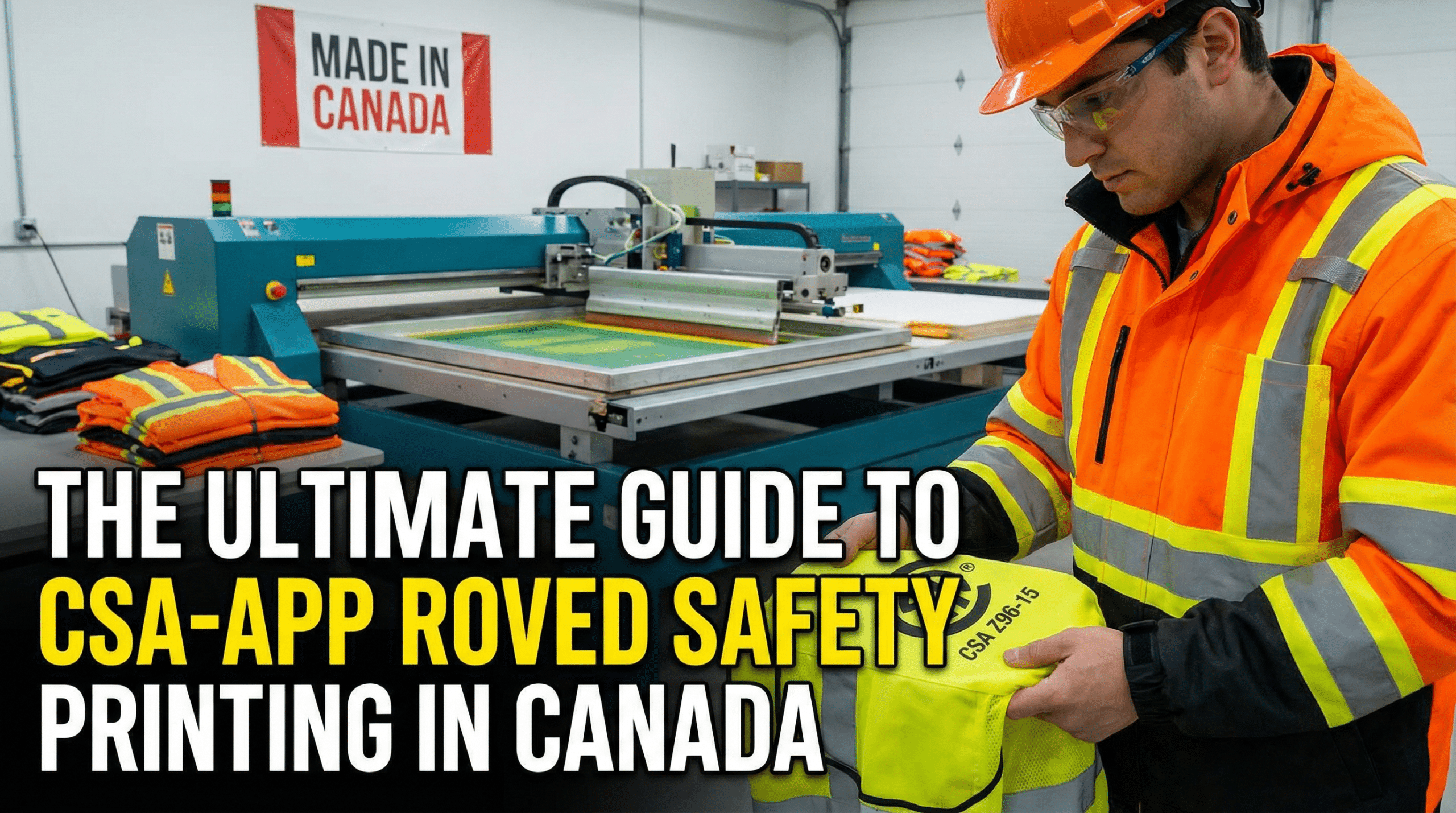
It is important to view this standard as a life-saving communication system rather than a set of technical hurdles. The goal is to make a worker impossible to miss by grabbing the attention of vehicle and equipment operators in any lighting condition, day or night. At Branding Centres, located in Etobicoke, we ensure that every piece of safety wear we brand respects these non-negotiable requirements for materials, colours, and reflective components.
Visibility Equals Safety: The Core Principle
The core principle behind the standard is simple: visibility equals safety. The standard sorts garments into different classes of protection, much like traffic lights use different colours to communicate caution. A higher-class garment contains more visible material, signalling a greater need for awareness from those nearby. This systematic approach takes the guesswork out of safety and builds a unified protocol across Canadian jobsites from Vaughan to Hamilton.
Decoding the Three Garment Classes
Choosing the right class of garment is the first step in any custom printing project. You must match the level of protection to the real-world risks your crew faces every day.
Class 1: For Low-Risk Areas
Class 1 gear offers the most basic level of visibility under the CSA Z96-22 standard. These garments are designed for workers in low-risk spots where they are well separated from traffic and vehicle speeds stay below 50 km/h. A typical example would be a warehouse worker in a Brampton facility or a parking lot attendant. Class 1 apparel usually focuses on making the worker conspicuous against their immediate background without needing full-body coverage.
Class 2: The Standard for Most Roadside Work
Class 2 represents a significant jump in visibility and is the most common class required for people working near traffic. This class is mandatory for environments where vehicle speeds are between 50 and 100 km/h. Roadside survey crews, utility workers, and school crossing guards in the GTA typically require Class 2 compliance. These garments provide 360-degree visibility of the upper torso, covering the front, back, and sides.
Class 3: For High-Risk Environments
Class 3 provides the highest level of visibility and is mandatory for the most hazardous environments. This includes situations where vehicle speeds exceed 100 km/h, such as highway crews working on the 401 at night. Class 3 garments require retroreflective striping on the arms and legs in addition to the torso. This outlines the full human form, allowing drivers to recognize a person much faster and from a greater distance.
Comparison Table: CSA Z96-22 Garment Classes
| Garment Class | Typical Work Environment | Risk Level | Key Feature Requirement |
| Class 1 | Warehouses, Parking Lots | Low (under 50 km/h) | Basic visibility against immediate background |
| Class 2 | Road Construction, Utilities | Moderate (50-100 km/h) | 360-degree torso coverage; minimum for roadway work |
| Class 3 | Highways, Night Work | High (over 100 km/h) | Torso, arm, and leg bands to outline human form |
The Science of Materials: Polyester vs. Cotton
When selecting safety apparel for customization, the material dictates the durability, comfort, and printing compatibility.
100% Polyester: The Hi-Vis King
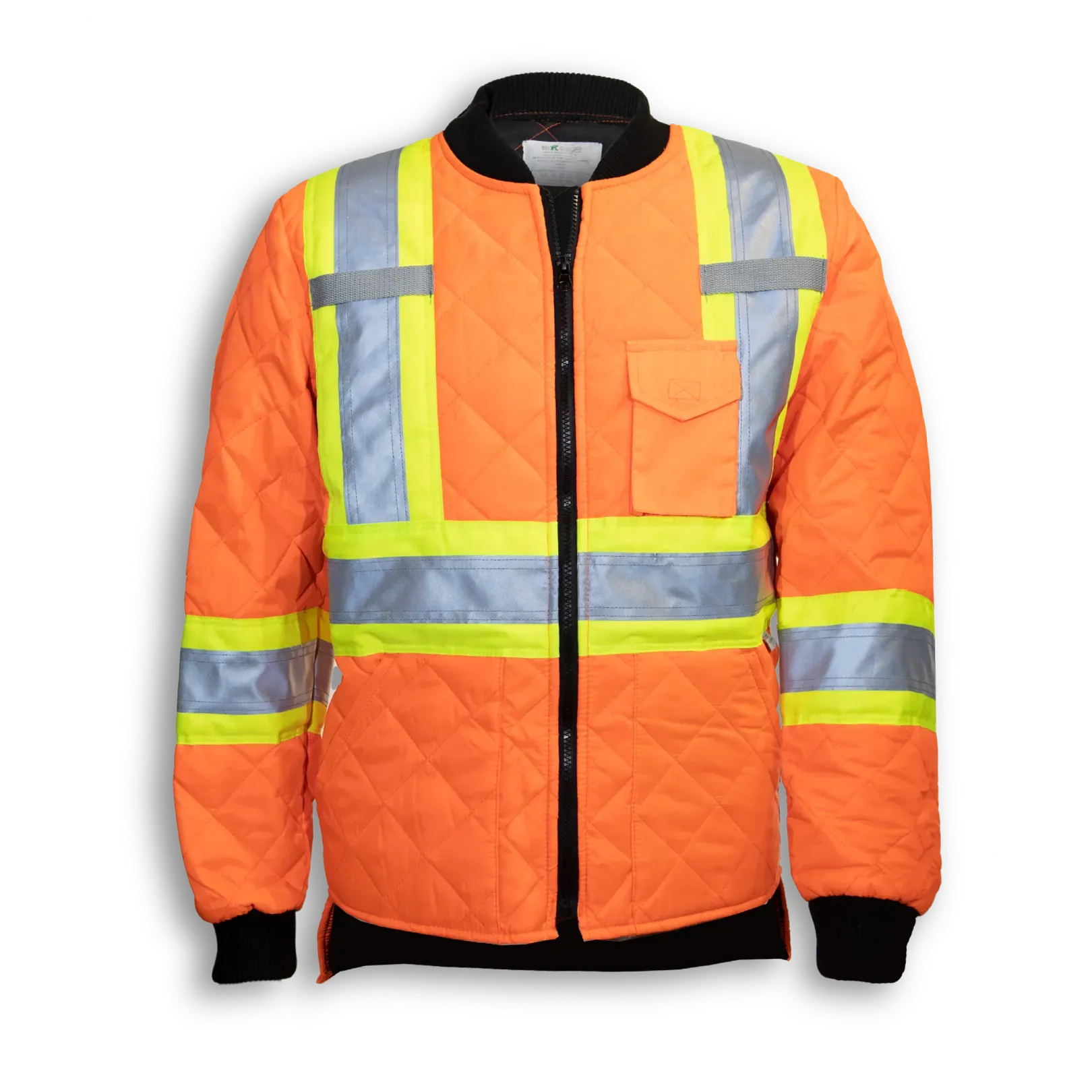
Standard high-visibility gear is usually made from synthetic materials like polyester. Polyester is the preferred choice for safety gear because it holds fluorescent dyes exceptionally well, ensuring the garment maintains its “pop” during the day. Furthermore, polyester offers moisture-wicking properties, which are essential for physically demanding roles in Mississauga or Vaughan.
At Branding Centres, we offer specialized items like the Quilt Polyester Traffic Safety Jacket which features a 100% polyester shell designed for durability and visibility in demanding Canadian climates.
100% Cotton Duck: Rugged Protection
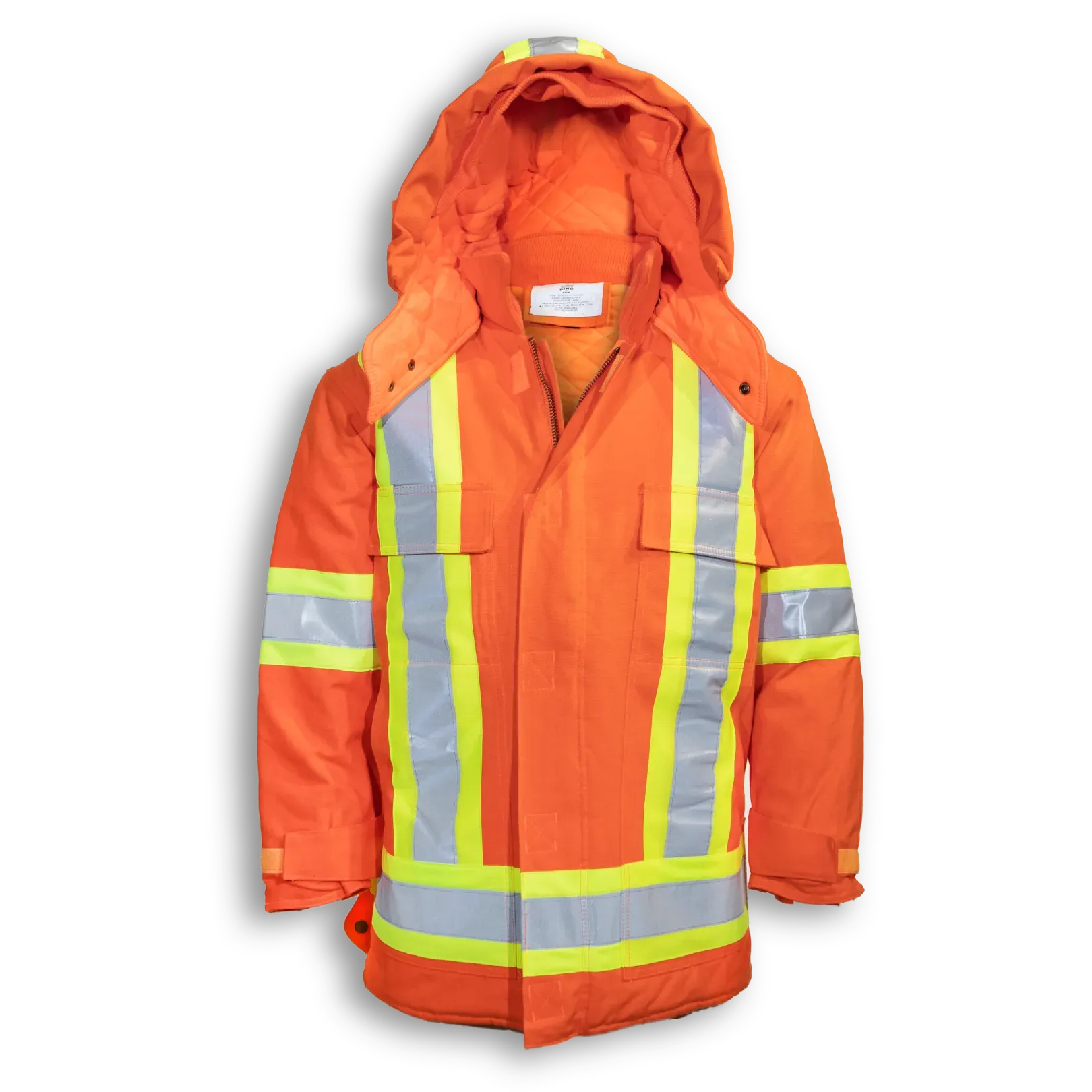
When durability and tear resistance are your top priorities, canvas or “duck” cotton is the right choice. This material provides toughness for construction and demolition environments while remaining flexible enough for movement. We carry the 100% Cotton Duck Safety Jacket With Quilt Lining, which meets CSA Z96-22 Class 2, Level 2 standards, combining the strength of cotton with the visibility of 3M Scotchlite reflective material.
Poly-Cotton Blends: The Versatile Middle Ground
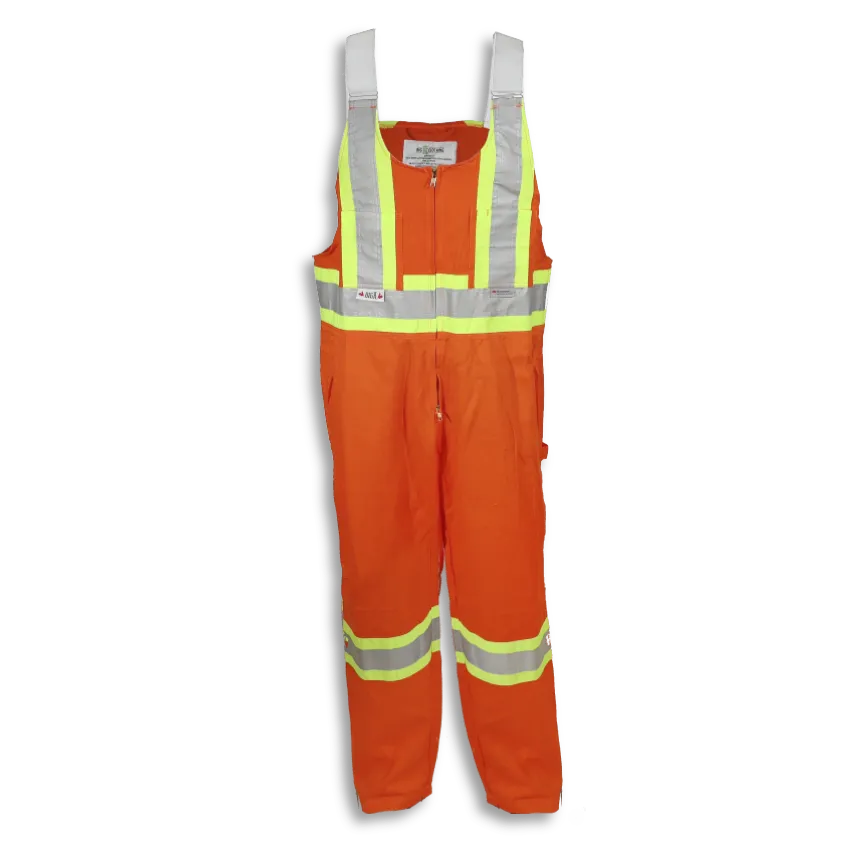
Many professional uniforms use a blend of polyester and cotton to combine the breathability of natural fibers with the durability and wrinkle resistance of synthetics. These are often used for corporate uniforms and high-turnover workwear that needs to withstand industrial laundering.
Custom Printing Methods for Safety Apparel
Adding a logo to safety gear requires a balance between brand visibility and regulatory integrity. The method you choose depends on the garment type and the work environment.
Screen Printing: The High-Volume Workhorse
Screen printing involves pushing ink through a mesh stencil directly onto the fabric. It is the most cost-effective method for large bulk orders of lightweight garments like t-shirts and vests.
- Pros: Vibrant colours, precise detail, and a lightweight feel.
- Cons: Not ideal for heavily textured fleece as the ink can get lost in the pile.
Embroidery: The Premium Standard
Embroidery uses computerized machines to stitch a logo directly into the fabric. It provides a textured, three-dimensional look that elevates brand image.
- Pros: Exceptional durability; the thread often outlasts the garment itself.
- Cons: Not recommended for waterproof gear because the needles puncture the waterproof membrane, leading to leaks.
Heat Transfer Vinyl (HTV): Tricky Garment Solutions
HTV involves cutting a design from specialized vinyl and applying it with a heat press. This is the go-to method for waterproof jackets and for creating reflective logos using specialized reflective HTV.
Strategic Logo Placement and Compliance
Adding a logo can accidentally void a garment’s compliance if not done carefully. According to CSA standards, a non-reflective logo must follow strict size and placement rules:
- Size: The logo must be smaller than 105 square centimetres.
- Placement: On the front, it can only cover up to 25 square centimetres of the vertical reflective striping.
- The Back: A non-reflective logo must not cover any of the reflective striping on the back, especially the mandatory “X” pattern.
The “X” pattern is a non-negotiable requirement in Canada. Its purpose is brilliant: it instantly tells a driver whether a worker is facing toward them or away from them. At Branding Centres, we strategically position your branding to ensure it never obscures these critical visual cues.
Specialized Protection: Flame-Resistant (FR) Gear
In industries like oil and gas or electrical utilities in Ontario, workers are exposed to potential arc flash or flash fire hazards. Standard polyester vests are dangerous in these environments because the synthetic material can melt and drip, causing severe burns.
FR high-visibility garments are made from materials that self-extinguish and will not melt. For dual-hazard environments, the garment must meet both the visibility rules of CSA Z96-22 and specific FR standards like NFPA 2112.
Maintenance Tips for Longevity
The life-saving properties of safety gear are only effective if the garment is kept in good shape. Over time, dirt, grease, and improper washing can kill the visibility properties.
- Inspect Regularly: Look for faded background colours. If the bright yellow or orange looks dull, it is time for a replacement.
- Check Tape Integrity: Look for cracks or peeling in the silver reflective tape.
- Cleanliness: Permanent stains from oil or asphalt compromise visibility. A clean garment is a visible garment.
- Proper Laundering: Always follow the manufacturer’s instructions. Harsh laundry chemicals can damage the retroreflective material.
Navigating Provincial Regulations: CSA vs. OHSA
For businesses in Ontario, it is vital to understand the difference between national standards and provincial laws.
- CSA Z96-22: Provides detailed specifications for reflective materials, placement, and classifications. It is an industry standard adopted as best practice.
- OHSA Regulation 213/91: This is provincial law in Ontario. It mandates that workers must be visibly identified in high-risk areas but often refers to CSA Z96 for the exact specifications of what qualifies as “appropriate” clothing.
Why Branding Centres is Your Trusted Safety Partner
Located in Etobicoke and serving the entire GTA and Canada, Branding Centres is an all-in-one branding company specializing in commercial signage and vehicle branding. We understand that your safety apparel is a critical piece of equipment.
We combine local expertise with a deep understanding of Canadian safety regulations. Whether you need Class 2 vests for a small team or a managed uniform program for a large fleet, we ensure that your logo looks professional while your team stays safe. We even provide essential compliance items like CVOR Number Decals to keep your commercial vehicles meeting all provincial standards.
Frequently Asked Questions (FAQ)
-
Is my old CSA Z96-15 gear still compliant?
While some regions may have had a transition period, the best practice is to adopt the latest CSA Z96-22 standard. The 2022 update includes critical changes, such as mandatory leg striping on Class 2 bib overalls, that older gear lacks.
-
Can I put a large company logo on the back of a safety vest?
You must be careful. A large, solid, non-reflective logo can reduce the total area of compliant fluorescent material, potentially jeopardizing the garment’s certification. It is often safer to use an outline logo or a smaller placement.
-
What is the difference between fluorescent and retroreflective material?
Fluorescent material (the bright orange or yellow fabric) provides daytime protection by making the wearer stand out against the background. Retroreflective material (the silver tape) does the heavy lifting at night by bouncing light from headlights back to the source.
-
Can you embroider on a waterproof safety jacket?
We do not recommend embroidery for waterproof gear. Each needle puncture compromises the jacket’s waterproof membrane. Heat Transfer Vinyl (HTV) is the preferred method as it adheres to the surface without puncturing it.
-
What is “Duck” fabric in safety wear?
Duck is a heavy, plain-woven cotton fabric known for its incredible resistance to tearing and snagging. It is the standard for rugged work jackets like our 100% Cotton Duck Safety Jacket.
-
Does Branding Centres offer volume discounts for fleet orders?
Yes, we specialize in bulk orders for businesses across the GTA and Canada. Bulk ordering is the most cost-effective way to outfit an entire team while ensuring standardized branding and safety compliance.
-
How long should a high-visibility garment last?
The lifetime of a garment depends on its use and maintenance. UV rays and industrial washing will eventually degrade the fluorescent dyes and reflective tape. Regular inspections are necessary to ensure the garment still meets the CSA safety requirements.
Elevate Your Safety and Your Brand Today
Your team works hard to represent your business in the communities of Toronto, Etobicoke, and beyond. Give them the protection they deserve with branded safety gear that meets the highest Canadian standards. At Branding Centres, we are ready to help you navigate the complexities of CSA-approved safety apparel printing to create a look that is both safe and iconic.
Contact Branding Centres Today
- Phone: +1 (416) 288-8661
- Email: info@Brandingcentres.com
- Location: 24 Ronson Dr Unit #1, Etobicoke, ON M9W 1B4
- Service Areas: Toronto, Etobicoke, Mississauga, Brampton, Vaughan, GTA and across Canada.
Visit our showroom or browse our safety catalog online to start your custom project!